



Current Trends in The Hospitality Industry


The COVID-19 pandemic hit the travel and hospitality industries hard. As demand recovered, hotels adopted new technology to keep guests safe and comfortable and to meet the extra demands the pandemic created. Digital transformation and process automation sit at the centre of these trends in the hospitality industry.
According to the U.S. Bureau of Labor Statistics, US employment in leisure and hospitality grew by 355,000 jobs in February 2021 and by 280,000 in March 2021 as the industry recovered.
Hotel Automation and Post-Pandemic Trends
The pandemic forced hotels to change how they serve guests, and digitalisation became one of the core hospitality trends. HotelTechReport keeps an up-to-date comparison of the hotel management software available.
Automation is one of the main trends in travel and hospitality. Guests now handle much of their stay themselves through online registration, self-service kiosks and online questionnaires, without staff involvement. Staff still need to oversee these systems.
In a Statista survey of hoteliers in Asia, Europe and North America, carried out in January and February 2021, the majority named improving the guest experience as a main reason for using technology.
Hilton moved early. Its HHonors app offered digital check-in with room selection from July 2014, and Hilton tested its Digital Key in 2015 before launching it widely in early 2016. The pandemic then pushed more guests to use features like these.
Many less advanced hotels turned to technology during the pandemic to offer guests similar automated services.
Automation Benefits for the Hospitality Industry
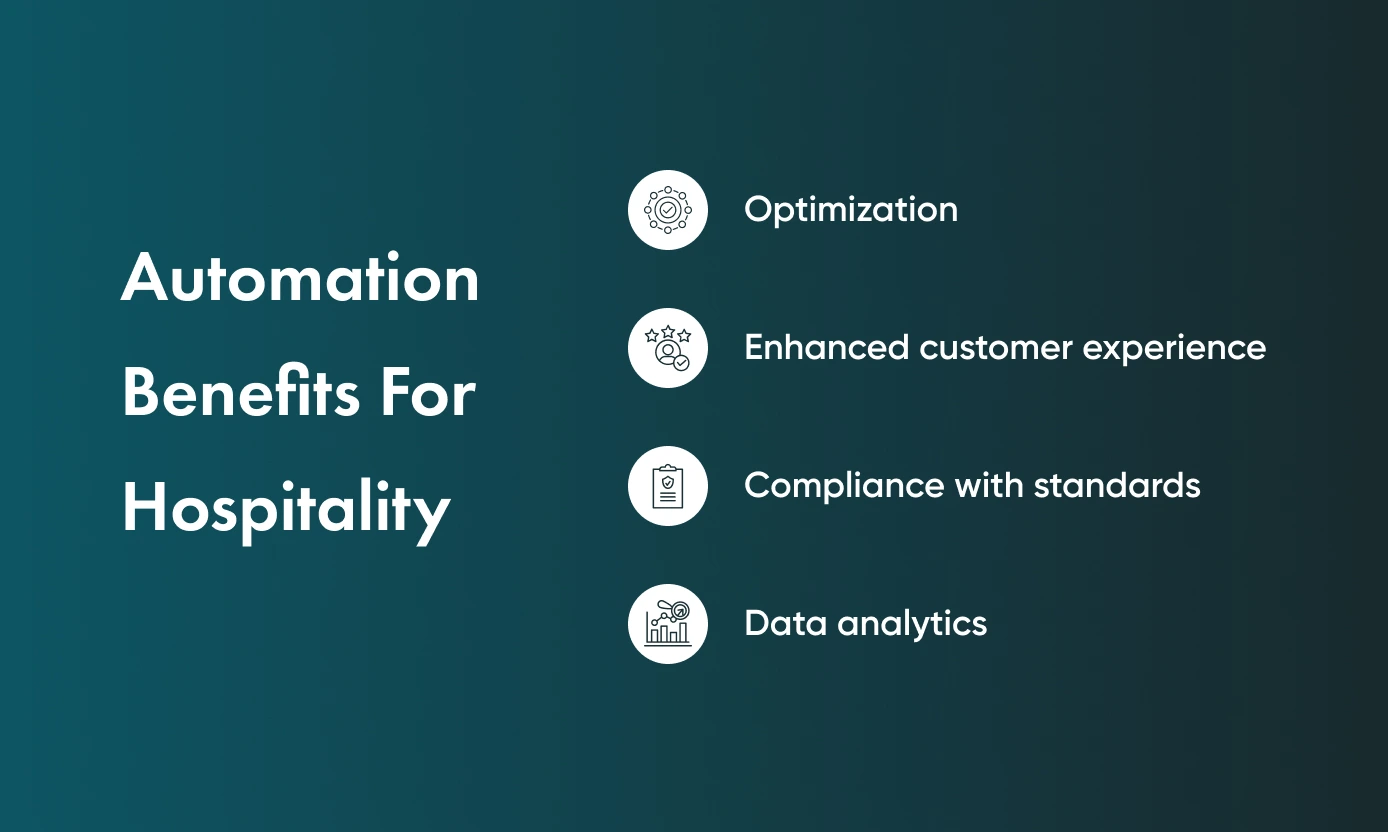
Optimisation
Automated hotel management systems make it easy to assign tasks: each employee sees what needs doing, when, and who is responsible.
Compliance with standards
Automation lets hoteliers set internal standards and monitor compliance with them automatically.
Enhanced customer experience
A hotel automation system shows managers how guest requests are handled. Requests that were not resolved show where the process needs fixing.
Data analytics
The automation software stores operational data, so managers can track the hotel's efficiency and guest satisfaction and spot bottlenecks in service.
Technological Trends To Improve The Automation Process
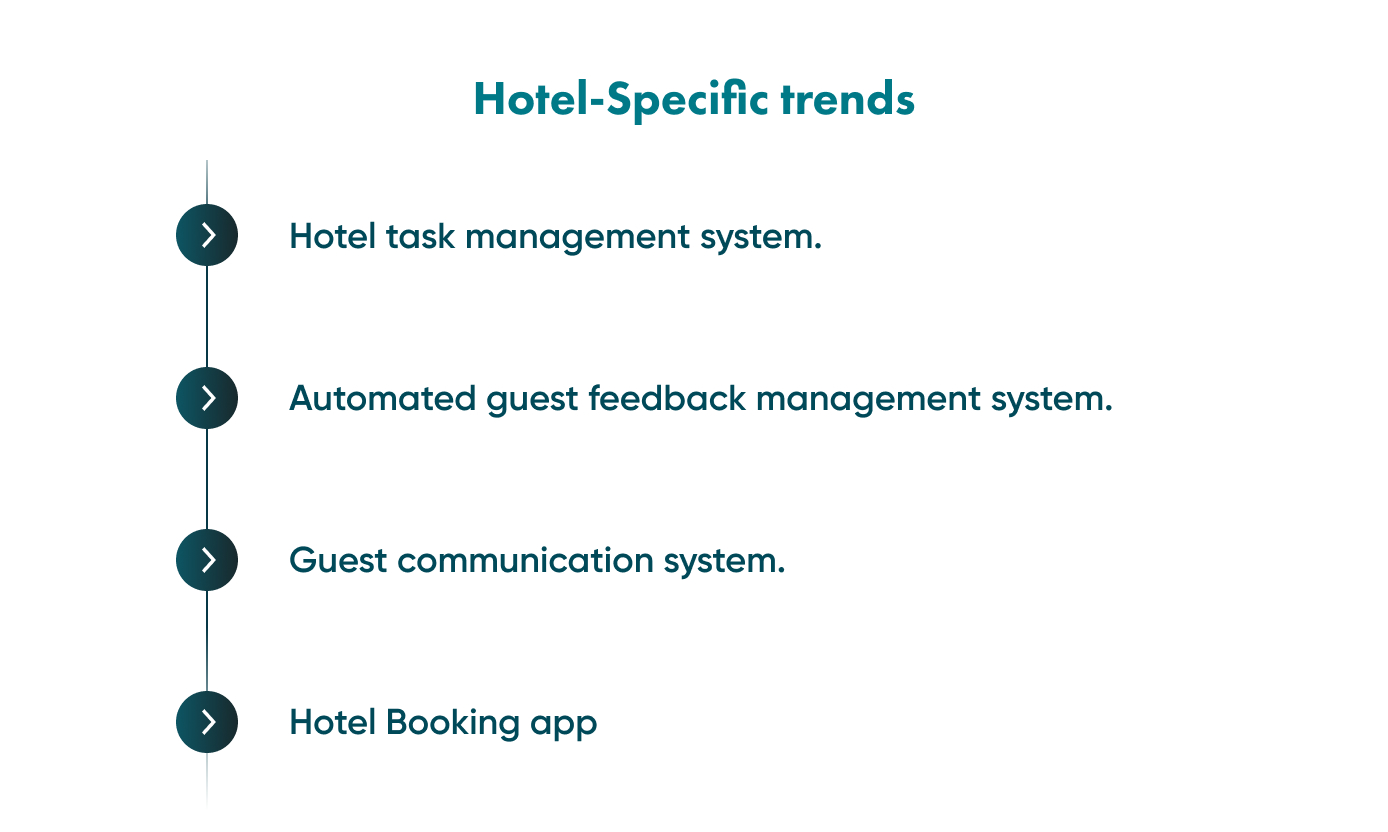
Hotel task management system
Guests who wait too long for a response may choose another hotel next time. A task management system assigns each request to the right staff member and sends alerts so that it gets done on time.
Automated guest feedback management system
Hotels can use an automated system to respond to reviews quickly. Radisson Hotel Group, for example, used ReviewPro's feedback management system and cut its average review response time from 6.3 days to 3.0 days year on year.
Guest communication system
Guests ask many of the same questions. A guest communication system answers the common ones automatically, at any hour, and leaves staff more time for other requests.
Go Wombat’s Expertise
At Go Wombat, we build automated systems for clients in the hospitality industry. One of them is srprs.me (pronounced "Surprise me"), a service that sends travellers to a destination they do not know in advance. Users choose the type of holiday they want, and the company prepares a tour with accommodation and flights included. Its staff had to perform many manual operations to match each user with the right trip, so the company asked us to automate them. Our developers built an algorithm for automated selection and booking, and we worked on integrating it into the srprs.me service to improve operational efficiency.
To hire an experienced Python development team, contact us.
Hotel booking apps
Booking apps let guests reserve and pay for a room in a few clicks, and online booking is likely to remain the norm.
Go Wombat is proud of Desty, an all-in-one B2B platform for online travel agencies that speeds up travel booking. Agencies integrate it into their websites, so users can book packages that include accommodation, air tickets and other services. Staff manage the packages, and users can customise them, for example by changing dates.
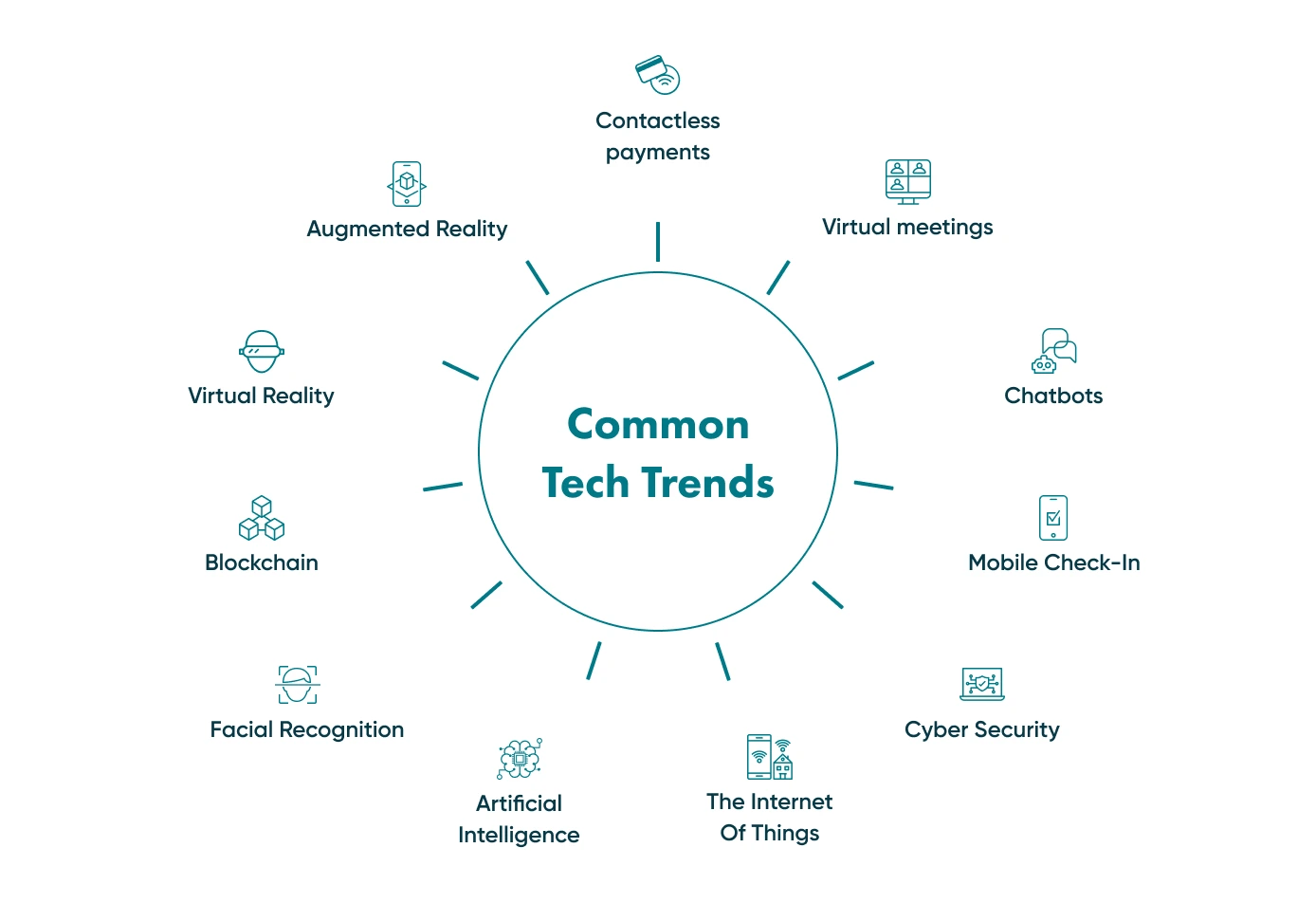
Contactless Payment
Contactless payment became essential during the pandemic. It started with payment cards, and wearables and mobile wallets have since widened its use. Hotels expanded contactless technology to make stays safer for guests.
Virtual Meetings
With restrictions on travel and personal contact during the pandemic, virtual meetings through video-conferencing apps rapidly became an accepted norm. The integration of messaging apps into working processes also increased.
Chatbots
Chatbots are not new, but more hotels now add them to their websites and mobile apps to answer guests instantly. Multilingual chatbots reply in the guest's chosen language.
Mobile Check-In
Mobile check-in removes a routine step and reduces person-to-person contact. Guests check in through the hotel's mobile app and skip the queue at reception.
Cyber Security
Hotels store guests' card details and personal data, which makes them a target. Phishing, DDoS attacks and malware threaten a hotel's website and customer database, and remote work by employees adds further risk, so hospitality software needs additional security layers.
The Internet of Things (IoT)
Connected devices around a hotel support contactless payments and self-service kiosks. In the room, guests can control lighting, air conditioning or heating from a mobile app or by voice.
Artificial Intelligence
AI helps hotels personalise the guest experience by identifying guest preferences, and it automates communication, for example through chatbots.
At Go Wombat, we build AI and machine learning applications in Python.
Contact us for help with your project.
Facial Recognition (FR)
Facial recognition uses AI to identify people. Hotels can use it for room access, and airports use it for passport checks. It could replace mobile check-in by recognising guests as they arrive, and it can restrict specific areas to authorised staff.
Blockchain
Blockchain is a decentralised ledger that makes payments more transparent and secure. Some hotels accept cryptocurrency from guests' crypto wallets, and blockchain is also used for identity verification and baggage tracking.
Virtual Reality
Hotels use virtual reality (VR) for online tours, so potential guests can see the layout of the rooms, restaurant or lounge before booking.
Augmented Reality
Augmented reality (AR) mostly runs in mobile apps. Hotels use it for interactive room views in which guests can move or add objects, and for gamification that adds game elements to a stay.
Conclusion
The pandemic pushed the travel and hospitality industries to automate. If you are starting now, automate the manual steps your staff repeat most, such as booking changes and guest requests.
Go Wombat provides software development and IT consultancy for the hospitality and travel industries. To discuss a project idea, contact us.
Share and subscribe to our blog
Related articles

Current Trends in The Hospitality Industry
Technology trends in the hospitality industry since the COVID-19 pandemic: automation, feedback and task management, chatbots, mobile check-in, IoT and AI.

How Do You Build an Online Hotel Booking System in 2026?
How to build an online hotel booking system in 2026: in-house versus marketplace, the features guests and staff use, useful APIs, security and cost.

Five Business Automation Trends to look out for in 2022
Five technology trends for business process automation in 2022, taken from Gartner's list: cloud-native platforms, composable applications, hyperautomation, AI engineering and generative AI.

How can we help you ?

