



Hiring A Full-Stack Development Company

The benefits, challenges, and steps
A full-stack development company takes a project from requirements to release and support with one team. This guide covers what such a company does, what can go wrong, and how to choose one.
Benefits of a full-stack development company
A complete project
A full-stack software development company runs the whole development cycle on a turnkey basis. It analyses the client’s requirements, creates the UI/UX design, develops the client side (front end) and the server side (back end), performs quality assurance and supports the project after release. It also handles databases, containers, hosting and web servers.
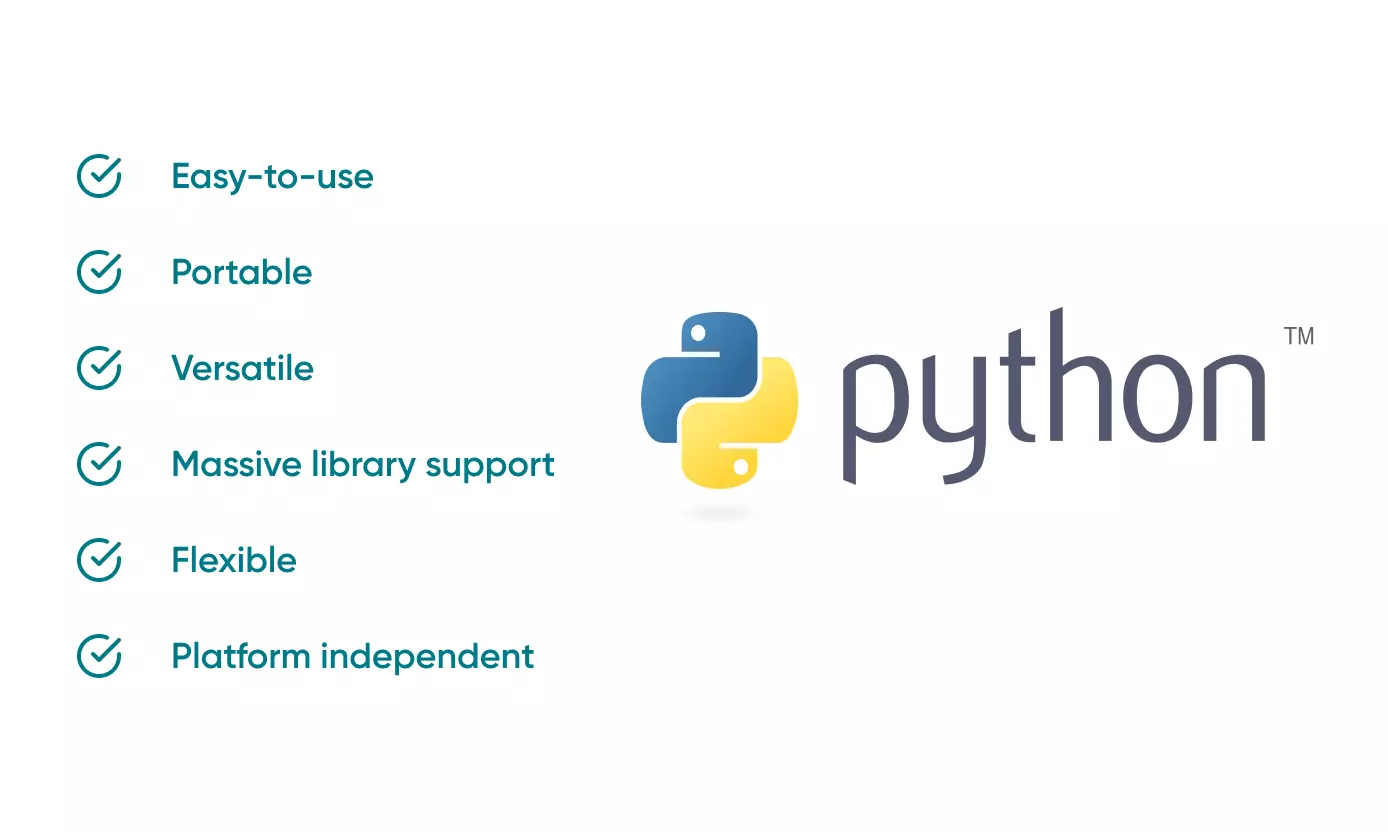
At Go Wombat, our main stack is Python (Django, FastAPI) on the backend, JavaScript and React on the frontend, and React Native for cross-platform apps. (You can read why we choose Python in this article.)
The team can change with the project. If you need to replace an engineer, Go Wombat can do so when a specialist at the same level is available.
Experience
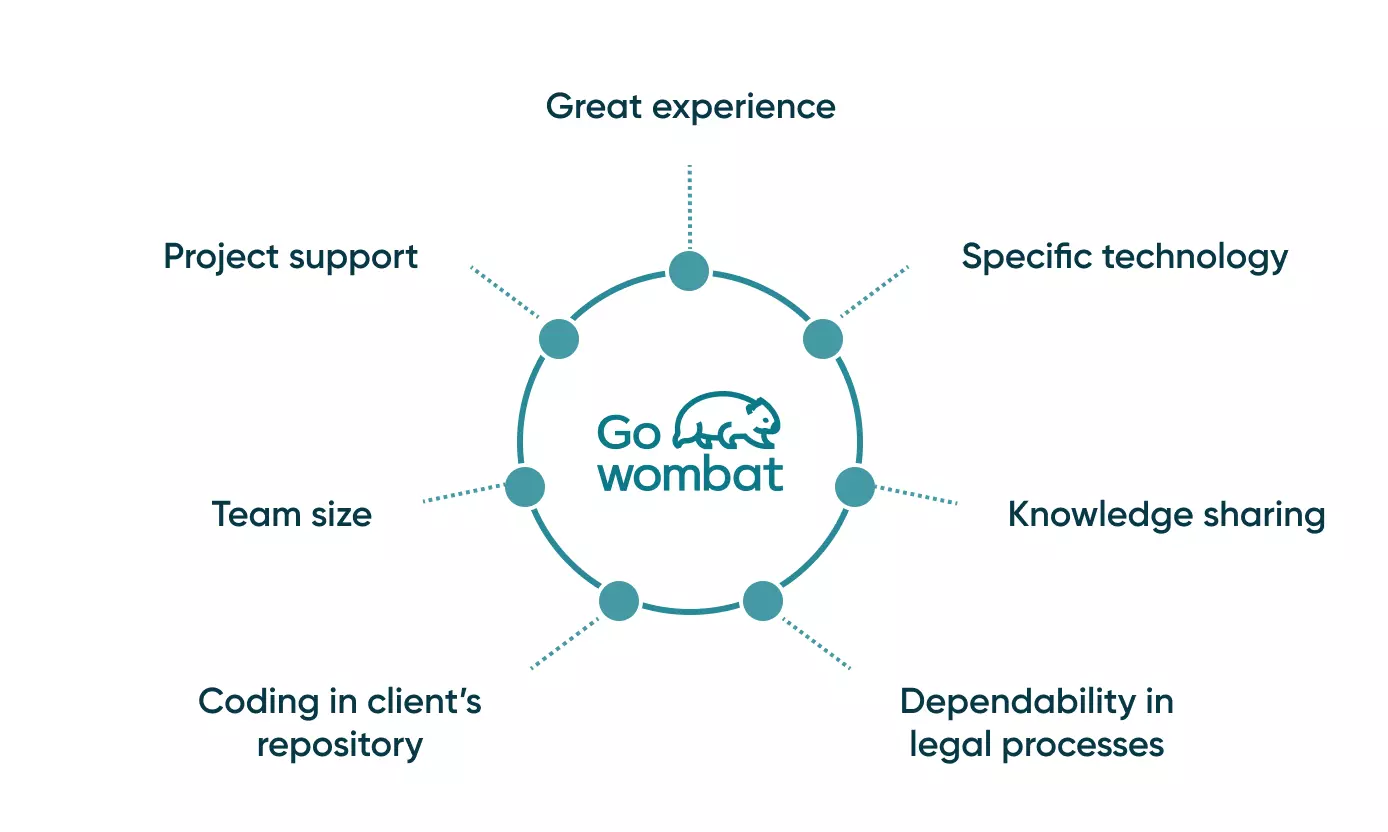
A full-stack company gives you specialists from several fields in one team, with experience of complex web and mobile applications.
Specific technology
Full-stack work can involve dozens of languages and frameworks. At Go Wombat, Python is the core of our full-stack development.
Client’s repository
A code repository (usually Git) stores a project’s source code and its change history. Many development companies write code in their own repositories and hand it over to the client later. Go Wombat developers can work directly in the client’s repository, so the code stays with the client throughout the project. This takes trust on both sides.
Team size
You can scale the team up or down as the project’s needs change.
Knowledge sharing
In a company with many specialists, engineers share what they learn across projects, so your team can draw on solutions that have already worked elsewhere.
Dependability
Hiring a full-stack development company involves contracts and legal obligations. Go Wombat’s legal office is at our administrative headquarters in Tallinn, Estonia, and our engineers work mainly from Ukraine and Spain. We sign a non-disclosure agreement (NDA) to protect confidentiality for both parties.
Project support
Because one team built the whole product, it can fix issues in any part of the stack throughout the project’s life cycle.
Challenges with a full-stack contract
Outsourcing a whole project has three main challenges, and each can be managed.
Reliability
Check a potential contractor before you sign: read client reviews, look through the portfolio and interview the team. A reputable company will answer all your questions.
Project control
A fully outsourced project is harder to control than an in-house team. Go Wombat sends clients regular progress updates and holds daily online meetings. We also run a risk assessment at the start of every project to find potential issues early.
Expense
A dedicated team costs more than a single freelance developer because it covers every role the project needs. One freelancer cannot do the work of a web developer, mobile developer, designer and tester.
With freelancers, you hire each specialist separately and coordinate their work yourself. A single full-stack contractor takes that coordination off your hands.
Steps to hiring a dedicated full-stack team
1. Determine requirements
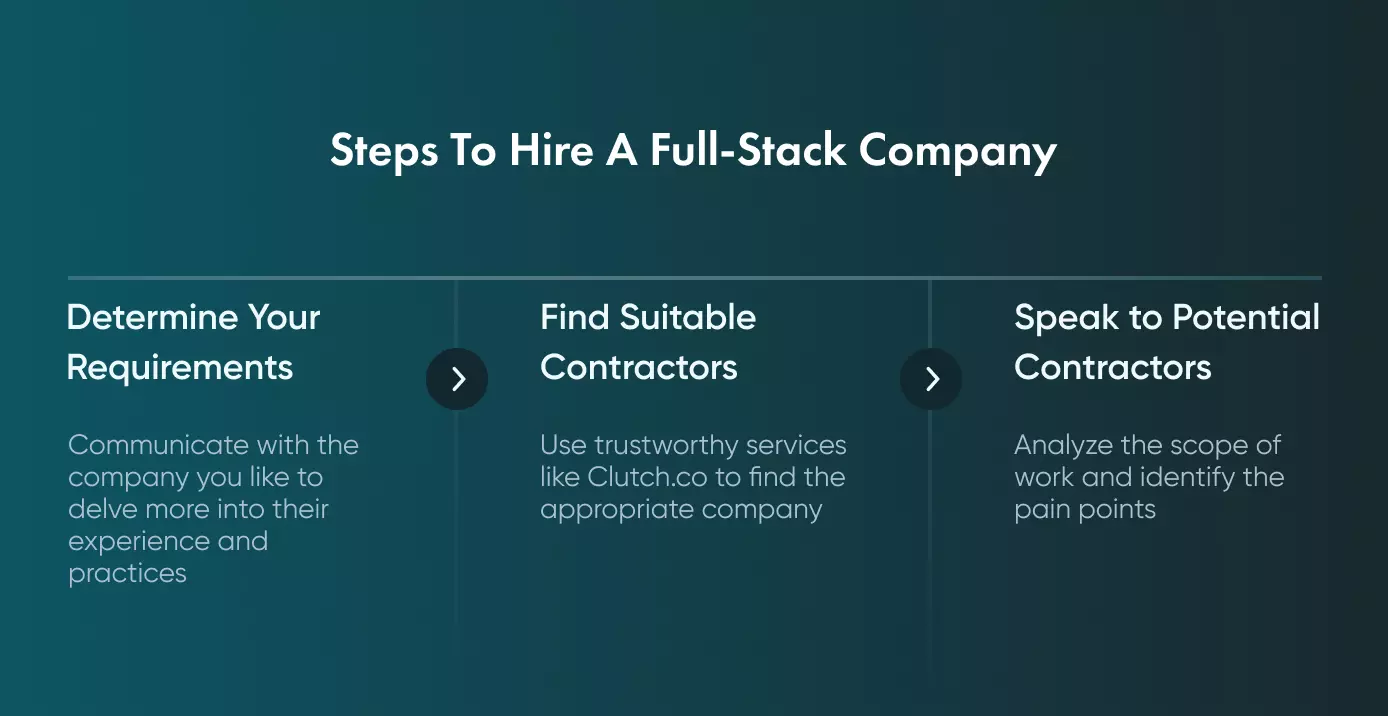
Start by defining what software you need and who it is for: analyse your target audience and what your customers need. This discovery phase produces the scope of work for the full-stack team.
If you do not have this expertise in-house, Go Wombat can run the discovery phase for you.
Also decide what the project is worth to your business and set your budget limit accordingly.
2. Find suitable contractors
Recommendations from people you trust are the best starting point. Without them, check review platforms such as Clutch.co and GoodFirms, or agency profiles (not individual freelancers) on UpWork. They show client feedback, ratings and team size, and you can filter contractors by size, location, rating and expertise to match your project.
Go Wombat has many clients in Europe, and we also work with clients in Australia and the US.
3. Speak to potential contractors
Meet each company on your shortlist to discuss how it would handle your requirements. A direct conversation shows you its technical and project-management skills. A company that wants your project will quickly send you the details you ask for.
At Go Wombat, you talk to people from the first contact, not a chatbot. We can visit you or host you at our offices to discuss the project, and we prepare a development roadmap as quickly as we can.
Need a development team for the project? Drop us a message.
Conclusion
If you need design, backend, frontend and QA from one vendor, a full-stack development company saves you from coordinating several freelancers. Check any contractor carefully before you sign.
Go Wombat is a full-stack development company with 10+ years of experience and 150+ delivered projects across many industries.
Contact us to discuss your project.
Share and subscribe to our blog
Related articles

How Can IoT Software Solutions Boost Your Business in 2026?
How IoT software works, the business models it enables, the opportunities it creates and the integration and security problems to plan for.

Five Proven Strategies To Automate Business Processes
What business process automation (BPA) is, what can and cannot be automated, five strategies for introducing it and the benefits to expect.

How Do You Build an Online Hotel Booking System in 2026?
How to build an online hotel booking system in 2026: in-house versus marketplace, the features guests and staff use, useful APIs, security and cost.

How can we help you ?

