



How to Build a Successful Mobile Application


This guide covers the steps to build a successful mobile application, from validating the idea to improving the app after launch. Before you start mobile app development, answer three questions: what problem the app solves, who it is for, and why existing apps do not already solve it.
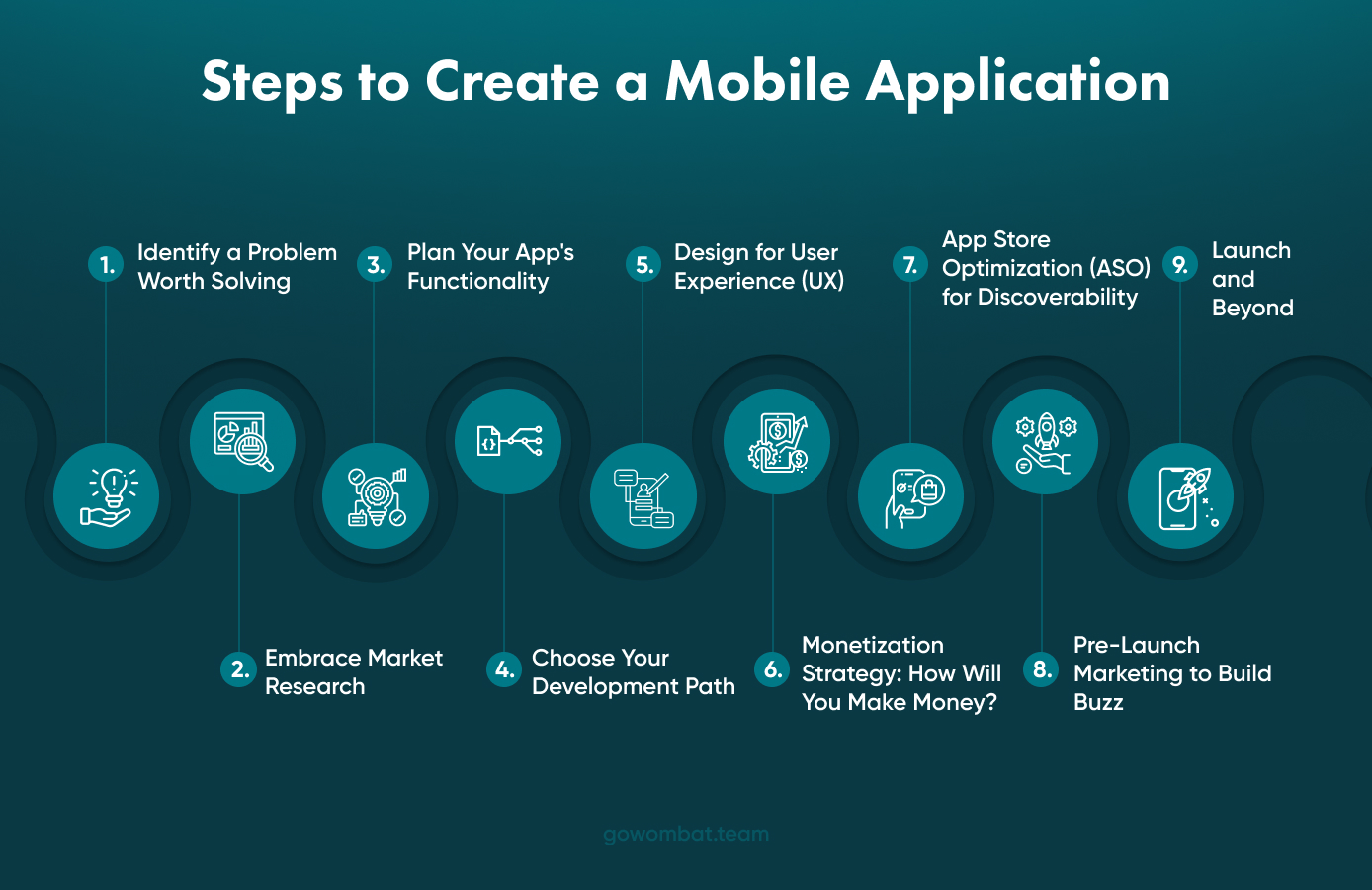
1. Identify a Problem Worth Solving
An app needs a real problem to solve.
- Brainstorm: list problems you run into in daily life or at work, and places where existing apps fall short.
- Research existing solutions: find the apps that already address the problem, note their strengths and weaknesses, and decide what your app will do better.
- Define your audience: decide who will benefit most from the app and learn their needs and pain points. This will guide your product decisions.
A well-defined problem makes it less likely that you build an app nobody needs. Some software development companies offer discovery phase services to research and validate an app idea before development starts.
2. Do Market Research
Market research helps you:
- Validate your idea: check whether there is real demand, using market trends and data on user behaviour.
- Identify competitors: find the established apps in your market and analyse their strengths, weaknesses and user reviews to find gaps you can fill.
- Learn from successful apps: study the popular apps in your niche, note which features users value and decide which of them your app needs.
If you do not have these skills in-house, specialists who offer marketing services can research your competitors and target audience for you.
3. Plan Your App's Functionality
Once the concept is validated, define the app's core functions.
- Prioritise features: start with a minimum viable product (MVP) that has only the features needed to solve your audience's core problem.
- Keep it simple: make the interface easy to use and leave complex functions out of the first release.
- Wireframes and prototypes: sketch the app's layout and user flows. This shows usability problems before any code is written.
With MVP development, the core features reach users first, and you add the rest based on their feedback.
4. Choose Your Development Path
There are three main ways to build an app:
- Do-it-yourself (DIY) app builders: drag-and-drop platforms for creating basic apps without coding. They are cheap but limit customisation and scalability.
- Freelance developers: freelance marketplaces connect you with independent developers. This is flexible, but you need to vet candidates carefully for quality and reliability.
- App development agencies: established app development agencies provide a team of experienced developers and designers. This suits complex apps but usually costs more.
The best approach depends on your technical expertise, budget, and app complexity.
5. Design for User Experience (UX)
Three UX principles to follow:
- Intuitive interface: make navigation and functions clear. Users should understand how to use the app without long tutorials.
- Visual design: a clean, consistent look makes the app easier to use and more trustworthy.
- Responsive design: make sure the app works well on different screen sizes and devices.
6. Choose a Monetisation Strategy
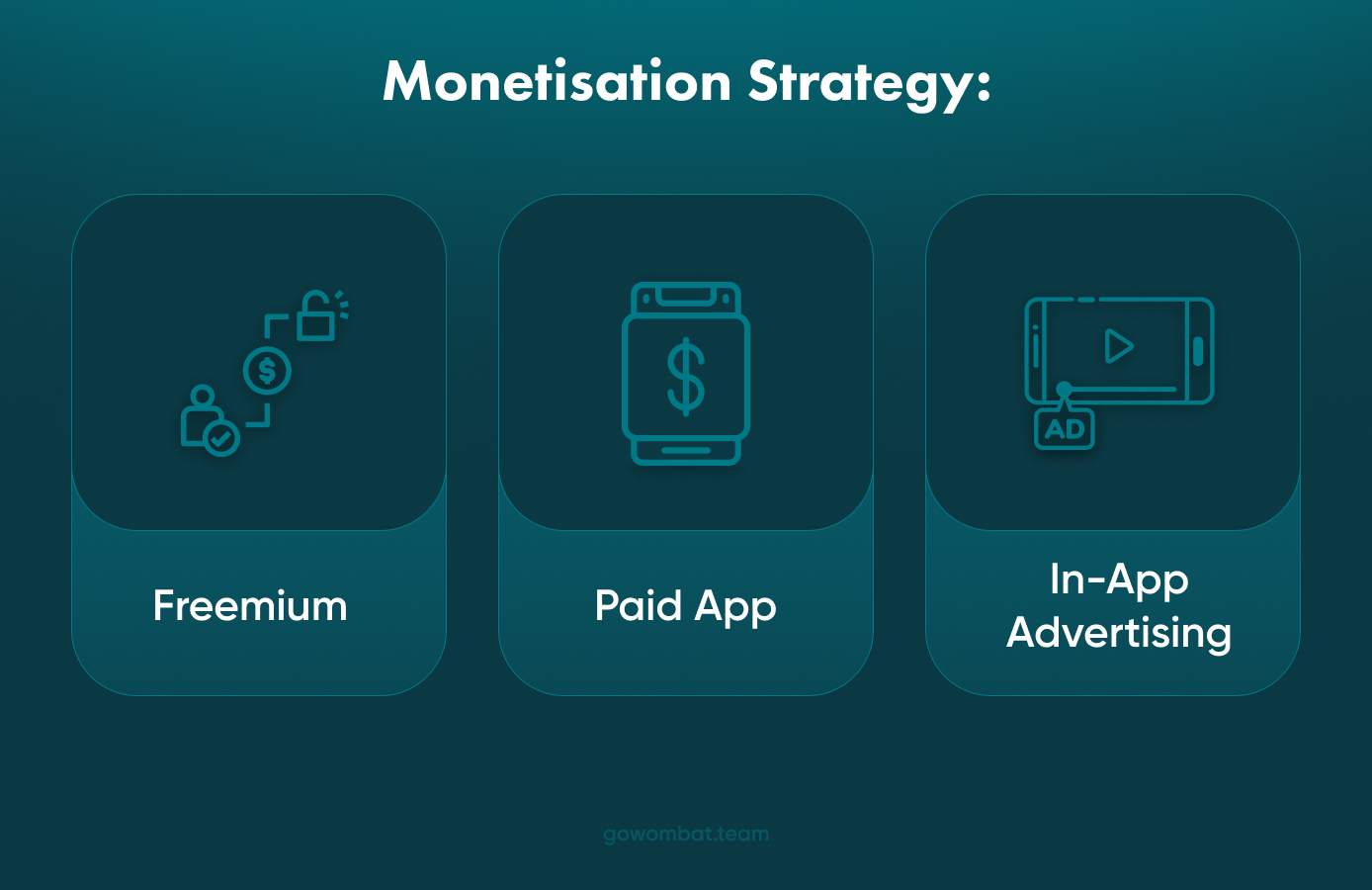
Decide before launch how the app will make money. Common models:
- Freemium: Offer a basic version of your app for free with premium features accessible through in-app purchases or subscriptions.
- Paid App: Charge a one-time fee for downloading your app. This model works well for utility apps that offer significant value upfront.
- In-app advertising: show ads in the app, so users do not pay directly.
Choose a monetization strategy that aligns with your app's value proposition and target audience.
7. App Store Optimization (ASO) for Discoverability
App store optimisation (ASO) means improving your app's listing in stores such as Apple's App Store and Google Play to increase organic downloads. It involves:
- Keyword research: find the terms people use to search for apps like yours and use them in the app title, description and metadata.
- A clear store listing: explain what the app does and why it is better than the alternatives, and add high-quality screenshots and preview videos.
- Reviews and ratings: ask satisfied users to rate and review the app. Good ratings build trust with new users.
8. Pre-Launch Marketing
Start building interest before launch:
- Landing page: collect email addresses from potential users for future campaigns.
- Social media: promote the app on the platforms your audience uses, with previews, behind-the-scenes posts and useful content from your niche.
- Public relations: pitch the app to tech blogs and relevant publications for coverage and reviews.
9. Launch and Beyond: Continuous Improvement
After launch, keep improving the app:
- Analytics and user feedback: track user behaviour to find what needs improving and to measure how well your marketing works.
- Bug fixes and updates: fix bugs promptly and release regular updates based on user feedback.
- User engagement: keep users coming back with push notifications, loyalty programmes and in-app events.
Companies that offer maintenance and support services can maintain and improve the app after launch.
Conclusion: Building a Successful Mobile App Takes Planning
A successful mobile app needs a validated problem, a focused MVP, good UX and steady improvement after launch.
Go Wombat provides mobile app development, discovery phase services, UI/UX design, backend and frontend development, MVP development, cybersecurity consulting, software testing and digital marketing. Contact us to discuss your app.
Share and subscribe to our blog
Related articles

How to Create a Mobile App from a Website
When a website needs a mobile app, how native and cross-platform apps compare, a React Native project of ours, and the steps to convert a website into an app.

Mobile App Security: How to Protect Data and Prevent Cyber Breaches
development marks a significant step for every organisation. By 2026, such applications extend beyond mere digital tools. Access to information systems, operational frameworks, and public perception now flows t…
-blogCardMobile-480x320.webp)
What are Progressive Web Apps? (PWA)
What progressive web apps (PWAs) are, how they compare with native apps, what they cost and when a PWA is the wrong choice.

How can we help you ?

