



Asset-level twins
Combine sensor readings, operating history and maintenance records to understand a critical machine’s condition and prioritise the next inspection.

AI Solutions & Services

Build

Secure & Comply

Design & Discovery
Not sure where to start with AI?
Check your readiness in a few minutes.
BIG 4 · SOLUTIONS-LED

Industry 4.0 & AgTech

AdTech & MarTech

Smart Cities & PropTech

SportsTech & Entertainment
Not sure where to start with AI?
Check your readiness in a few minutes.
 About Go WombatOur company, expertise and leadership
 CareersOpen roles and opportunities at Go Wombat
 Our CultureValues, collaboration and life at Go Wombat
 PartnershipTechnology and delivery partnerships
 Impact & SustainabilityOur social and environmental commitments
 Sustainability ReportOur sustainable development initiatives and annual report
We develop custom digital twin software that connects equipment data to operational models. Help your team investigate downtime, test process changes and plan maintenance. Start with one use case and a pilot you can evaluate.
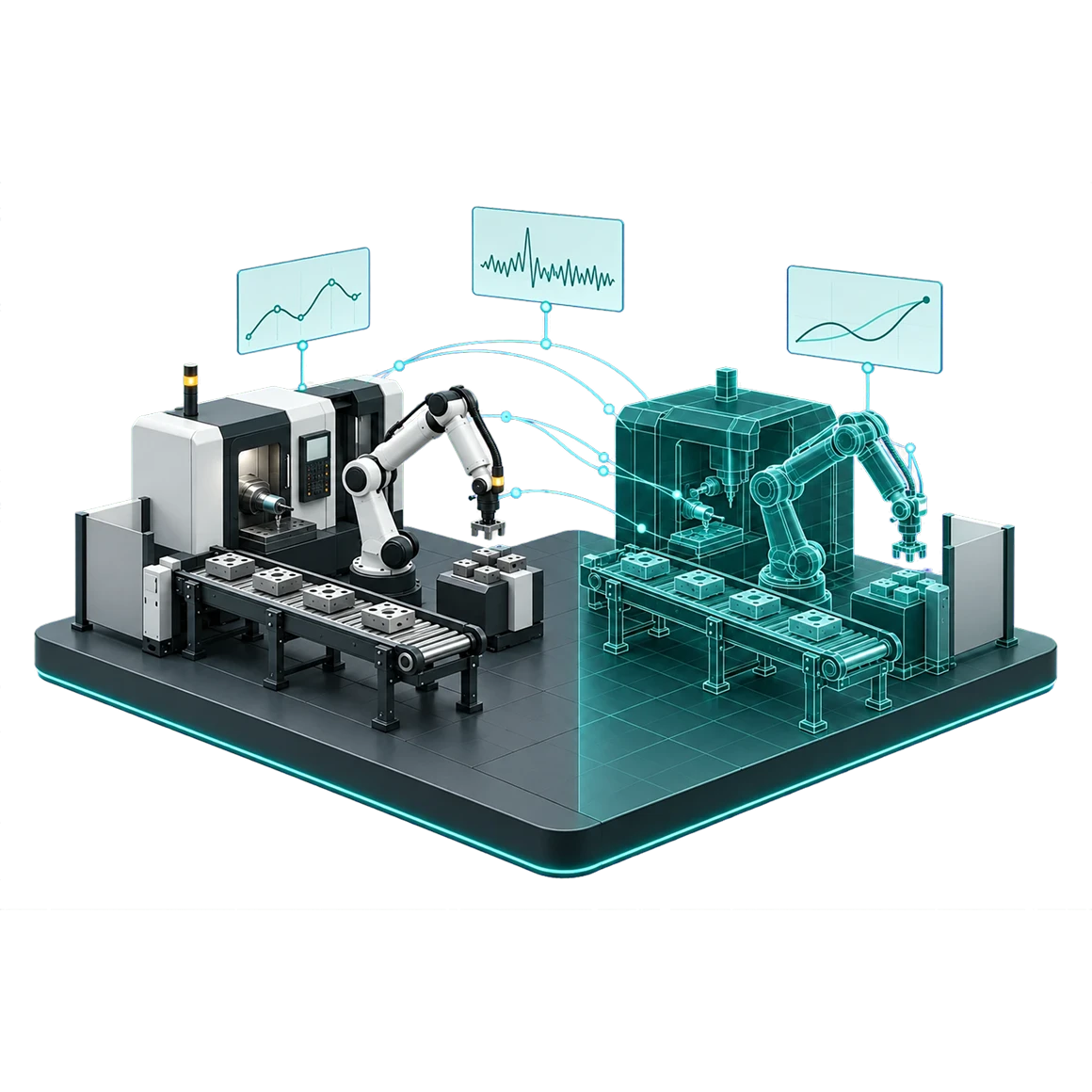
An effective digital twin has a clear purpose. Focus on the asset, process or site where better information can change an operational decision.
Combine sensor readings, operating history and maintenance records to understand a critical machine’s condition and prioritise the next inspection.

Model how machines, buffers and shift patterns interact. Compare changes to sequencing or capacity before scheduling a trial on the live line.

Connect production, asset and utility data across a site. Trace where constraints arise and assess how a change in one area affects the rest.

Bring equipment status, location and service history into one view so teams can coordinate fleet availability and maintenance across job sites.
Combine sensor readings, operating history and maintenance records to understand a critical machine’s condition and prioritise the next inspection.
Model how machines, buffers and shift patterns interact. Compare changes to sequencing or capacity before scheduling a trial on the live line.
Connect production, asset and utility data across a site. Trace where constraints arise and assess how a change in one area affects the rest.
Bring equipment status, location and service history into one view so teams can coordinate fleet availability and maintenance across job sites.
When a line misses its target, the cause may sit in a machine, a buffer or a scheduling rule. We build a connected model together with your engineers, tracing how those dependencies interact through your own operational data. We validate its assumptions with your team and turn what it shows into a change you can test directly on the line.
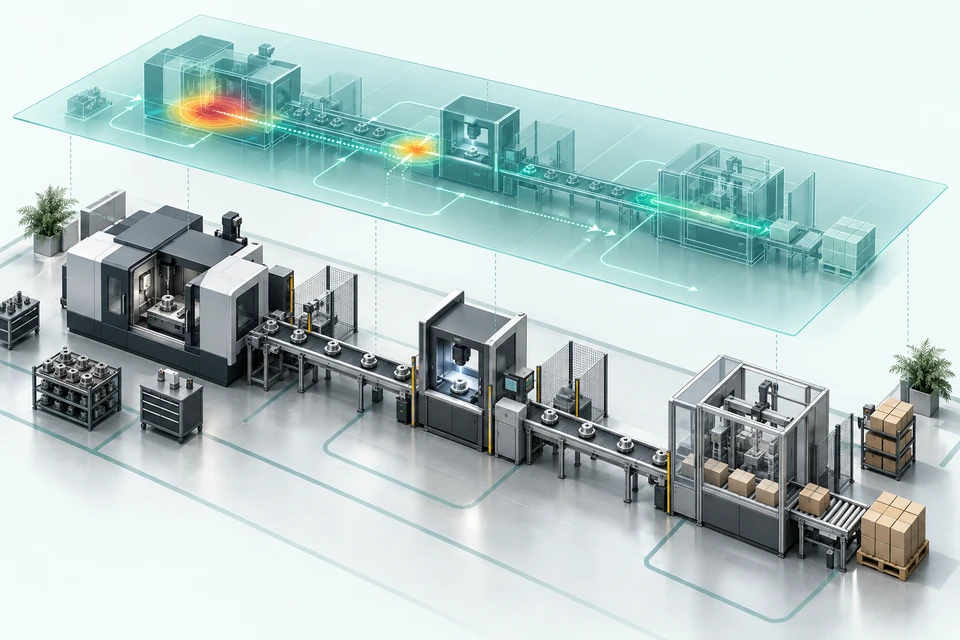
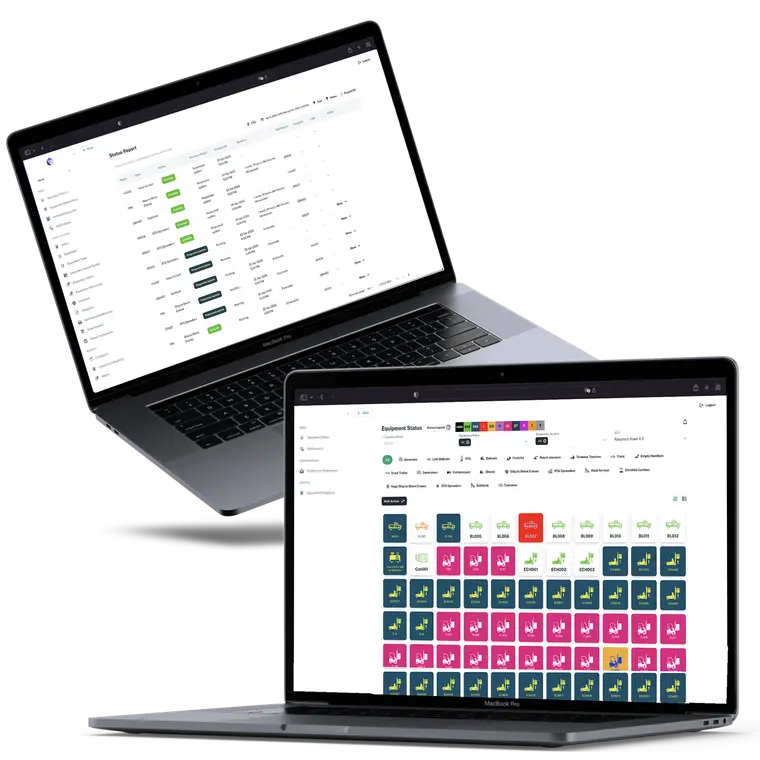
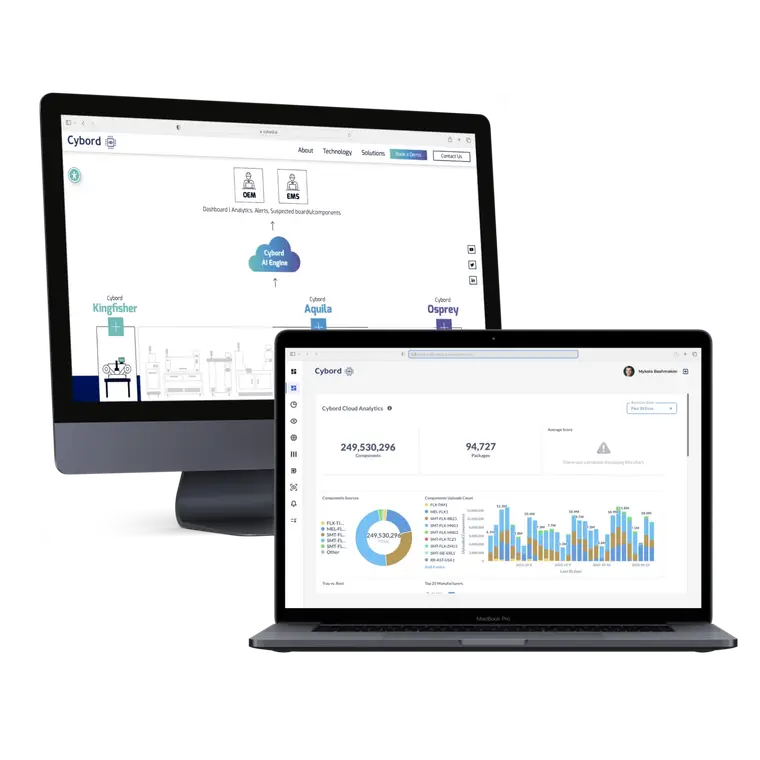
For Opsima, we connected equipment telematics, maintenance logs and third-party systems in a platform for port operations. With Cybord, our work supports AI-based component inspection and traceability across manufacturing sites. These projects demonstrate the integration, data and application engineering that a digital twin depends on.
Logistics and supply chain management
Logistics
May 2024 - Ongoing

Opsima builds software for managing complex physical operations in industries like construction, logistics, and maritime. Its platform brings data from equipment, people and tasks into one system, so teams can monitor, coordinate and optimise work in real time. The platform is designed to support predictive maintenance, safer operations and less downtime. It includes tools for managing large equipment fleets and field activities, and for communication between field teams and the office.
Quality control automation system
Manufacturing, Artificial Intelligence/Machine Learning
February 2021 - Ongoing
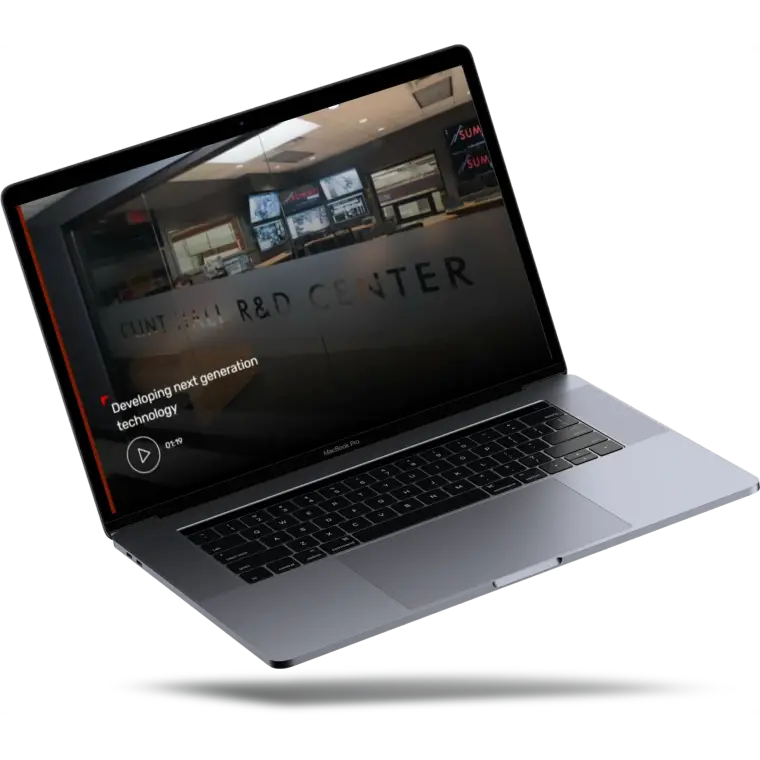
Cybord removes counterfeit and defective components from production lines. Its technology uses AI and big data to identify counterfeit, defective and tampered components, including hardware-based cybersecurity threats. Defects are detected during component placement and before reflow, which makes rework simpler and products more reliable. Integration with manufacturing execution systems quarantines nonconforming materials so they cannot be used.
Oil and gas management software
Oil & Gas
January 2016 - November 2018

The Oil Well SCADA System is monitoring software for integrated electric submersible (ESP) and surface pumping (HPS) systems. It gives engineers real-time data on each well and helps them optimise daily well production and total reservoir recovery. The client, an oilfield services company, provides ESP and HPS application engineering, equipment design, reliability engineering, equipment service and installation, equipment testing and repair, well testing, mobile test trailers, and cable spooling and repair.
Property management platform
Real Estate
March 2023 - August 2023

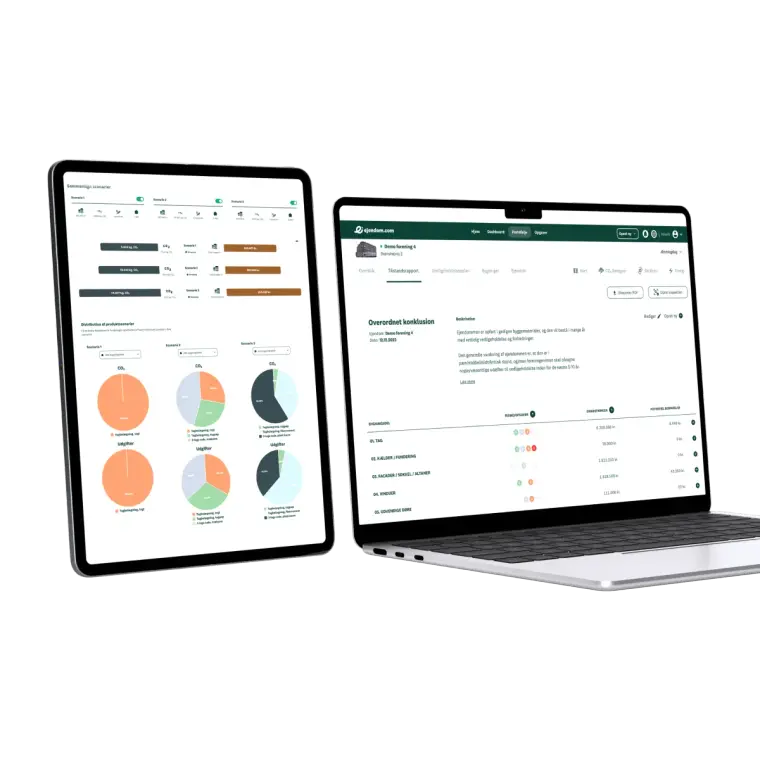
Ejendom is a Danish property management platform that acts as a digital service book for buildings. It helps property managers, housing cooperatives, engineers, and real estate professionals manage inspections, track building conditions, plan maintenance, monitor energy consumption, and calculate CO₂ emissions from one central system. It collects data from public databases automatically and gives AI-assisted recommendations, replacing manual paperwork and spreadsheets.
A useful twin combines a model of your operation with the data needed to keep it relevant. Monitoring shows the current state; simulation helps explore the consequences of a proposed change.

Compare scenarios such as a different buffer size, maintenance window or production sequence. Make assumptions explicit and test model behaviour against observed conditions before using its outputs to guide a decision.

Link assets and their relationships to telemetry and operational records. Set an update frequency that fits the decision, and make missing or stale data visible so users know how current the picture is.
Your operators know the equipment. Your IT team knows the systems. We bring them into the design process so the software reflects both the operational reality and the technical constraints.

We map data sources, asset identifiers and timestamps before building the operational view. Checking gaps and inconsistent records early helps prevent misleading comparisons later.

We design around the people who will use the twin: what they need to investigate, who takes action and where that action is recorded. Interfaces and integrations follow that workflow.

Access permissions, network boundaries and data handling are part of the architecture. We agree integration and deployment choices with your IT and operational teams before connecting systems.

We agree acceptance criteria with your engineers and compare model outputs with observed behaviour. The pilot makes its assumptions and limitations clear, giving you evidence for the next investment decision.
Each phase answers a practical question and produces something your team can review. Scope the work around one use case, then use the findings to plan a wider rollout.

Define the decision, users and success measure. Review data availability and access constraints. The output is an agreed pilot scope with priorities, assumptions and acceptance criteria.

Connect the selected sources and map them to assets. Check quality, timing and interruptions. Your team reviews the data flow and any gaps that affect the model.

Develop the model and interface for the agreed use case. Test against real operating conditions with your engineers and document where the results can support a decision.

Review the pilot against its success criteria with the people using it. Agree what to refine, what to maintain and what is needed before extending to more assets or sites.
Define the decision, users and success measure. Review data availability and access constraints. The output is an agreed pilot scope with priorities, assumptions and acceptance criteria.
Connect the selected sources and map them to assets. Check quality, timing and interruptions. Your team reviews the data flow and any gaps that affect the model.
Develop the model and interface for the agreed use case. Test against real operating conditions with your engineers and document where the results can support a decision.
Review the pilot against its success criteria with the people using it. Agree what to refine, what to maintain and what is needed before extending to more assets or sites.
A twin can bring together several disciplines. We select the integrations, analytics and interfaces around your requirements and build on the systems you already have.

Use condition data and maintenance history to identify patterns worth investigating and help teams prioritise service work.

Bring machine and sensor data into an operational model with consistent asset references, timestamps and update rules.

Connect inspection results and component traceability to the production context so teams can investigate quality issues.

Make complex assets and spaces easier to explore with 3D interfaces where spatial context helps users understand the operation.
Use condition data and maintenance history to identify patterns worth investigating and help teams prioritise service work.
Bring machine and sensor data into an operational model with consistent asset references, timestamps and update rules.
Connect inspection results and component traceability to the production context so teams can investigate quality issues.
Make complex assets and spaces easier to explore with 3D interfaces where spatial context helps users understand the operation.
A dashboard displays information. A digital twin represents an asset or process, including relevant relationships and behaviour, and stays connected to real-world data. It may use a dashboard as its interface and simulation to explore scenarios. We start by identifying the decision you need to support; that determines whether you need a twin, a simpler monitoring application or a combination.
Not necessarily. Existing sensors, equipment controllers, operational databases and IoT platforms may already provide the inputs you need. A detailed 3D interface is useful when spatial context matters, but it is not required for every twin. We assess the available data first and identify any gaps before proposing extra instrumentation or software.
We assess the interfaces, protocols and access rules of your monitoring, production and maintenance systems during discovery. The integration plan covers data ownership, asset mapping, update frequency and network restrictions. Where direct access is limited, we explore approved alternatives with your IT and operational teams and make the constraints part of the scope.
We define acceptance criteria for the intended decision, then compare model outputs with observed conditions and review discrepancies with your engineers. Validation includes the effects of missing data and changes in operating conditions. The model’s assumptions and limits stay explicit, and changes to equipment or processes may require it to be tested again.
The main factors are data readiness, the number of integrations, model complexity and the validation work required. Start with one asset or process and a defined business question. After reviewing your requirements, we can propose a first phase with deliverables, dependencies and an estimate, then use the pilot findings to plan the next investment.
Bring the operational problem you want to solve, the asset or process involved and a brief overview of your current systems. Examples of the decisions your team struggles with are more useful than a finished specification. Share any known constraints or target dates; we can help identify the questions a discovery phase needs to answer.