


Equipment and supply chain software
Software that runs your machinery, gives you end-to-end visibility of the supply chain and keeps your production line running smoothly.

AI Solutions & Services

Build

Secure & Comply

Design & Discovery
Not sure where to start with AI?
Check your readiness in a few minutes.
BIG 4 · SOLUTIONS-LED

Industry 4.0 & AgTech

AdTech & MarTech

Smart Cities & PropTech

SportsTech & Entertainment
Not sure where to start with AI?
Check your readiness in a few minutes.
 About Go WombatOur company, expertise and leadership
 CareersOpen roles and opportunities at Go Wombat
 Our CultureValues, collaboration and life at Go Wombat
 PartnershipTechnology and delivery partnerships
 Impact & SustainabilityOur social and environmental commitments
 Sustainability ReportOur sustainable development initiatives and annual report
Custom manufacturing software that connects production, inventory and the supply chain, reduces production errors and shortens turnaround times.
Discuss your manufacturing project
Factories, plants and assembly lines all run on IT. Our developers build and implement custom software and IT solutions for manufacturing facilities of different segments and sizes.
Software that runs your machinery, gives you end-to-end visibility of the supply chain and keeps your production line running smoothly.

Industrial management apps that help you manage assets and resources and coordinate work across the company.

A facility that runs around the clock needs a network that stays up. We set up your network and build IT solutions that keep your equipment and systems connected.

Software that controls who has access to which systems, how users are verified, and which roles, privileges and permissions they have.

Add logistics features to your manufacturing software to keep track of warehouses, orders and transportation, including a full set of supply chain management features.

AI and machine learning help where a task is repetitive and data-rich, such as visual inspection of components. Our consultants advise where they make sense in your manufacturing software.

Real-time data from your facilities and IoT devices, presented in clear dashboards for business intelligence.

Manufacturing software has to handle materials, personnel and processes together. We build systems that cover all three.
Software that runs your machinery, gives you end-to-end visibility of the supply chain and keeps your production line running smoothly.
Industrial management apps that help you manage assets and resources and coordinate work across the company.
A facility that runs around the clock needs a network that stays up. We set up your network and build IT solutions that keep your equipment and systems connected.
Software that controls who has access to which systems, how users are verified, and which roles, privileges and permissions they have.
Add logistics features to your manufacturing software to keep track of warehouses, orders and transportation, including a full set of supply chain management features.
AI and machine learning help where a task is repetitive and data-rich, such as visual inspection of components. Our consultants advise where they make sense in your manufacturing software.
Real-time data from your facilities and IoT devices, presented in clear dashboards for business intelligence.
Manufacturing software has to handle materials, personnel and processes together. We build systems that cover all three.
A production site has to be efficient and safe. Our manufacturing software development services build tailored solutions that help you meet quotas and support your team.
When a production line needs a live model of itself to plan changes and catch problems early, that work extends into digital twin software.
Manufacturers must follow regulations, guidelines and best practices that vary by location and industry. Our software can help you track whether your factory meets the requirements that apply to it.
A rise in demand can put a strain on your facility and hold back growth if you are not prepared for the volume. We build scalable software from scratch and extend existing platforms.
If your niche has specific requirements for materials, processes or other variables, our business analysts and solutions architects work out the logic and design a tool for your factory.
Here's how we build custom IT solutions for the manufacturing industry.


01
02
Need a project manager for your manufacturing software? We provide software project management, task outsourcing and consulting for manufacturers.
The main types of applications and software platforms used in manufacturing:

CRM solutions help you manage customer interactions and leads and close sales.

A manufacturing execution system (MES) gives you real-time insight into workflows throughout the production life cycle.

SCM software tracks the flow of raw materials, parts and finished products through the supply chain, helping you optimise inventory, reduce lead times and work with suppliers.

Manufacturing ERP software keeps orders and inventory up to date and connects processes across the business.

Manufacturing management software to track time and performance, plan schedules and coordinate several projects at once.

Real-time data about your equipment helps you plan maintenance, prevent bottlenecks and reduce delays caused by repairs.

Asset tracking and storage software shows where equipment and inventory are and helps you use space and resources better.

We build software that uses computer vision and AI to monitor the condition of parts and products in your supply chain.

Testing and measuring software automates measurements, data analysis and reporting for quality control, making results more precise and consistent.
CRM solutions help you manage customer interactions and leads and close sales.
A manufacturing execution system (MES) gives you real-time insight into workflows throughout the production life cycle.
SCM software tracks the flow of raw materials, parts and finished products through the supply chain, helping you optimise inventory, reduce lead times and work with suppliers.
Manufacturing ERP software keeps orders and inventory up to date and connects processes across the business.
Manufacturing management software to track time and performance, plan schedules and coordinate several projects at once.
Real-time data about your equipment helps you plan maintenance, prevent bottlenecks and reduce delays caused by repairs.
Asset tracking and storage software shows where equipment and inventory are and helps you use space and resources better.
We build software that uses computer vision and AI to monitor the condition of parts and products in your supply chain.
Testing and measuring software automates measurements, data analysis and reporting for quality control, making results more precise and consistent.
Software is one of the factors that affect the profitability of a manufacturing facility. Custom manufacturing software can help in the following ways.
Software reduces the time needed to create prototypes and tune the production line, which shortens time to market.
Card 1 of 7: Accelerate time-to-market
Our developers work with many languages, libraries and frameworks and have built software for businesses with very different requirements. They turn your requirements into reliable, easy-to-use industrial software.
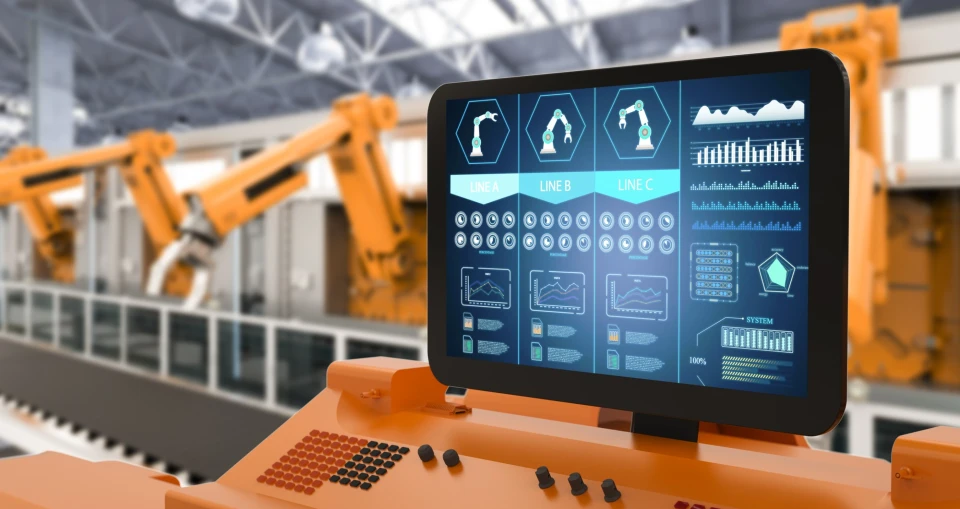
Projects we have delivered for manufacturing companies.
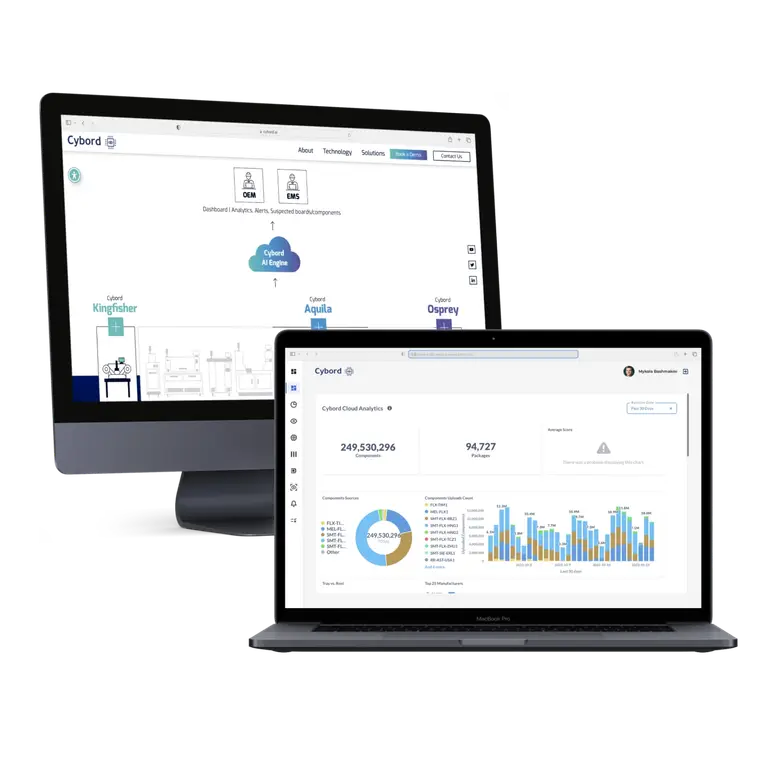
Quality control automation system
Manufacturing, Artificial Intelligence/Machine Learning
February 2021 - Ongoing

Cybord removes counterfeit and defective components from production lines. Its technology uses AI and big data to identify counterfeit, defective and tampered components, including hardware-based cybersecurity threats. Defects are detected during component placement and before reflow, which makes rework simpler and products more reliable. Integration with manufacturing execution systems quarantines nonconforming materials so they cannot be used.
Manufacturing, Agriculture
March 2020 - Ongoing

Demco is a large equipment manufacturer in the US. It produces agricultural equipment, semi-trailers, trailer components and RV towing products. Go Wombat built a CRM system that improved communication between Demco, its dealers and their customers. Demco already used an ERP system for internal business processes, but not for the interaction between dealers and customers.

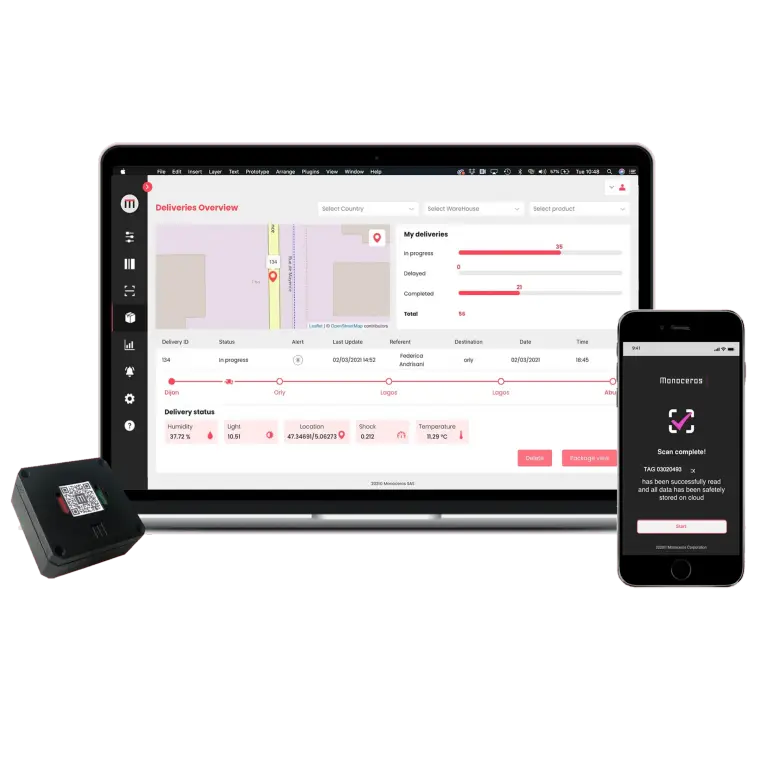
Real time location system
Logistics
December 2020 - May 2021

Monoceros is a logistics platform that shows the status and location of packages in real time. A sensor inside each package transmits data, and the platform displays it as live tracking information, so users can follow each delivery and monitor package conditions.
It is the development of software built around a manufacturer's processes, personnel and equipment, and around the analytics managers and staff need to make decisions about daily and long-term operations.
Software lets manufacturers track and manage operations and equipment and gives managers and staff the data they need to avoid bottlenecks, cut costs and improve production efficiency.
Common types include:
Enterprise resource planning, or ERP software for manufacturing
Customer relationship management (CRM) solutions
Manufacturing execution systems (MES)
Supply chain management software (SCM)
Manufacturing management systems
Quality management software (QMS)
Material requirements planning software (MRP)
Computer vision software
Accounting software
It depends on your requirements. Every manufacturer works differently, so off-the-shelf software may not fit your processes. Custom software from Go Wombat is designed after our business analysts have studied how your business works.
ERP stands for "enterprise resource planning". Manufacturing ERP systems help companies keep track of inventory, orders and shipping and connect processes across the business.
Start by mapping the systems already in use, such as ERP, MES, SCADA and maintenance tools, together with their interfaces and data owners. The scope should identify which connections are needed, how often data must update and which access or production constraints apply. This helps determine what can be integrated and what requires further investigation.
Describe one operational problem, who experiences it and how it is measured today. Bring a list of relevant equipment and software, the data available, and the people who understand the process. Note production windows, access restrictions and known data gaps. These details help define a focused pilot and realistic acceptance criteria.
Choose measures tied to the operational problem, such as time spent preparing reports, inspection rework or the completeness of equipment data. Compare the pilot with a recorded baseline under agreed conditions and include feedback from the people using it. Document limitations and unresolved data issues before deciding whether to extend it to more lines or sites.


