



Understanding CI/CD in Software Development


How CI/CD makes a project faster and more reliable
CI/CD (continuous integration and continuous delivery) is a core practice in software development. It automates the path from a developer's commit to production, so teams can ship smaller changes more often.
This article covers the basics: what CI and CD are, the practices they rely on, and how a CI/CD pipeline works.
What are CI and CD?
Continuous Integration (CI)
Continuous integration is usually the first step towards CI/CD. Developers merge their changes into a shared mainline frequently, and every merge is built and tested automatically. This reduces merge problems, which appear when developers or teams work on versions of the code that drift apart. Without continuous integration, such conflicts often surface only late in development.
Continuous Delivery (CD)
Continuous delivery is a discipline in which software is built so that it can be released to production at any time, as Martin Fowler defines it. Every change goes through an automated pipeline that builds, tests and prepares it for release, and the release process, often including infrastructure provisioning, is automated too.
Continuous deployment goes one step further: every change that passes the pipeline is released to production automatically. It extends continuous delivery, so continuous delivery has to be in place first.
What's the difference between CI and CD?
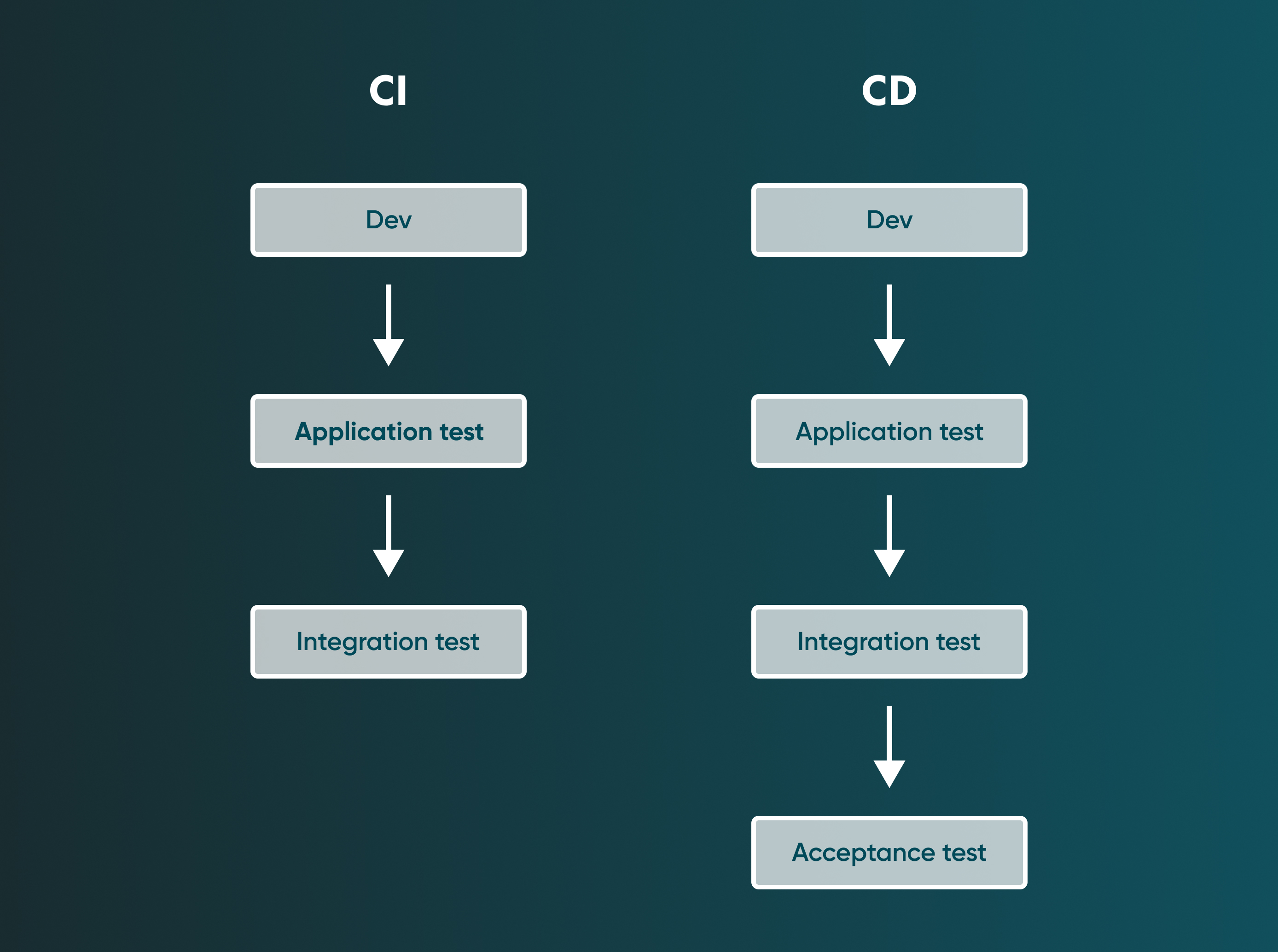
In short, CI keeps code integrated and tested while developers work on it. CD keeps the result releasable at any time and automates the release. Testing is part of both.
Many companies start with CI and then move on to automating delivery and deployment, for example for cloud applications.
CI/CD fundamentals
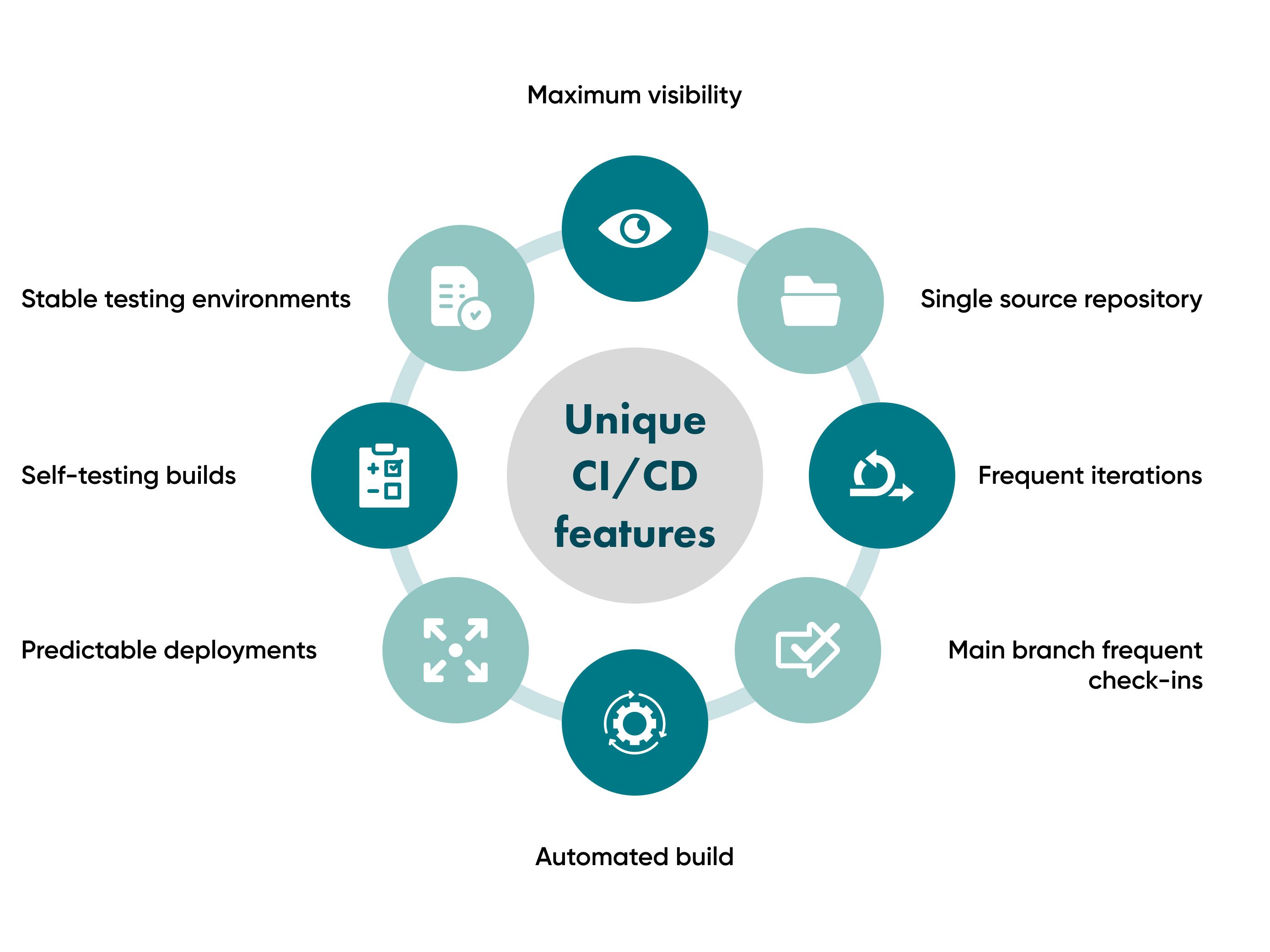
Single source repository
Keep everything in one version-controlled repository rather than scattered across several places. Everyone who works on the build then uses exactly the same version.
The repository itself is under version control and holds everything needed to build and run the product: source code, database schema, libraries, properties files, test scripts and build scripts.
Frequent iterations
Frequent commits leave fewer places for conflicts to hide. Make small, frequent changes rather than large ones, so that any change is easy to roll back if something goes wrong.
Main branch frequent check-ins
Everyone should push commits to the main (trunk) branch at least daily. Short-lived branches are fine; long-lived ones are not, because unintegrated code builds up conflicts. Merge small pieces of work one at a time rather than several changes at once.
Automated build
A single command should build the whole system, including web server files, database scripts and application software. The CI process then builds and packages the code into a working application automatically.
Maximum visibility
Full visibility is hard to achieve and may require changes to how the team works, as well as extra tools.
CI/CD helps, because every team member can follow all changes through version control.
Stable testing environments
Tests should run in a stable environment that mirrors production. You cannot test changes safely on the live product, so the test environment needs to be a close copy of it.
Self-testing builds
A failing test must fail the build. Run static analysis before the build to check code quality and security, and only let code through if it passes.
Predictable deployments
Deployments should be routine and low-risk enough to do at any time. That requires rigorous, reliable testing and verification in the pipeline. Frequent deployments with small changes are also less risky and easier to roll back.
What is the CI/CD pipeline?
A CI/CD pipeline is the sequence of steps that turns a code change into a new release of the software. It connects the tools, people and processes involved in delivery.
A pipeline can be run manually, but it should be automated.
A typical pipeline has four stages: source, build, test and deploy.
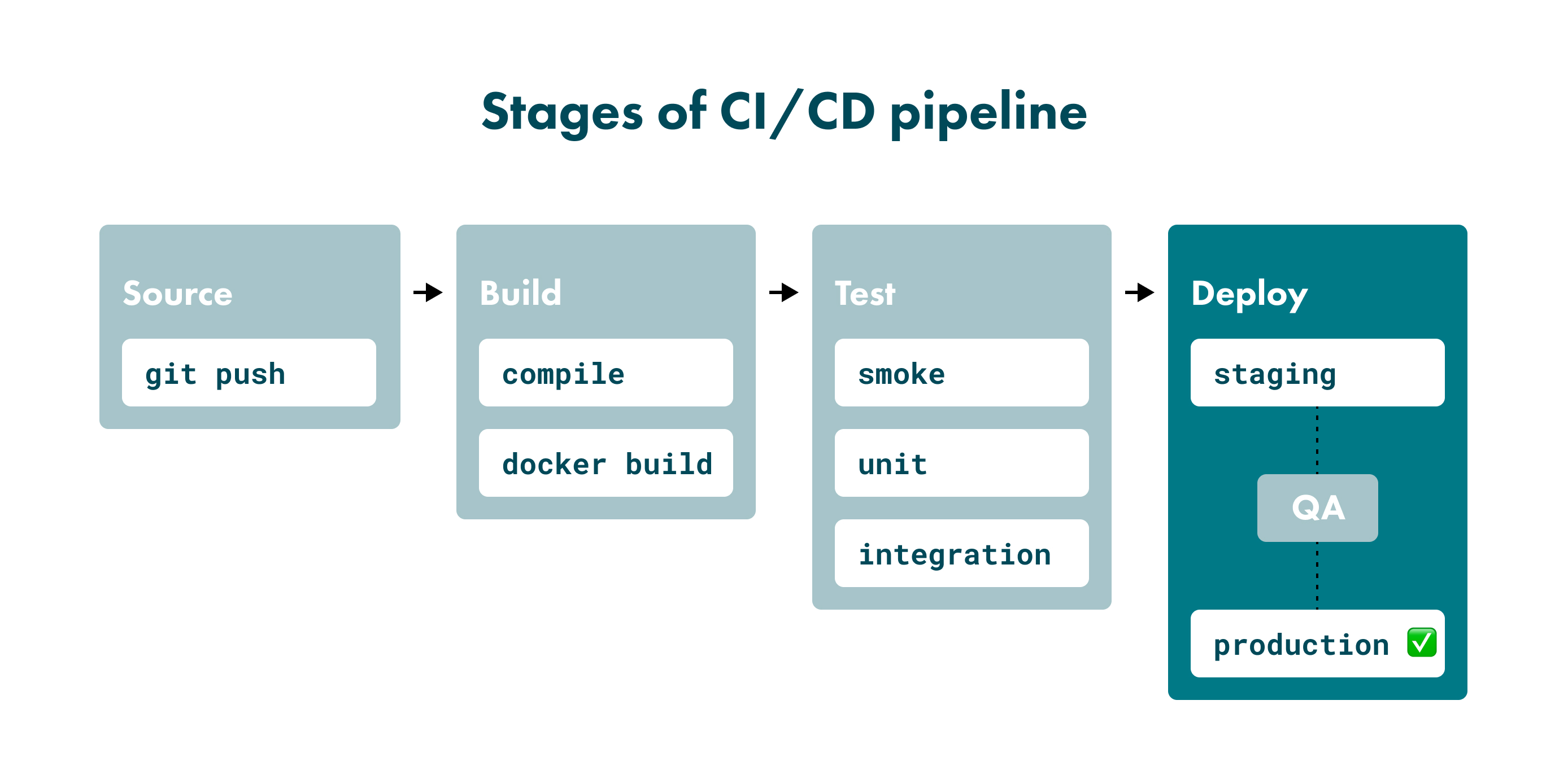
Source
The pipeline starts from the source code repository. Usually a change in the repository, such as a push or a merged pull request, triggers it: the repository sends a webhook notification to the CI/CD tool, which starts the pipeline. Other common triggers are a manual start, a schedule and the result of another pipeline.
Build
The build stage turns the source code and its dependencies into something that can run, and compiled languages are compiled here. Python, JavaScript and Ruby code does not need compiling, but the build stage is still useful: it installs dependencies, bundles or transpiles JavaScript and builds Docker images. A failed build points to a basic problem in the project and should be fixed immediately.
Test
The test stage runs automated tests that check the code and the behaviour of the application. Automating it makes quality assurance part of every change.
Testing stops recurring issues from reaching customers. In many pipelines the code is merged at the end of this stage, once all checks have passed.
Deploy
Deployment is the last stage. It runs only if testing and merging finished without conflicts or errors, and it puts the code on servers, for example in Azure or AWS, where it runs for users.
To discuss CI/CD for your next project, book a confidential chat with Go Wombat.
Why is CI/CD important?
CI/CD standardises how a team builds, tests and releases software. Without it, people run tests in a different order or skip minor steps by accident.
These mistakes happen because everyone follows their own process. Automating merging, testing, delivery and deployment gives the whole team the same one.
What is the role of CI/CD in Software development?
Software projects go through development, testing, deployment and monitoring stages.
CI/CD is both an agile and a DevOps practice, and CI/CD tools are part of the wider DevOps and DevSecOps toolchain. To run a pipeline well, teams need tools that remove the friction that slows down integration and delivery.
What are the benefits of CI/CD?
Automation takes repetitive checks off developers' hands and reduces human error, so the team can be more confident in each release and spend more time on the product itself.
Other benefits of CI/CD include measurable progress, better code quality, faster bug fixing and smoother releases.
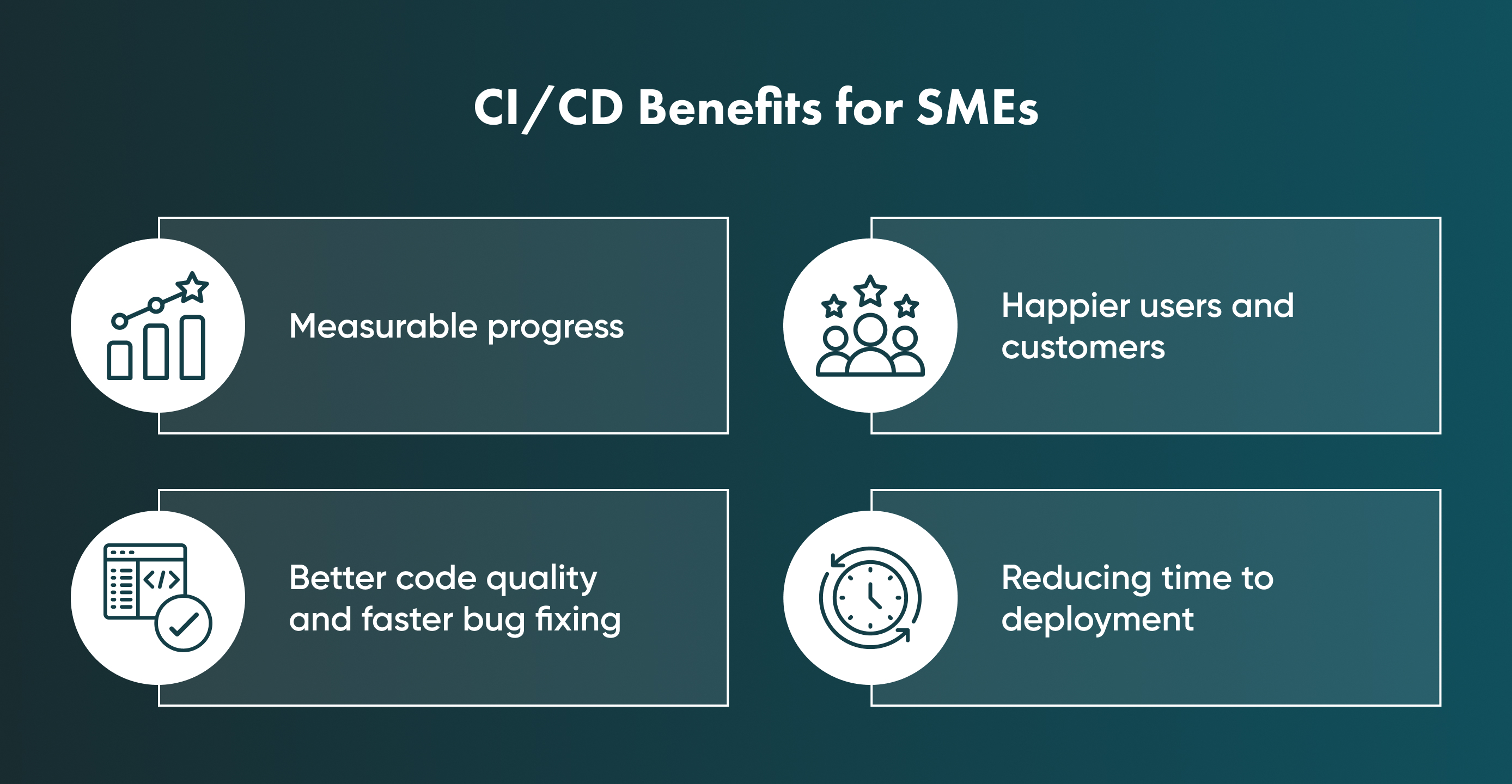
Measurable progress
CI/CD tools report metrics such as build and test results, which make failures measurable and progress visible. They also show the weak points of the pipeline early, so you can fix the process before it costs much time.
Better code quality and faster bug fixing
Bugs found early are cheaper to fix. A bug that goes unnoticed can end up with important functionality built on top of it.
Fixing it then takes much more effort, because a large part of the code depends on it. A CI/CD process with test automation catches such bugs early and keeps code quality high from the start.
Happier users and customers
Fewer bugs reach production, so users get a better experience. New features also reach the market faster.
Reducing time to deployment
Automating the pipeline shortens the time from commit to release across the whole development lifecycle.
Conclusion
CI/CD hands repetitive build, test and release work to software. The team deploys more often, spends less time on each deployment and can focus on the work that automation cannot replace.
Contact us to tell us about your project.
Share and subscribe to our blog
Related articles

What Role Does Big Data Play in Software Development?
What Big Data is, its main types and analytics methods, and how it helps software teams decide what to build, test features and manage risk.

GitOps Vs. DevOps - What are the key Differences and Challenges?
GitOps runs deployments from a Git repository; DevOps is the broader practice it belongs to. What each one is, their benefits and challenges, and how they differ.
Why Is the Digital Twin of an Oil Refinery the Most Complex AI System You Will Ever Build?
Why a digital twin of an oil refinery is so hard to build: seven interdependent layers from physics simulation to control system integration, results from Cosmo Oil's refinery digital twin, a look at Honeywell's planned digital-twin work at the Dangote refinery, team and data prerequisites, and why projects fail.

How can we help you ?

