



How Smart Stadiums Are Evolving into Digital Ecosystems

Smart stadiums connect AI, IoT and custom software into one digital ecosystem. In 2026, what sets these venues apart is how well they use data to run operations and serve fans. Drawing on Go Wombat’s background in AI and Python, this article looks at where digital technology creates value in today’s stadiums.
Why Smart Stadiums Matter Now
Fans expect quick entry, personalised services and a constant connection. Operators and event organisers, meanwhile, deal with rising costs, tighter security, queues and concession sales, and need to keep the venue earning on non-event days. Digital systems are how they manage all of this at once.
PwC's research on digital stadiums points to real-time insights and connected fan experiences as the direction of travel. Custom Market Insights forecasts the global smart stadium market to reach about $38.3 billion by 2033, driven by investment in AI tools, connectivity and data systems. When sports organisations connect ticketing, venue operations and fan data in one system, they can cut waste and tailor the matchday experience to each fan.
Smart Stadium Technologies Reshaping Infrastructure
Smart sports venues run on layered, interconnected infrastructure rather than isolated tools, with each layer playing a specific role.
What Core Technologies Define Smart Sports Venues in 2026?
At the base, high-capacity connectivity is combined with flexible software platforms, which make analytics, immersive fan experiences and real-time decisions possible across the venue:
- 5G and high-speed Wi-Fi 6/6E/7 networks capable of supporting tens of thousands of devices simultaneously
- Fibre-to-the-edge architectures that deliver both power and data deep into the venue
- IoT sensors that monitor temperature, air quality, lighting, and foot traffic
- Digital signage and AR-enabled navigation integrated with mobile applications
- Edge computing nodes that handle data locally to reduce latency and energy usage
SoFi Stadium in Los Angeles, for example, runs thousands of access points and large digital displays, so live statistics, replays, targeted content and wayfinding are available anywhere in the venue.
How are AI and Digital Twins Transforming Operations?
Artificial intelligence and digital twins are now part of how many stadiums run. These systems combine live sensor feeds with historical data and run predictive models to show how the stadium would behave under different scenarios.
With a digital twin, operators can test security setups, staffing, energy use and concession locations virtually before changing anything on site. Rehearsing entry flows and security layouts this way helps shorten queues without adding space for security checks.
At the 2022 FIFA World Cup in Qatar, organisers used digital twins of the stadiums to manage crowd flow, tune the cooling systems and plan predictive maintenance across several venues.
Safety, Security, and Crowd Management at Scale
Safety is one of the main concerns of stadium management, because tens of thousands of people arrive and leave within short periods. Digital systems help venues balance security with a smooth fan experience.
What Innovations Improve Fan Safety and Entry Flow?
Newer security methods aim to keep people moving while still detecting threats. Instead of stopping every fan at a staffed checkpoint, smart systems analyse movement and behaviour.
AI-powered screening uses machine-learning-based image analysis to detect threats while fans walk through the gates without stopping. Biometric gates based on voluntary facial recognition let registered visitors in quickly, especially in staff and VIP areas.
Some large US stadiums build live crowd heatmaps from camera streams and mobile data to spot congestion early and redirect fans through digital signage and in-app notifications.
These methods usually combine:
- Continuous video and sensor monitoring of crowd density;
- Real-time congestion alerts for the operations teams;
- Dynamic rerouting through digital signage and mobile apps;
- Data-driven adjustment of staffing and security resources.
What Risks and Gaps Remain in Smart Security?
Digital security brings its own problems. Biometric tech, for example, stirs up plenty of privacy worries - especially with strict rules like GDPR in play. AI models need careful training, or they become biased and flag innocent people. And every connected device is another way in for attackers.
In response, many operators are introducing AI guidelines, collecting less data and strengthening contingency plans.
Engaging Fans Through AI, AR, and Immersive Content
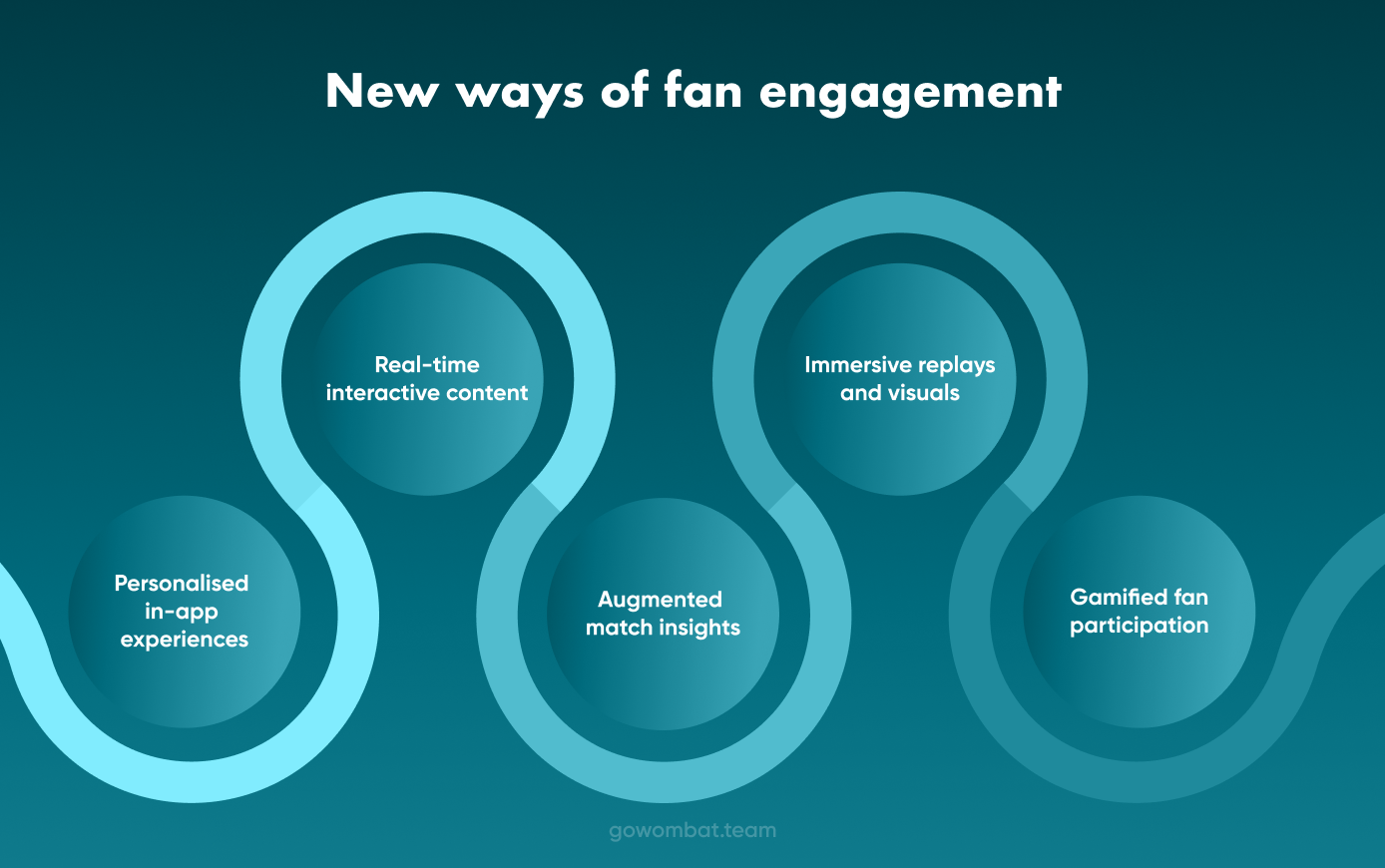
Fan engagement is now a main way for venues to stand out. Stadium apps let fans order food, watch replays and find their way from their seats.
How is AI Enhancing Fan Engagement?
AI-powered stadium apps personalise what each fan sees based on location, preferences and what is happening in the game. They handle food and merchandise orders, recommend content and adjust offers as the event progresses.
At the LA Clippers’ Intuit Dome, opened in 2024, fans can link their face to the team app and use it to enter the arena and pay at concessions without pulling out a phone or card (Stadium Tech Report).
AI-driven fan engagement systems typically combine:
- Real-time location and context awareness inside the venue;
- Behavioural analysis based on historical data and real-time stats;
- Personalised recommendations for food, merchandise, or content;
- Dynamic promotions triggered by in-game events.
What Role do AR and VR Play Inside Stadiums?
Augmented and virtual reality add layers of information and entertainment to the in-stadium experience. With AR, fans see player statistics, replays or navigation cues on their phones.
Some large venues also offer VR stadium tours and mixed-reality experiences to sell season tickets, host virtual concerts and engage fans on non-event days.
Common uses:
- Augmented reality overlays with live player statistics and replays;
- Virtual stadium tours for marketing and remote engagement;
- Mixed-reality concerts and brand activations;
- AR-assisted navigation and wayfinding during events.
Sphere in Las Vegas takes a different route to immersion: instead of AR or VR, it surrounds the audience with a giant LED dome. It mainly hosts concerts and immersive films; its first live sporting event was UFC 306 in September 2024.
Revenue Models, Frictionless Commerce, and ROI
Digital stadium technology also affects the bottom line: it cuts wasted resources and opens new revenue streams.
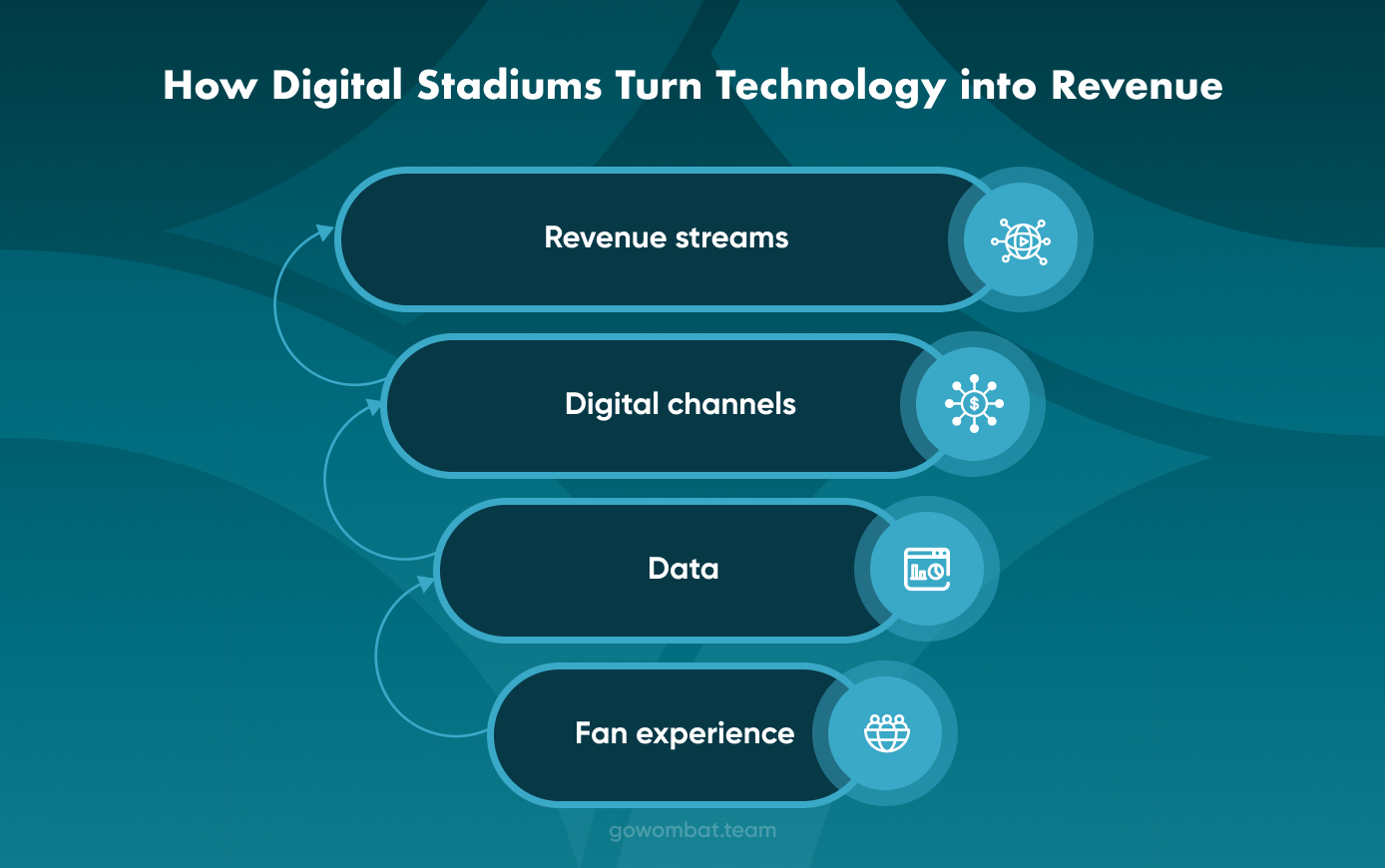
How are New Digital Revenue Models Emerging beyond Matchday Spending?
Digital systems let teams and venues earn beyond matchday ticket and food sales, by using data and reaching fans all year round.
Some venues sell premium in-app perks, offer exclusive content and set up personalised sponsorship deals. Some collect anonymised data on how fans move and spend time, and share those insights with brands so they can measure foot traffic and ad performance in real time. Stadiums also act as digital media hubs, selling targeted ads across mobile apps, web, video boards and other connected screens.
How do Stadiums Generate ROI from Digital Investments?
Frictionless commerce is one source of return. Cashierless stores and mobile ordering keep queues short, so fewer fans give up on buying. Digital twins help stadiums plan staffing, energy use and concession layouts.
Digital venues can also switch more easily between sport, concerts, e-sports and brand events throughout the year.
The main ROI drivers are:
- Frictionless retail and mobile ordering that keep lines moving and sales up;
- Predictive analytics for staffing and energy use;
- Using the venue for more than live games;
- Smarter, data-backed sponsorships and ads.
What Role Does Blockchain Play in Ticketing?
Blockchain-based ticketing reduces fraud, scalping and unauthorised resales. Tokenised tickets can be traced through the resale market, and clubs can tie them to loyalty rewards or special experiences.
Tokens can also work as digital collectables that unlock VIP perks, exclusive merchandise or behind-the-scenes access.
Practical Checklist for Smart Stadium Leaders
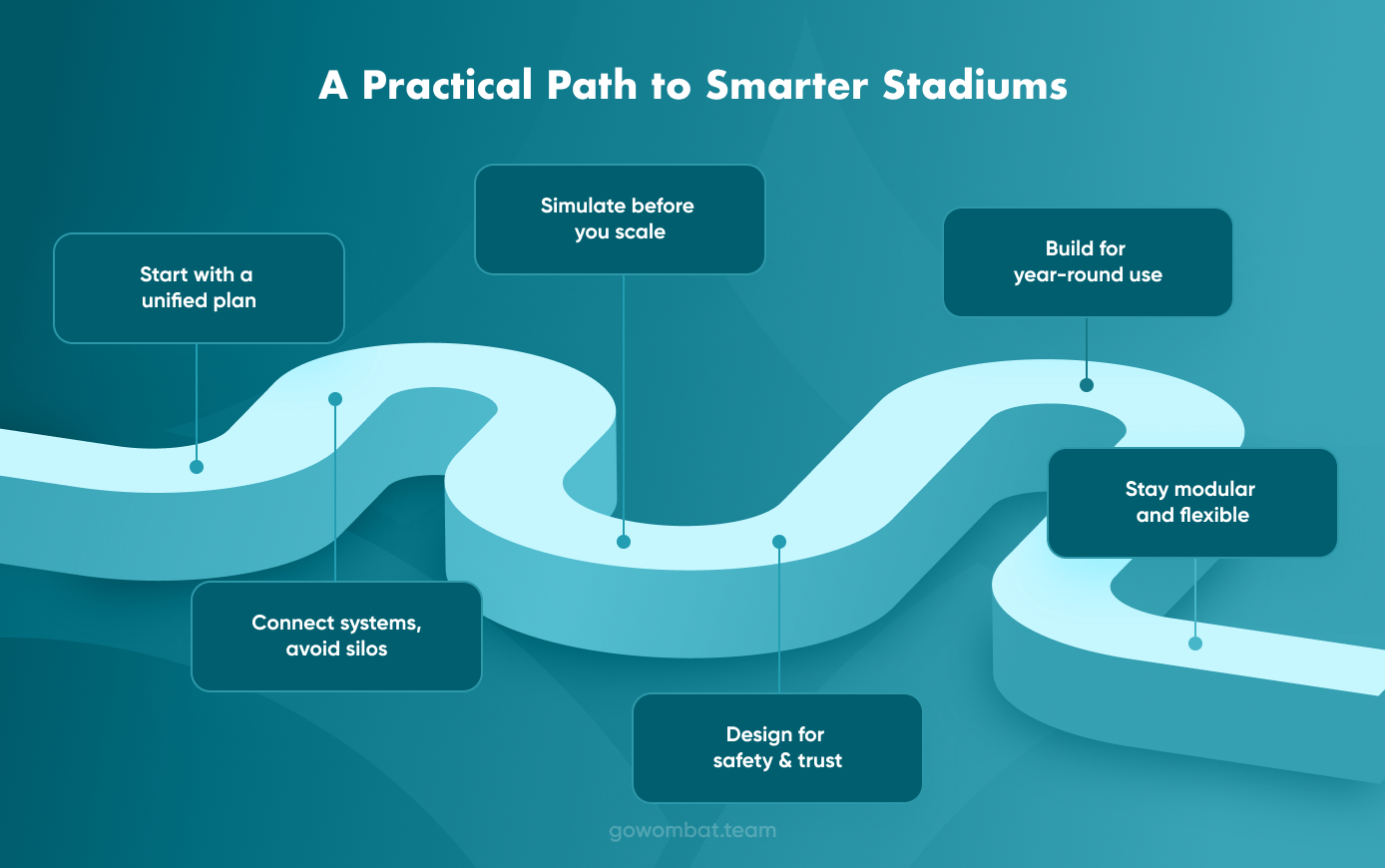
Start with a plan rather than scattered pilot projects:
- Audit your current infrastructure: find the gaps and the systems that don’t exchange data.
- Pilot a digital twin to test crowd, security and energy scenarios before they happen.
- Use edge computing to keep your safety systems fast and responsive.
- Stick to privacy, security, and AI governance rules at every step.
- Design infrastructure for more than game days, including concerts and festivals.
- Choose modular, software-driven platforms to avoid lock-in to one vendor’s stack.
Conclusion and Key Takeaways
AI, IoT and digital twins are turning stadiums into connected venues where entry, security, payments and maintenance run on shared data.
Custom software and AI integration are what connect these systems. If you are planning a new digital layer for a sports venue, or want to turn an AI idea into a working prototype, talk to Go Wombat experts.
FAQs
What is a smart digital stadium?
A smart stadium combines AI, IoT, connected physical assets and software platforms to improve efficiency, safety and the fan experience.
How do digital twins help stadium operators?
A digital twin recreates the stadium from current data, so operators can foresee bottlenecks, plan resources and test scenarios without risk.
Why is 5G essential for contemporary stadiums?
5G enables low-latency services such as AR experiences, frictionless commerce and real-time analytics at scale.
In what ways is fan data handled with care in smart stadiums?
It is through methods such as consent-based collection, anonymisation, and adherence to regulations like GDPR.
How is the success of smart stadium projects measured?
By better throughput, higher spending per fan, lower energy costs and more use of the venue beyond match days.
Share and subscribe to our blog
Related articles

Why Predictive Analytics Is the Key to Engagement and Loyalty
How sports leagues and entertainment companies use predictive analytics for personalisation, churn prediction and loyalty, with examples from the NBA, Formula 1 and LaLiga.
-blogCardMobile-480x320.webp)
Agent as a Backend: Replacing REST Controllers With AI Agents That Reason
Agent as a Backend (AaaB) replaces or augments hardcoded REST controllers with AI agents that reason about each request. Components, boundaries, security and costs.

How to Build Custom Real Estate Software Solution
The steps to build custom real estate software: scoping, planning, choosing a vendor, core features, UX, security, integrations, testing and training.

How Can MCP Agents Run a Smart City Grid in Real Time?
How Model Context Protocol agents can coordinate a smart city's energy grid in real time — reading from EMS, DERMS and market feeds, while hard real-time control stays on physical controllers.

How can we help you?

