



Digital Transformation in the Oil and Gas Industry


Since Drake Well in Pennsylvania, the first commercial oil well in the US, was drilled in 1859, the oil and gas industry has relied on new practices and technologies. Digital technology is the latest of them.
Digital transformation in the oil and gas industry means using digital technologies and data analytics to run operations more efficiently and at lower cost.
Why is digital transformation in the oil and gas industry significant?
Fluctuating demand has pushed companies to adopt technology that helps them explore and develop oil fields more efficiently.
Even conservative companies now test and adopt new technologies regularly, and they look at other industries for ways to make core processes and decision-making more efficient.
To get results, companies need to cover the whole chain: exploration, extraction, transportation, storage, refining and marketing.
Oil and gas software is at the heart of all these processes.
Oil prices are volatile: in April 2020, during the COVID-19 crisis, the price of WTI crude briefly fell to about minus $37 a barrel. Volatility like this pushes companies to cut costs, and technologies such as the internet of things and artificial intelligence help by increasing efficiency and reducing pollution.
Data comes first: How oil and gas companies should start processing data
Oil and gas companies receive large volumes of data from sensors and equipment spread over wide areas. The goal is to collect operational data from each point, analyse it in real time and use the results to improve performance.
That involves three tasks: automating data collection, integrating data from multiple sources and analysing it.
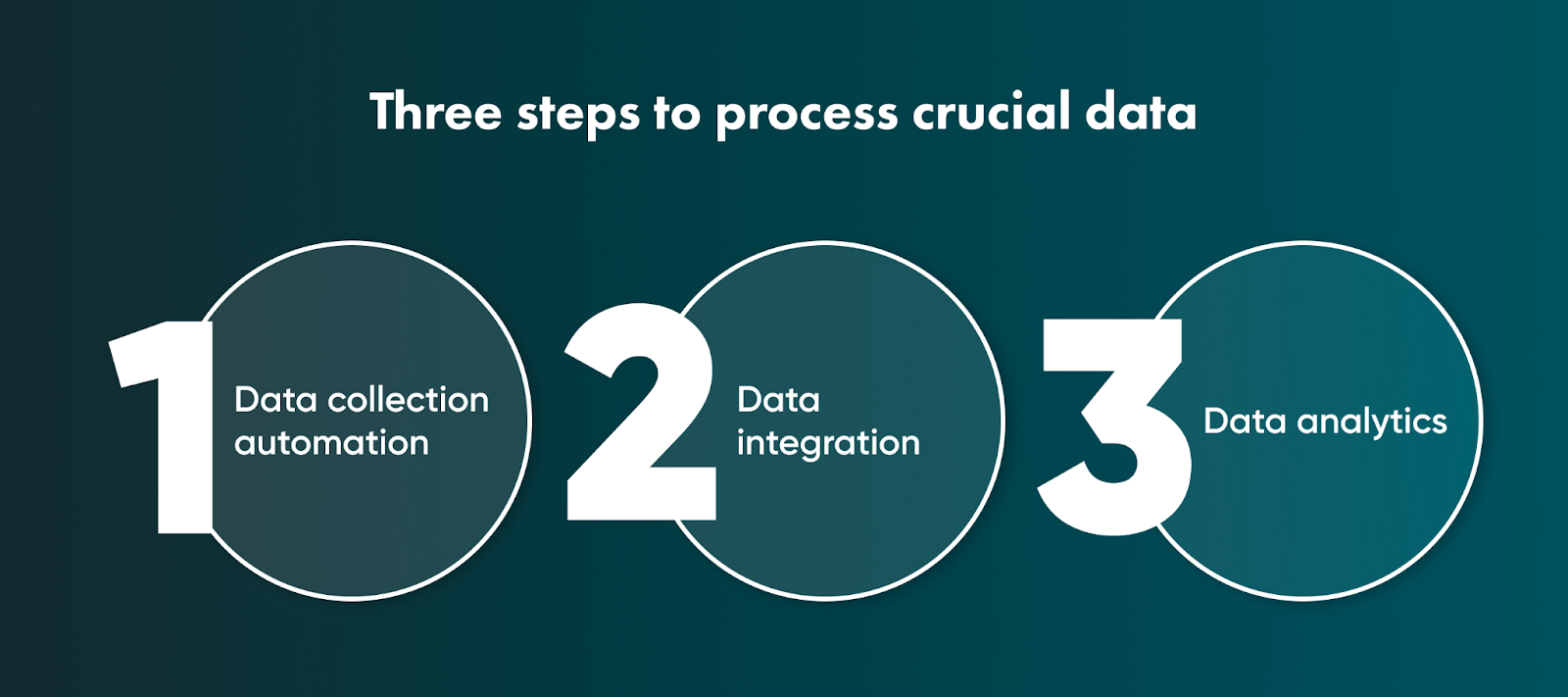
1. Automate data collection
Modern sensors let companies analyse operational data in real time. An offshore platform generates a large volume of data every day, and much of it is only useful for a short time.
Offshore sites usually send data over satellite links with limited bandwidth, so moving everything to a central repository is slow.
The answer is to process data at the edge, on the platform itself. Specialists can then decide which data to send to the central repository and which to analyse on the spot.
2. Data integration
Integration is harder, because the data comes from many different, distributed sources: embedded sensors, video cameras and third-party systems.
Many companies use data virtualisation, which presents all sources as one logical database regardless of data format and location.
Integration happens on the fly, when a user requests data from several sources, so no central physical storage is needed.
Users get the data in the format they need at the moment they request it.
Virtualisation also replaces much of the manual data gathering and integration that many oil and gas companies still rely on.
3. Data analysis
Analysis turns raw data into information that companies can use to reorganise production processes.
Because datasets keep growing, this requires big data tools that scale.
Companies also need specialists who know how to use these tools.
To discuss digitalising your business, contact us.
How the oil and gas industry benefits from new technologies
Digital transformation means bringing digital technology into every area of the business, which changes how the company operates and serves its clients.
For oil and gas companies, the main benefits are these.
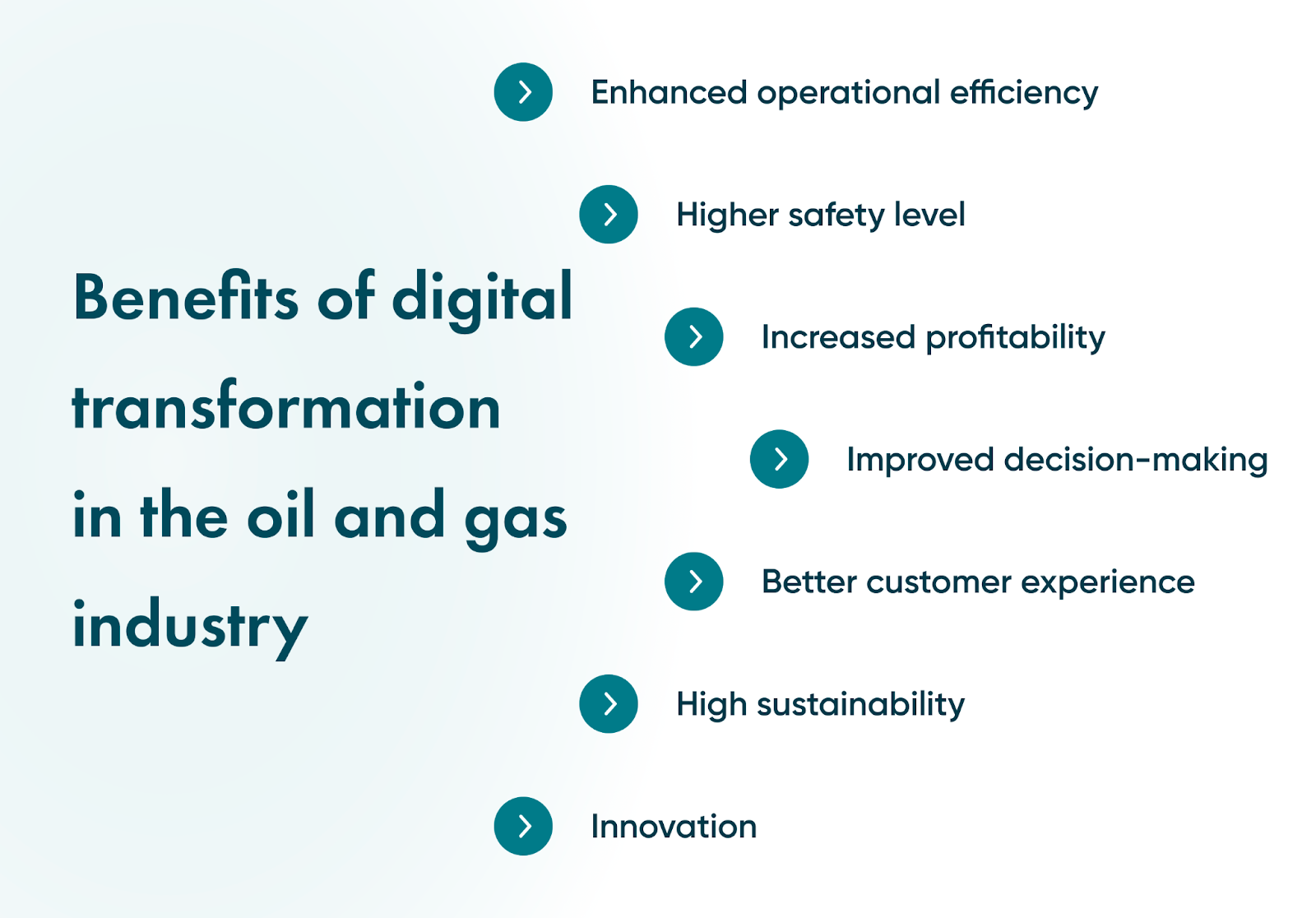
Enhanced operational efficiency
Automating operational processes reduces manual work and raises productivity. It can also mean better use of resources, better asset performance and less downtime.
Higher safety level
Real-time data, predictive analytics and automation help companies detect and reduce safety risks, which means fewer accidents, injuries and fatalities.
Increased profitability
Optimised production, lower costs and better supply chain management make a company more profitable and competitive.
Improved decision-making
Real-time data, predictive analytics and visualisation tools give decision-makers better information, which leads to better resource allocation.
Better client experience
With better data, companies understand their clients' needs and preferences and can tailor products and services to them.
High sustainability
Optimising processes, reducing waste and improving energy efficiency lower a company's environmental impact and carbon footprint.
Innovation
Digital tools make it possible to develop new products, services and business models, and with them new revenue streams.
Top 6 technology trends in the oil and gas industry
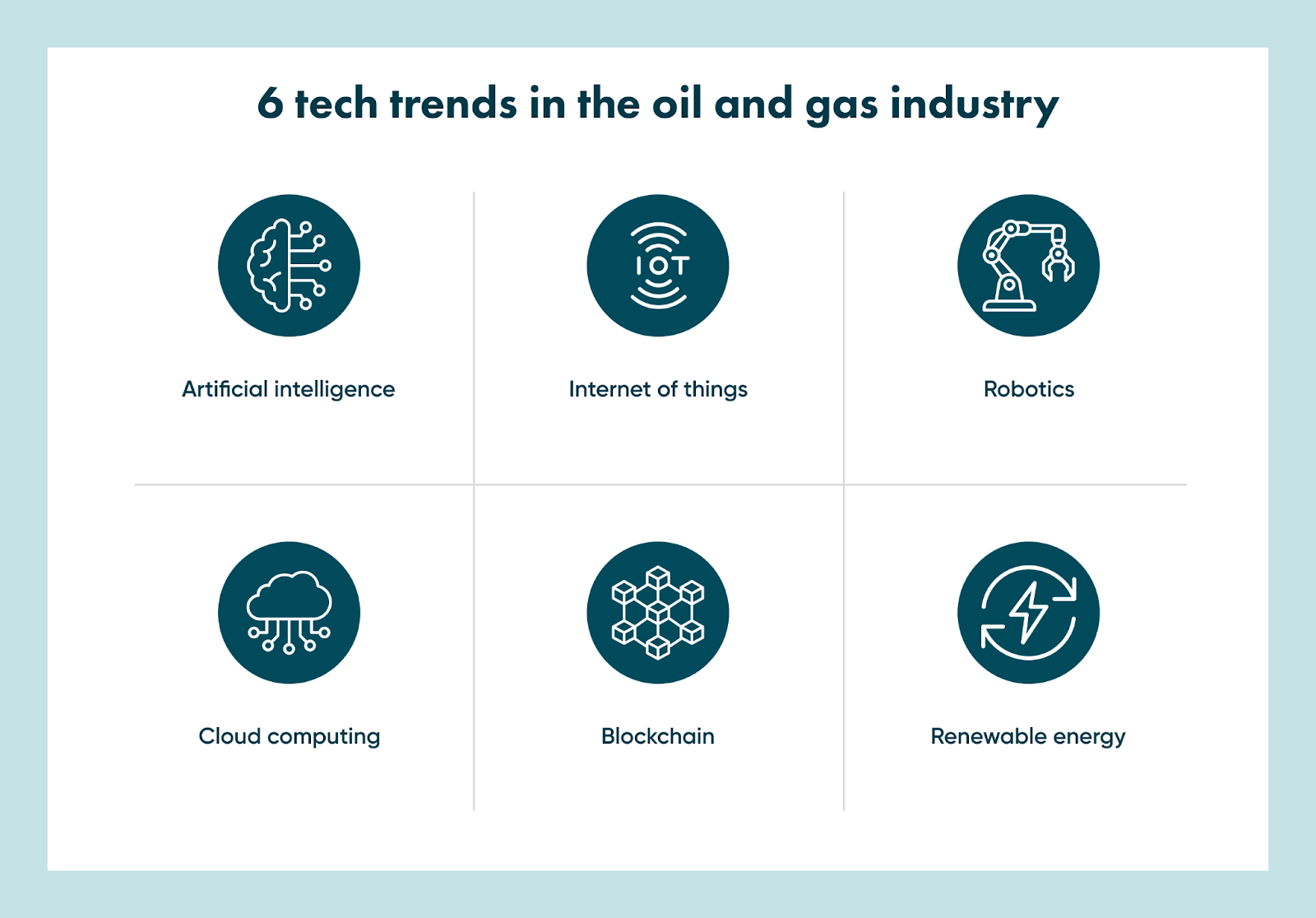
Artificial intelligence and machine learning
The oil and gas industry uses AI and machine learning to optimise exploration, drilling, and production processes.
For example, AI algorithms can analyse seismic data to identify potential drilling sites, and machine learning can predict equipment failures so that maintenance is scheduled before a breakdown causes downtime.
In reservoir modelling, AI helps build more accurate models, which help companies increase production and recovery rates.
AI algorithms can analyse data from sensors and other sources to identify and proactively mitigate potential safety risks.
Our detailed article covers AI in the oil and gas (O&G) industry.
Internet of things
IoT sensors and devices monitor O&G production processes in real time, helping companies detect equipment failures, prevent accidents and optimise production.
The data they generate can be analysed for insights into production processes and equipment performance, which helps companies cut operating costs.
Robotics
Robots and drones can inspect and maintain equipment in hard-to-reach or dangerous locations, which improves safety and reduces costs.
They can also lift heavy objects, move equipment and load and unload cargo, reducing the risk of injury to workers.
Autonomous underwater vehicles (AUVs) and remotely operated vehicles (ROVs) are used in subsea exploration and drilling.
Cloud computing
Cloud computing refers to delivering computing services, including storage, processing, and applications, over the internet.
Cloud platforms let companies store and manage large volumes of data centrally and securely. Specialists analyse it with advanced analytics tools to find patterns, optimise processes and make data-driven decisions.
Blockchain
Blockchain is a decentralised, distributed ledger technology that allows for secure and transparent data storage and transactions.
It can improve supply chain management and reduce fraud.
For example, it can record crude oil's origin and movement from the wellhead to the refinery, so every step is traceable.
Blockchain can also run smart contracts: self-executing contracts that automatically enforce the terms of an agreement.
They can be used in procurement, logistics and supply chain management.
Renewable energy
The oil and gas industry is adopting renewable energy technologies such as wind and solar power to reduce greenhouse gas emissions and diversify revenue streams.
Many oil and gas companies invest in renewable energy projects and business models that combine fossil fuel production with renewable generation.
Go Wombat has experience with oil and gas technology. To discuss your project, contact us.
8 steps to digital transformation
Digital transformation takes time. These eight steps help O&G companies plan it.
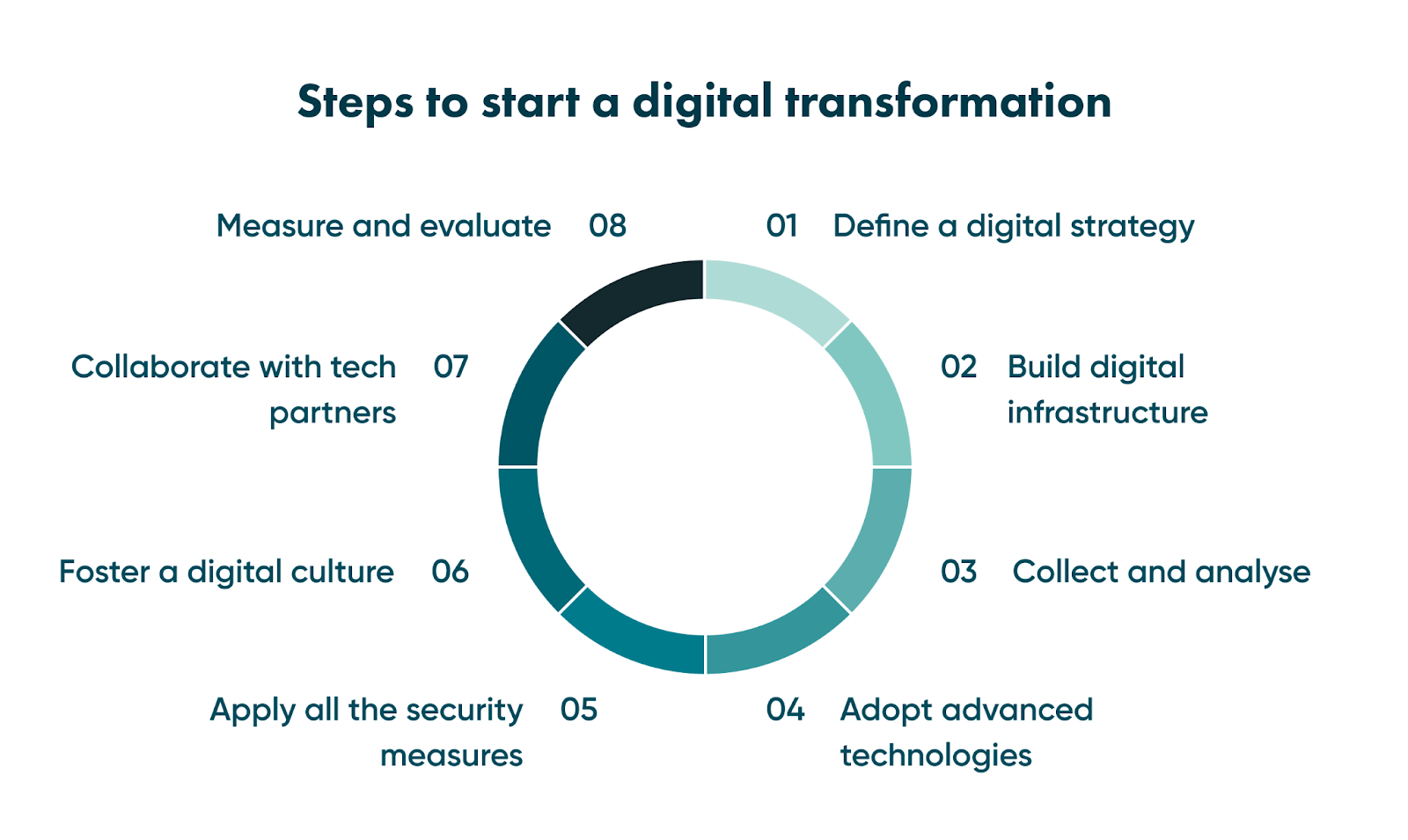
1. Define a digital strategy
Identify key business objectives, assess current technology capabilities, and create a roadmap for digital transformation.
2. Build digital infrastructure
Upgrade existing infrastructure or invest in new technology platforms to support the transformation.
Go Wombat can help with this step.
3. Collect and analyse
Plan how you will collect data from sensors, machines and human operators.
Analyse the data to understand operational performance and find areas for improvement.
4. Adopt advanced technologies
Adopt the technologies that fit your goals, such as IoT, AI and cloud computing, to streamline processes and improve decision-making.
5. Apply all the security measures
Protect sensitive data and meet regulatory requirements with measures such as encryption, multi-factor authentication and regular security audits.
6. Foster a digital culture
Encourage innovation, collaboration and continuous learning, and train employees in the digital skills they need.
7. Collaborate with tech partners
Work with technology partners, suppliers and other stakeholders and use their expertise.
This can include joint research and development, co-creating technology and sharing data and insights.
8. Measure and evaluate
Track progress with key performance indicators (KPIs) to measure results against your goals and find areas for improvement.
Review the results over time, including their effect on operations and client experience, and use client feedback to refine the roadmap.
Conclusion
Modern technology lets O&G companies automate routine processes and make better use of their data.
Go Wombat can build custom software for your O&G company from scratch.
Our business analysts start by studying your niche and requirements to identify potential benefits and risks.
To discuss custom oil and gas software, contact Go Wombat.
Oil and gas industry software FAQ
What is digital transformation in the oil and gas industry?
It is the use of digital technologies across the value chain, from exploration and production to transportation and distribution, to improve efficiency, safety and sustainability and to reduce costs.
What are the challenges of digital transformation in the oil and gas industry?
The three main challenges are:
- Legacy systems and infrastructure: much of the industry runs on legacy systems that are difficult and expensive to upgrade.
- Data integration: data comes from sensors, machines and people, and bringing it into one system is complex.
- Regulatory compliance: regulations and standards vary by country and region, and every digital initiative must comply with them.
What is a new technology in oil and gas?
Several are being adopted at once: artificial intelligence and machine learning, the internet of things, blockchain, cloud computing, robotics and renewable energy.
Share and subscribe to our blog
Related articles

AI in Oil and Gas: The Technology Revolutionising the Industry
How AI is used in oil and gas: the benefits, applications from defect detection to exploration, and the technologies used alongside it.
Why Is the Digital Twin of an Oil Refinery the Most Complex AI System You Will Ever Build?
Why a digital twin of an oil refinery is so hard to build: seven interdependent layers from physics simulation to control system integration, results from Cosmo Oil's refinery digital twin, a look at Honeywell's planned digital-twin work at the Dangote refinery, team and data prerequisites, and why projects fail.
How RAG Helps AdTech Platforms Reduce Campaign Data Hallucinations
RAG helps AdTech platforms reduce AI hallucinations by grounding outputs in real campaign data, making reporting, attribution and recommendations more accurate and auditable.

How can we help you ?