



PHP vs Python

Which One Suits Your Project Development Best?
PHP and Python are open-source scripting languages, and both are widely used for backend web development. They have several features in common but differ in syntax, ecosystem and the kinds of projects they suit best.
What is PHP?
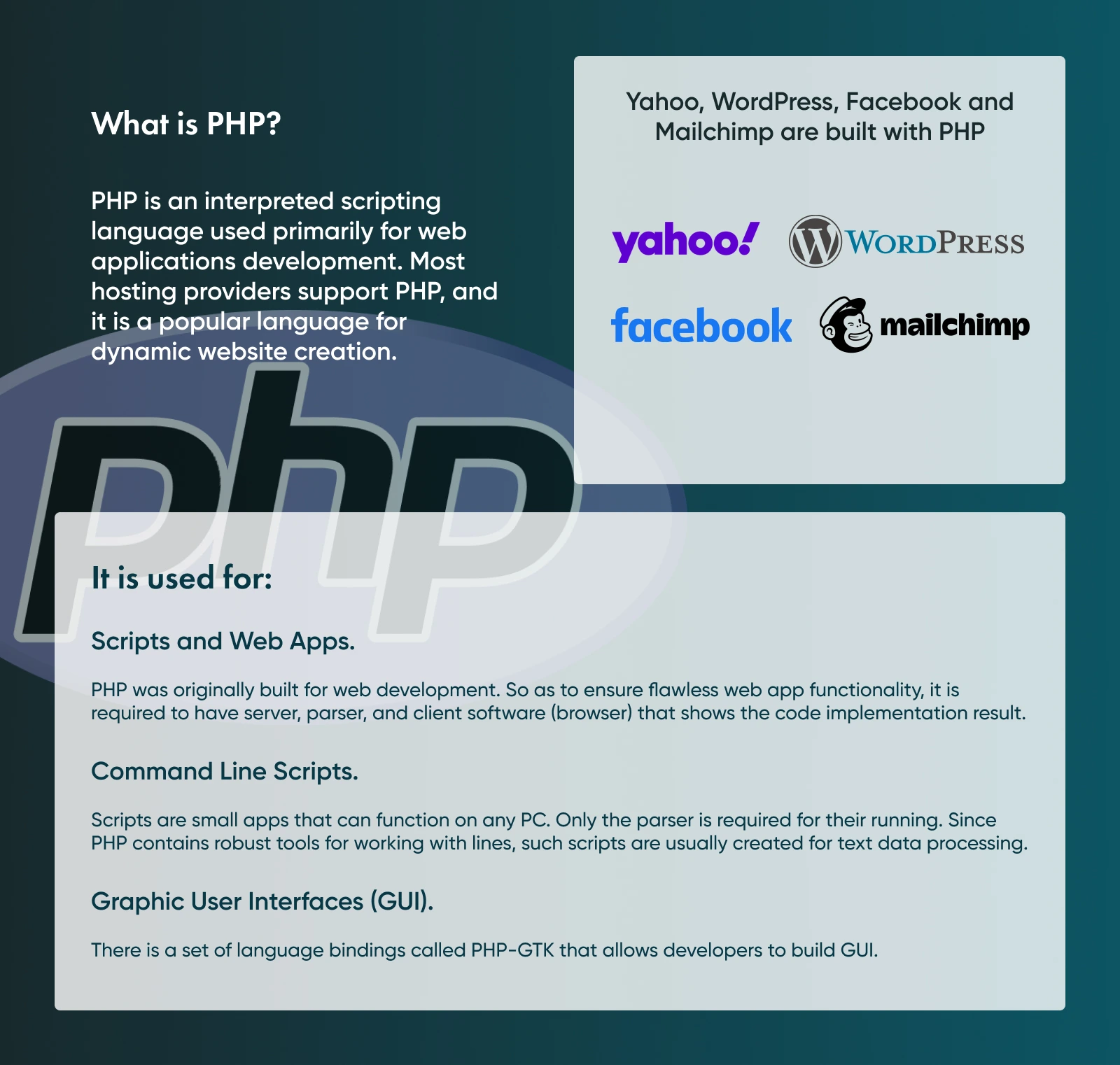
PHP (Hypertext Preprocessor) is an open-source server-side scripting language designed primarily for web development. It runs on the server and generates the HTML sent to the browser, and it is one of the most widely used languages for dynamic websites and web applications. Built-in extensions such as PDO and mysqli make it straightforward to connect to databases.
What Is Python?
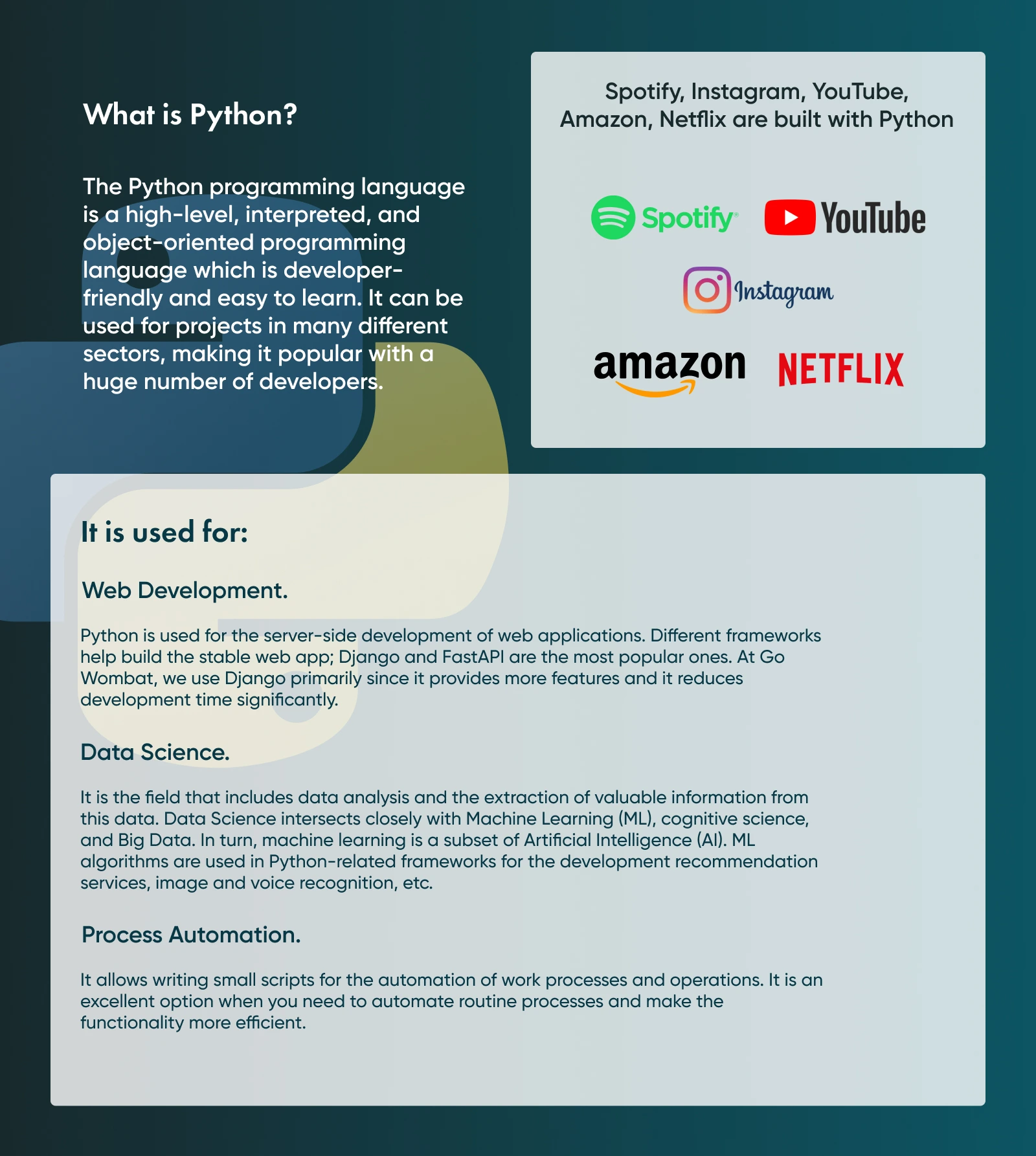
Python is a high-level, general-purpose programming language known for its clean, readable syntax. It is easy to learn, which has made it popular with beginners and professional developers alike, and it is used in many different sectors. For asynchronous code, Python's standard library provides asyncio: an event loop runs coroutines concurrently in a single thread and switches between them at each await. This is concurrency, not parallelism, and it suits I/O-bound work such as network requests.
At Go Wombat, we have used Python for data analysis and machine learning in many projects, including work for startups.
Hire an experienced Python developer! Contact us
Similar Features
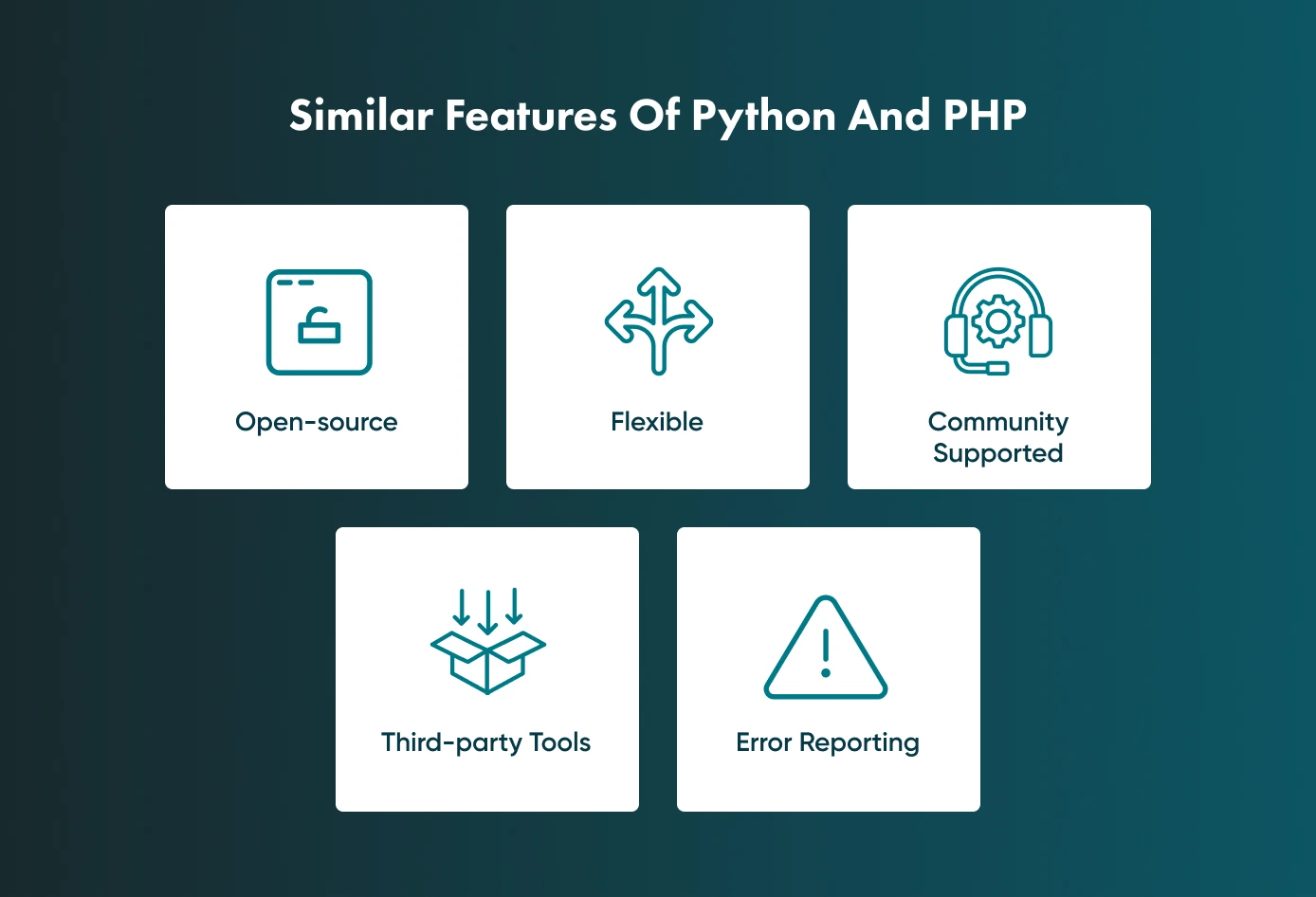
Open-source
Python and PHP are both open-source and free to use.
Cross-platform
Code written in either language runs on Windows, Linux and macOS.
Community Supported
Both languages have large, active developer communities.
Third-party Tools
Both have large ecosystems of libraries and frameworks: PHP packages are installed with Composer from Packagist, Python packages with pip from PyPI.
Error Reporting
Both languages report errors with a message, the file and the line number. Many developers find Python's tracebacks easier to read.
Start building your project with Go Wombat. Get in touch with us!
More detailed comparison of Python vs PHP
Popularity
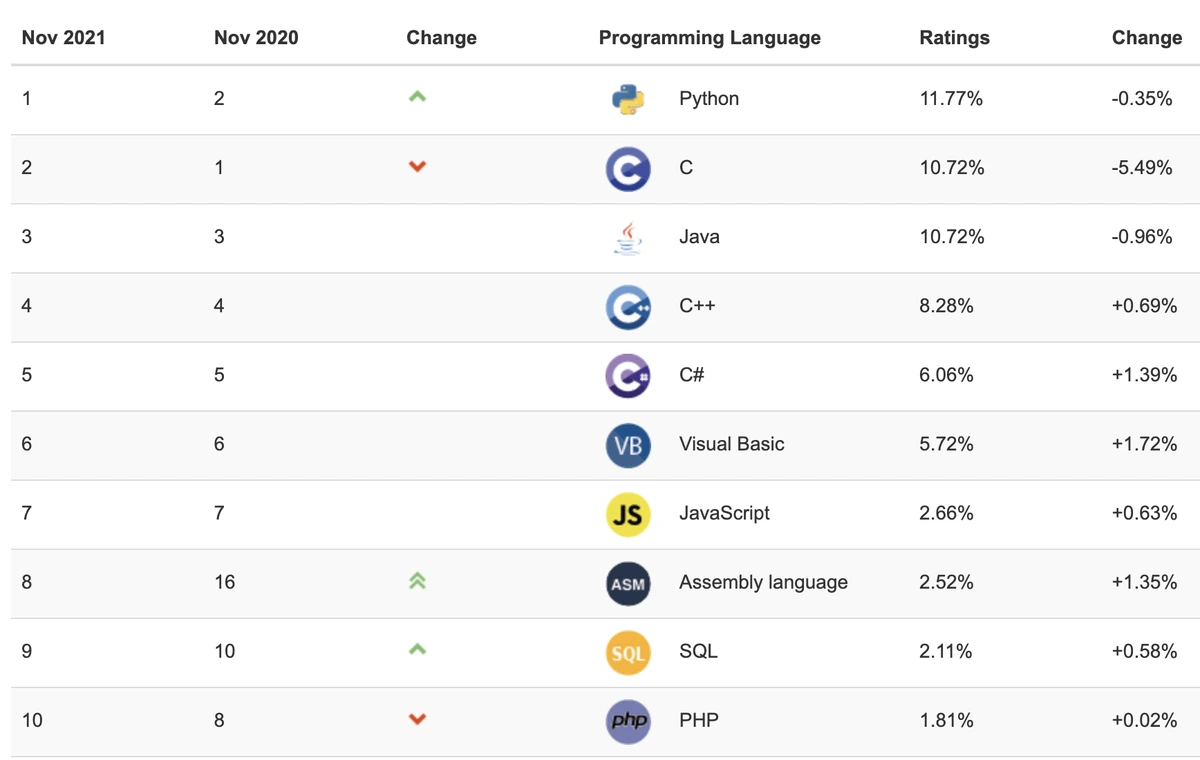
The TIOBE index ranks programming languages using search results from Google, Bing, Wikipedia and more than 20 other sites. It measures popularity, not which language is best. In October 2021, Python ranked 1st and PHP 9th; in September 2026, Python is still 1st and PHP is 14th.
Speed Of Development
Python's concise syntax often lets developers write fewer lines of code for the same task. Code reuse, however, is not unique to Python: both languages support functions, classes and packages, and PHP also has traits, a mechanism designed specifically for code reuse.
Performance
Early PHP versions were relatively slow. PHP 7, released in 2015, brought major performance improvements. In practice, a web application's speed depends more on its architecture, database queries, caching and hosting than on the choice between these two languages.
Complexity
Both languages support object-oriented programming. Python is generally easier to learn, and its readable syntax makes code easier to review and debug.
PHP is built mainly for dynamic websites and web applications and is rarely used outside the web.
Hire Python web app developers! Contact us
Scalability
Both languages can run large web applications; how well an application scales depends mostly on its architecture. PHP developers commonly use the Laravel and Symfony frameworks.
Widely used Python web frameworks include Django and FastAPI. At Go Wombat, we work mostly with Django, whose loosely coupled components suit complex applications. For machine learning, Python offers TensorFlow, Keras (since Keras 3, a multi-backend library that runs on JAX, TensorFlow or PyTorch) and scikit-learn.
Versatility
PHP is used for websites, online shops and database-driven applications, including high-traffic ones. WordPress runs on standard PHP, and Facebook runs on Hack, a PHP dialect that Meta developed for its HHVM runtime. According to W3Techs, 69.8% of websites whose server-side language is known use PHP (September 2026).
Python is a general-purpose language. Besides web development, it is used for data analysis and visualisation, testing, system administration, process automation, and mobile, desktop and game development.
Security
In practice, security depends more on the framework and on development practices than on the language itself.
PHP has built-in security functions, but according to Veracode data published in 2015, 86% of the PHP applications it analysed had at least one cross-site scripting (XSS) vulnerability. The report did not cover Python, so it does not show that Python is safer.
Django includes protection against CSRF, XSS, SQL injection and clickjacking out of the box. Laravel and Symfony offer similar built-in protection for PHP projects.
At Go Wombat we pay careful attention to software security, data protection and GDPR compliance. Our certified Chief Security Officer (CSO) oversees security implementation and IT audits.
Debugging
Both languages have mature debugging tools: Xdebug for PHP, and Python's built-in pdb plus the debuggers in IDEs such as PyCharm and VS Code. Xdebug has to be installed and configured as a PHP extension, while pdb ships with Python.
Community Support
Both languages have been in use since the 1990s, so answers to most common problems are already documented.
So Which Is Better?
PHP is a practical choice for content sites, online shops and projects built on WordPress, Laravel or Symfony. Python is the better fit when a web application also needs data processing, machine learning or automation.
At Go Wombat, we work with the Python/Django stack.
If you need Python developers, we can provide a dedicated team.
Contact us to discuss your project.
Share and subscribe to our blog
Related articles

10 Key Software Development Trends In 2022
The software development trends we expected to matter most in 2022, from automation and AI to blockchain and PWAs, and what they mean for custom software.

CEO Role in a Tech Startup: Responsibilities and Skills
What a tech startup CEO does: vision and strategy, fundraising, hiring, finances, risk, AI strategy, and the skills the role needs.

How Can IoT Software Solutions Boost Your Business in 2026?
How IoT software works, the business models it enables, the opportunities it creates and the integration and security problems to plan for.

How can we help you ?