



How Can IoT Software Solutions Boost Your Business in 2026?

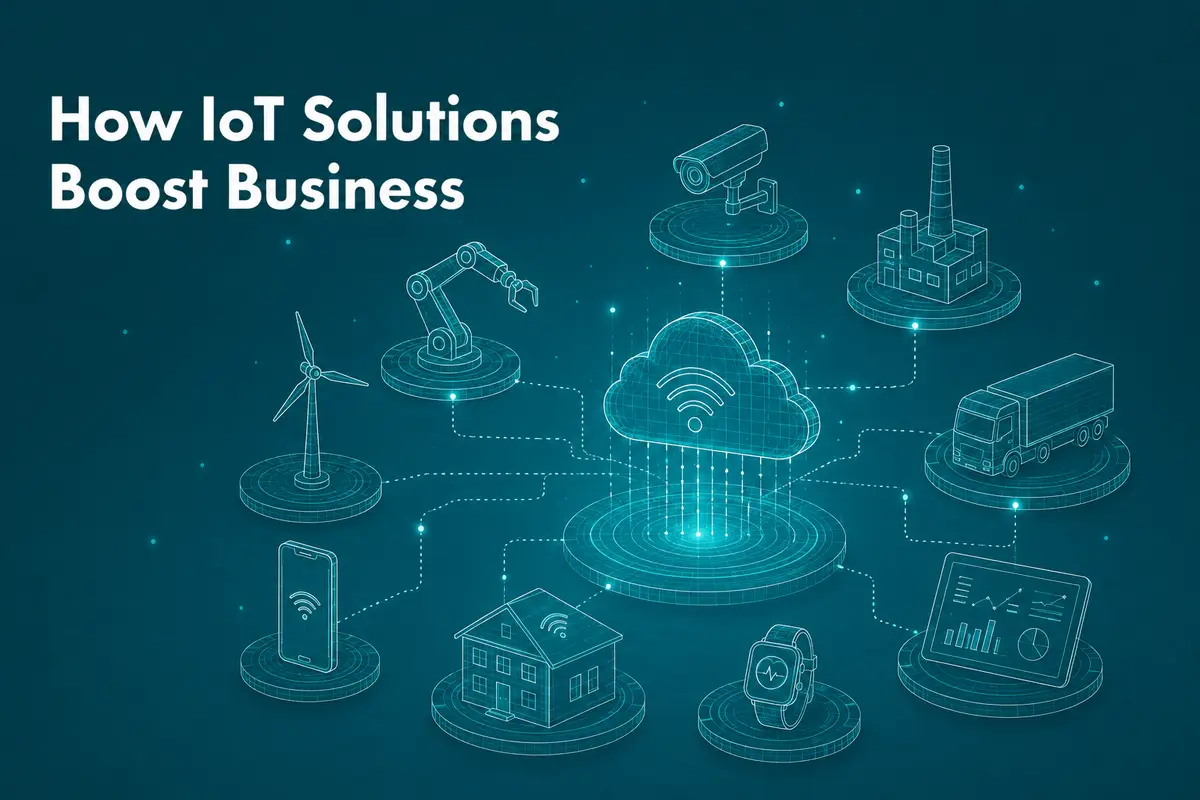
Many companies still treat the Internet of Things as a hardware project. The real value of IoT software solutions shows up after the sensors are installed, in the platform that turns raw signals into decisions a business can act on.
Connected devices are already common in logistics, manufacturing and healthcare. The practical question is which business model, platform and partner will make an IoT investment pay for itself.
What Is IoT and How Does It Work?
IoT software is the layer that lets connected devices exchange data and act on it without a person in the loop. A single sensor recording temperature is not IoT. A network of sensors that sends readings to an analytics engine, flags an anomaly and opens a maintenance ticket is.
Three parts make this work: a data pipeline (from device to cloud), an analytics layer (making sense of the readings) and a control layer (acting on what the analytics find). Many deployments now push part of the analysis to the edge, processing data on or near the device instead of sending everything to a central server. This cuts latency and bandwidth costs, which matters once you run thousands of devices rather than ten.
A related concept is the Internet of Behaviour, which uses IoT data to understand what customers or employees do around a machine, as well as what the machine itself is doing. Add machine learning to that pipeline and you get predictive maintenance, demand forecasting and digital twins: virtual replicas of physical assets that let engineers test changes before touching the real thing.
IoT Business Models to Consider in 2026
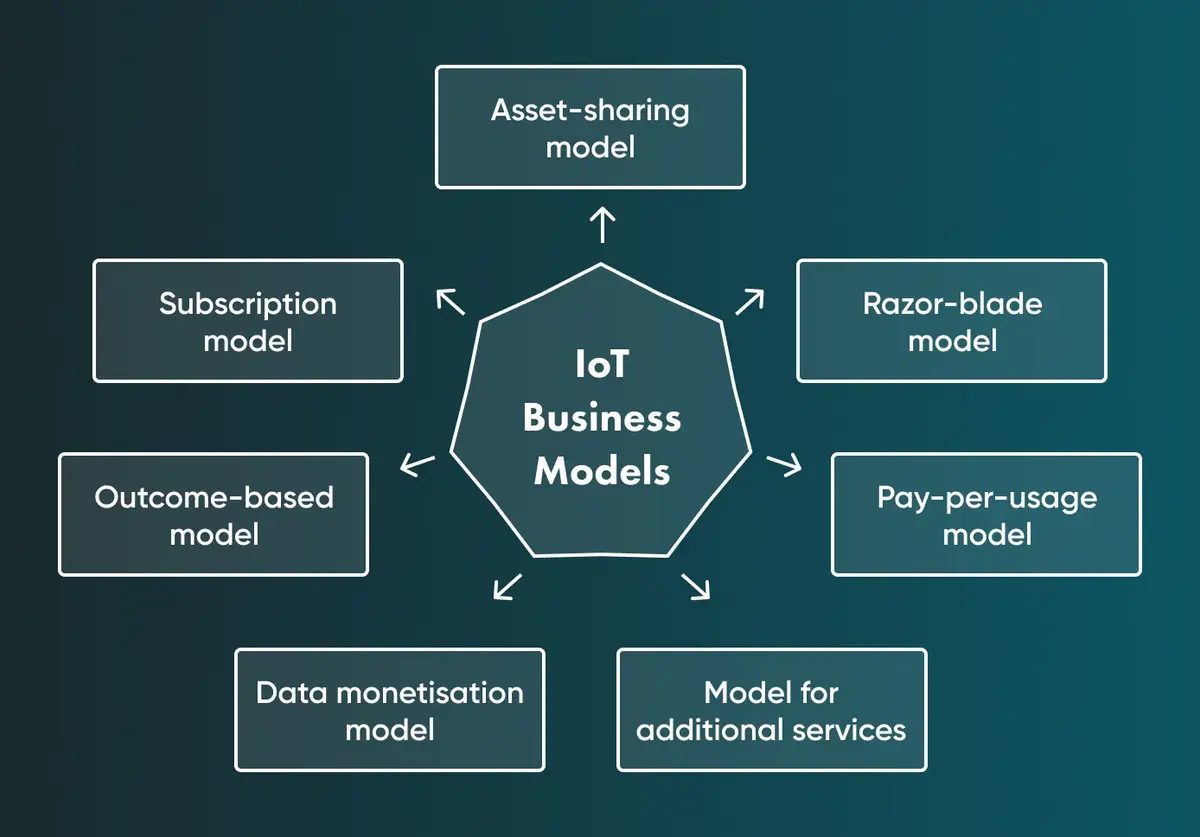
The business model matters as much as the sensors. These are the models worth evaluating before development starts.
Subscription model
Your IoT product gives you round-the-clock visibility into how a customer uses it. Charge monthly or annually for that ongoing value instead of a one-off sale, and you turn a hardware purchase into a recurring relationship.
Outcome-based model
Customers pay for the result, not the equipment. Rolls-Royce's TotalCare programme works this way: airlines usually buy the engines with the aircraft, then pay Rolls-Royce a fixed rate per flying hour for maintenance and the risk of repairs, which gives them a predictable cost of ownership. Sensors on the engine feed a monitoring system that predicts wear before it becomes a failure.
Asset-sharing model
This suits large manufacturing networks with spare capacity. Sell that capacity back into the market, split the cost across users, and nobody pays for a system they only use part of the time.
Data monetisation model
You gather usage data and sell the non-confidential parts of it to third parties who can put it to work. IoT-equipped vehicles are the classic case: driving-behaviour data can be sold to insurers who use it to build usage-based policies.
The “razor blade” model
Sell the core device cheaply, then earn the margin on the consumables it depends on. The IoT platform can reorder consumables automatically when stock runs low, which keeps the customer buying from you without any manual step.
Pay-per-usage model
Customers pay only for the time or volume they actually use. This does not generate revenue from the hardware itself, but it gives you a precise read on how customers behave, which is useful when you are deciding where to invest next.
Additional-services model
Once your IoT platform is monitoring a customer's operation, you can sell services on top of it. A building fitted with energy-monitoring sensors is a natural candidate for a follow-on energy audit contract, for instance.
Opportunities IoT Creates for Your Business
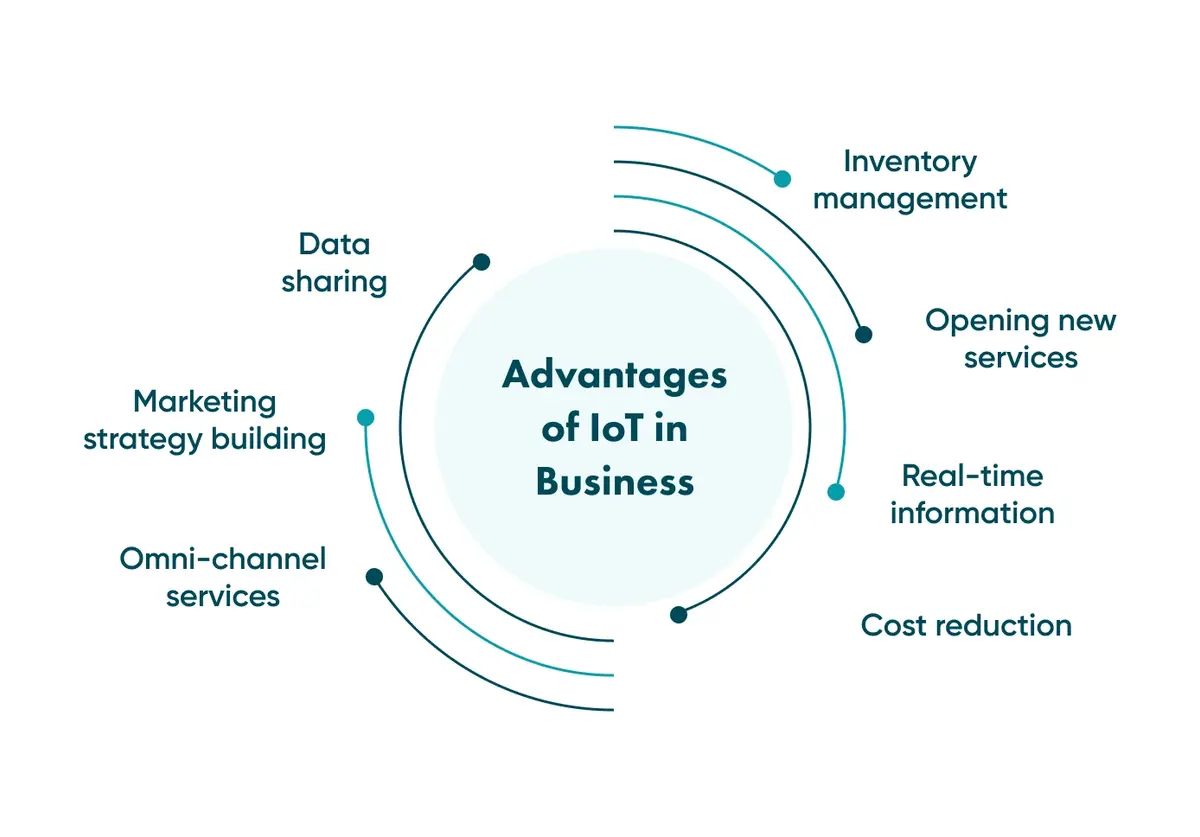
Inventory management. Automated tracking flags missing stock before a human notices, and IoT-based surveillance in a warehouse can catch theft in near real time.
Data sharing across the business. IoT gives you a live view of how users interact with your product, which sharpens everything from the purchase cycle to customer support.
New service lines. Predictive maintenance algorithms let you spot a customer's next need before they do, which opens the door to services they had not asked for yet.
Sharper marketing. Detailed behavioural data lets a marketing team personalise offers by customer segment instead of running one campaign for everyone.
Real-time information. In retail, this is the difference between a shelf that is always stocked and one that is not. Samsara's fleet platform shows what real-time IoT data looks like at scale: Samsara says it processed more than 20 trillion data points in 2025 across the vehicles and equipment it monitors, and it reported $1.62 billion in revenue for its 2026 fiscal year. That only works because the software turns sensor noise into decisions as the data arrives, not in a weekly report.
Omnichannel visibility. Devices placed around a physical location feed a single system that shows what customers want and where demand is building.
Cost reduction. Automated inventory checks and safety monitoring replace manual rounds, which reduces both labour time and missed problems.
How to Start Your IoT Software Integration
Getting from idea to working system usually follows three stages.
- Research the problem, not the technology. Identify the pain point your IoT product will solve, and be honest about whether solving it will actually generate revenue. A business case built on “IoT sounds innovative” will not survive contact with a budget committee.
- Choose the business model. The models above are not mutually exclusive. A single product can combine a subscription fee with a data monetisation stream, for example.
- Scope the technical build with specialists. IoT software has to meet the technical demands of the specific network you are integrating, and that work should sit with a team that has done it before.
Take a logistics operator whose engineers check fuel levels and tyre pressure by hand across a fleet of forty vehicles. The checks take several hours a week and still miss problems until they become breakdowns. Once sensor data feeds a central dashboard, the maintenance team can fix issues before they cause downtime, and the manual checks can stop.
Challenges in IoT Software Implementation
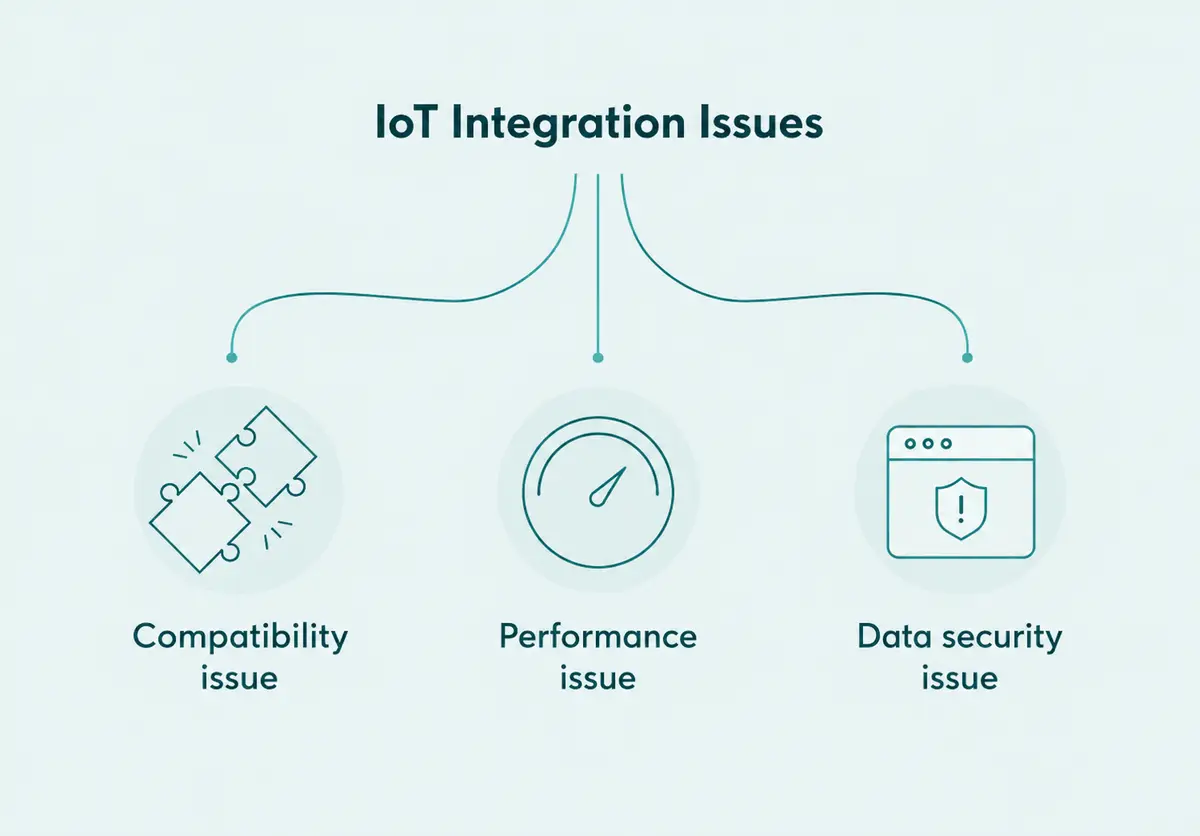
Compatibility. Different manufacturers still build to different technical standards, which makes integrating new IoT sensors with existing equipment slower than most projects budget for. The Matter 1.6 standard, released in June 2026, is one of the more credible attempts to fix this: it lets devices from competing manufacturers work with the same smart-home or building-management ecosystem without a proprietary hub. Industrial IoT does not have anything quite as unified yet, so compatibility checks still belong early in any technical scoping conversation.
Performance. An IoT network is only as strong as its weakest device. One malfunctioning sensor can distort the readings that the whole system depends on, so monitoring the monitors is not optional.
Data security. IoT networks widen the attack surface, since every connected device is a potential entry point. Regulators have noticed: the EU Cyber Resilience Act, in force since December 2024, requires connected-device manufacturers to report actively exploited vulnerabilities within 24 hours starting in September 2026, with full compliance required by December 2027. In healthcare, a compromised device can put a patient's safety at risk, not only their data. Build cybersecurity into the software from day one, because regulators now expect it.
Build the Best IoT Software With Go Wombat
Go Wombat has more than ten years of experience and 150+ delivered projects, including software for industrial IoT, connected operations and the AI built on top of them. We build IoT back ends in Python and Django, and use React and React Native for the front end and companion mobile apps.
We are ISO 27001-certified, and our Chief Information Security Officer helps decide what security architecture each IoT project needs instead of applying a generic checklist. With the EU Cyber Resilience Act now setting deadlines for connected-device manufacturers, that decision has to be made early.
Our engineers have built this kind of software for manufacturing, logistics, AdTech and sports clients. If your roadmap includes business intelligence on top of the IoT data, or process automation triggered by it, we build that into the same system rather than adding it later.
To scope your IoT software project before writing a spec, speak with a specialist at Go Wombat.
Frequently Asked Questions
What is IoT software and how does it work?
IoT software connects devices, gathers the data they produce, and applies analytics so decisions can be made without a person checking every reading manually. It typically combines a data pipeline, an analytics layer, and a control layer that acts on what the analytics find.
Which IoT business model is right for my company?
It depends on what you are selling and how customers use it. Subscription and pay-per-usage models suit ongoing services, outcome-based models suit high-value equipment like Rolls-Royce's aircraft engines, and data monetisation suits businesses that generate valuable behavioural data as a by-product.
How much does IoT software development cost?
Cost depends on the number of devices, the complexity of the analytics layer, and the security requirements involved. A discovery phase with an experienced team is the fastest way to get an accurate estimate rather than a generic range.
What industries benefit most from IoT in 2026?
Manufacturing, logistics, energy, and increasingly retail and hospitality see the clearest returns, mainly because they combine physical assets with processes that benefit from real-time visibility.
What are the biggest IoT security risks right now?
The main risk is the expanded attack surface: every connected device is a potential entry point. The EU Cyber Resilience Act now sets legal deadlines for vulnerability reporting, which makes security a compliance issue as well as a technical one.
How do we start an IoT pilot without overcommitting budget?
Start with a single, well-defined use case rather than a fleet-wide rollout. A scoped pilot with a specialist partner reveals the real technical and business-model questions before you commit to a full integration.
Share and subscribe to our blog
Related articles

Five Proven Strategies To Automate Business Processes
What business process automation (BPA) is, what can and cannot be automated, five strategies for introducing it and the benefits to expect.

How Artificial Intelligence Enhances The Hospitality Industry
How hotels and travel agents use artificial intelligence, from guest-journey analysis and booking to chatbots, housekeeping and utility management, and the challenges that remain.

Six Reasons to Work with A Ukrainian IT Company
Six reasons to work with a Ukrainian IT company: skilled specialists, a good quality-to-price ratio, capable companies, good English, flexible teams, and location and time zone.

How can we help you ?

