



Fixed Cost Vs Time and Materials in Software Development

What is the difference, and which is more suitable for your project?
Fixed cost (Fixed Price) and Time and Materials (T&M) contracts split budget risk differently between the client and the software vendor. The model you choose affects what the project costs, how quickly it starts and how much you can change once development is under way.
At Go Wombat, we have worked under Fixed Price, Time and Material and Dedicated Team contracts, and most of our projects run on Time and Material. Projects that span several cloud platforms or integrate third-party APIs often uncover issues mid-project, and the contract model decides who absorbs them. Below we compare the two models and explain when each one fits.
What Is A Fixed Price Contract?
Under a Fixed Price (fixed cost) contract, the scope of work, specification, deadline and budget are agreed before development starts and do not change.
The vendor carries the risk of delivering on time and on budget. For the client, the appeal is predictability: you know the cost and the delivery date up front.
There are trade-offs. Quality can suffer when the team has to fit everything into a fixed deadline, and vendors add a risk buffer to the estimate, so you may pay more than the work actually costs.
Fixed Price Particulars
A detailed specification up front
Everything has to be in the specification. Any later change, such as a new feature or a different technology, costs extra time and money.
Extra payment for out-of-scope work
If you need something extra during development, you and the vendor sign an addendum to the contract, and the extra work is paid for separately.
Increased cost
Because the vendor must deliver within the deadline and without extra fees, it prices every foreseeable risk into the estimate, which raises the cost.
When A Fixed Price Is Suitable
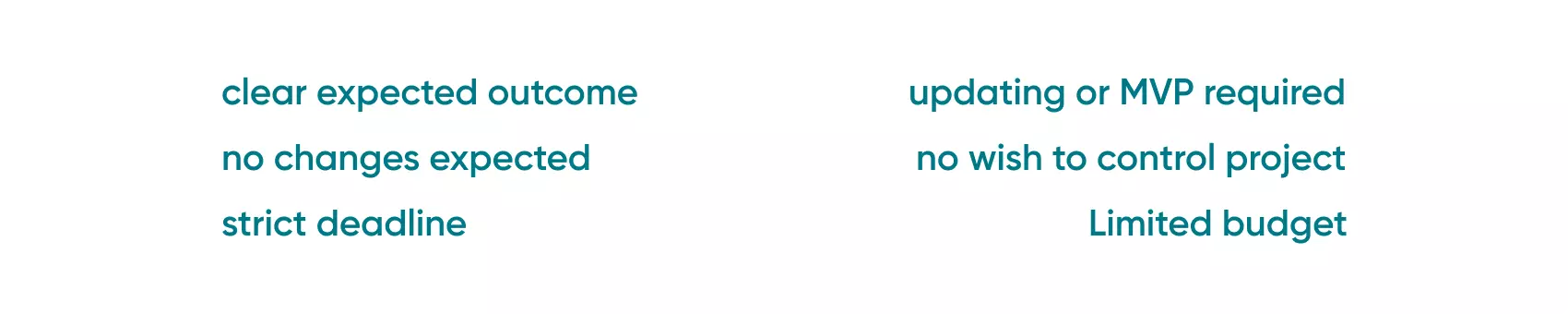
A Fixed Price contract works best when:
- The project scope is clearly defined and unlikely to change
- You have a strict, non-negotiable budget
- The project is small or straightforward in nature
- You are building an MVP to present to investors
- You do not require ongoing involvement in the development process
A Time And Material Contract
Under a Time and Materials (T&M) contract, the client pays for the time the team actually spends and the tools used. The contract fixes an hourly rate for each developer or for the development team, not the total price.
At Go Wombat, we split development into sprints. After each sprint, we review the result with the client, get their approval and send a report on the hours spent and the work done.
We plan tasks and track time and bugs in Jira and similar tools. Clients have access too, so they can follow progress and control spending.
Contact Go Wombat to choose the most appropriate pricing model for your project!
Time And Material Model Particulars
Flexibility
Under Time and Material, you can add or remove features without signing additional agreements. Every task still takes time, and that time is billed.
Uncertain timeline and budget
This is the other side of flexibility. At the start, neither the client nor the vendor knows the exact completion date or total cost, because every added task or change moves both.
Transparency
Time and Material relies on regular communication. At Go Wombat, we hold regular meetings with the client and send detailed reports for each period.
When A Time And Material Contract Is Suitable
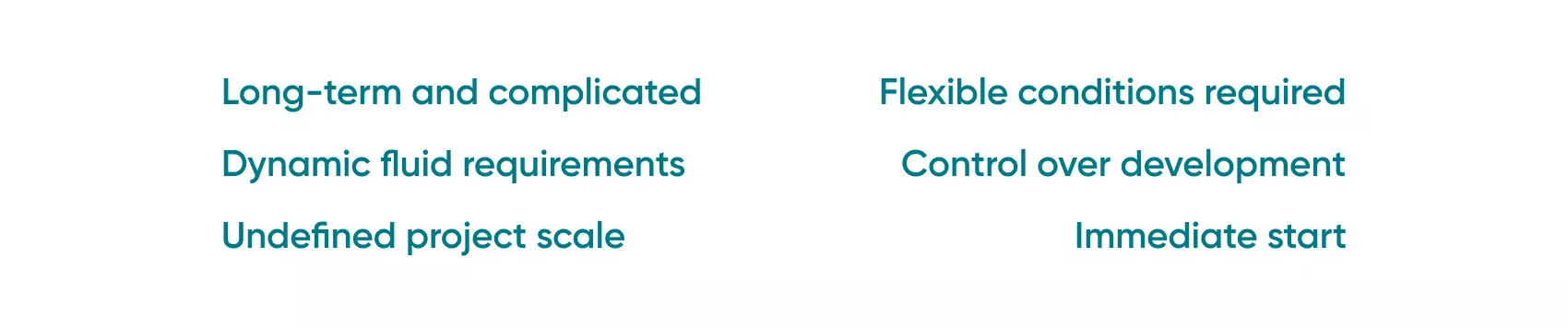
Choose a Time and Material model if:
- Your project requirements are likely to evolve during development
- You need flexibility to add, remove, or reprioritise features
- The project is large, complex, or long-term
- You want to be actively involved and provide feedback throughout
- You prefer to pay for actual work done rather than a fixed estimate that includes risk buffers
The Pros and Cons of a Fixed Price Model
Advantages
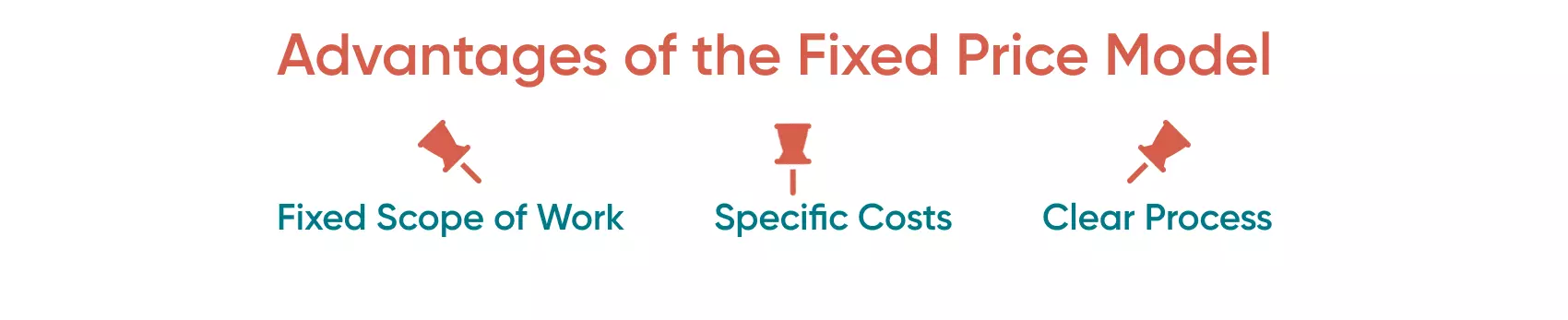
Fixed scope of work
You agree the scope with the development team at the start and know it will not change before delivery.
Exact cost
Before you sign, the vendor gives you a detailed estimate and you agree an exact price. You know the total up front, which a Time and Material contract cannot give you.
Clear Process
You get a roadmap from the start of development to delivery, and you know the completion date, so you can plan around it.
Drawbacks
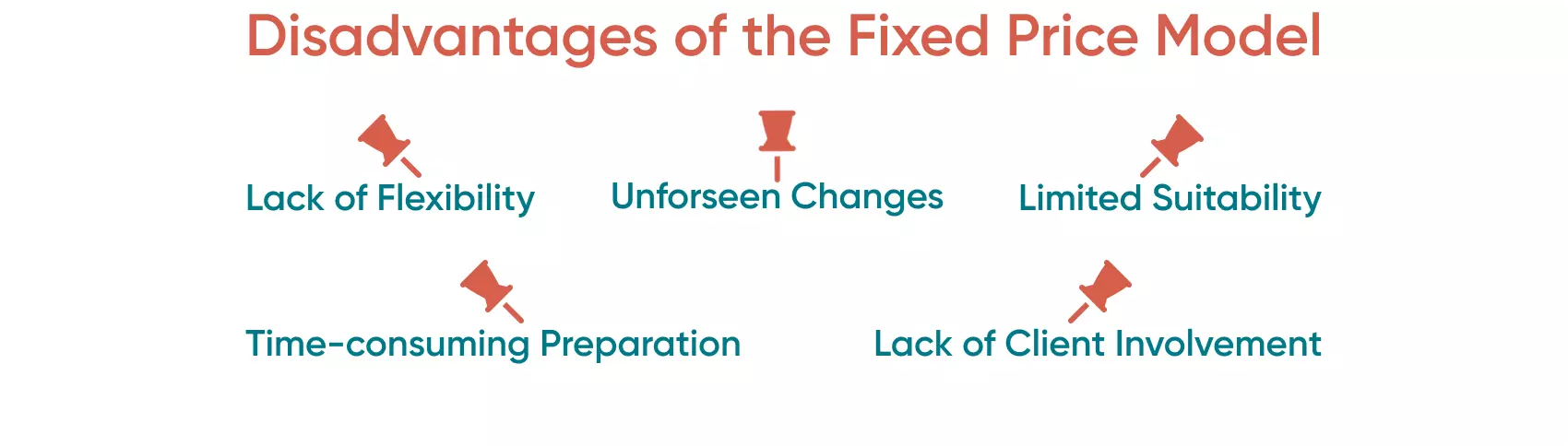
Lack of flexibility
The scope is fixed, so any addition means a paid change request. If the product needs new functionality during development, the team cannot simply add it, and the end product may fall short of what you actually need.
More time-consuming spec writing
Working out every detail in advance takes time. Our specialists have to think through the entire development process to write the specification, and the less detail the client provides, the longer this takes.
Fixed can become not fixed
If a change turns out to be essential, you have to renegotiate the contract with the vendor, which slows the project down and extends the timeline.
Lack of Client Involvement
A Fixed Price project often runs with little client involvement once the specification is signed. With few check-ins, the product can meet every technical requirement and still miss what the client expected.
It doesn’t fit all projects
Fixed Price works for small, straightforward projects. For products whose scope will change, such as an eCommerce store or an AI-based application, it usually leads to repeated change requests and renegotiation.
Pros and Cons Of A Time and Material Model
Advantages
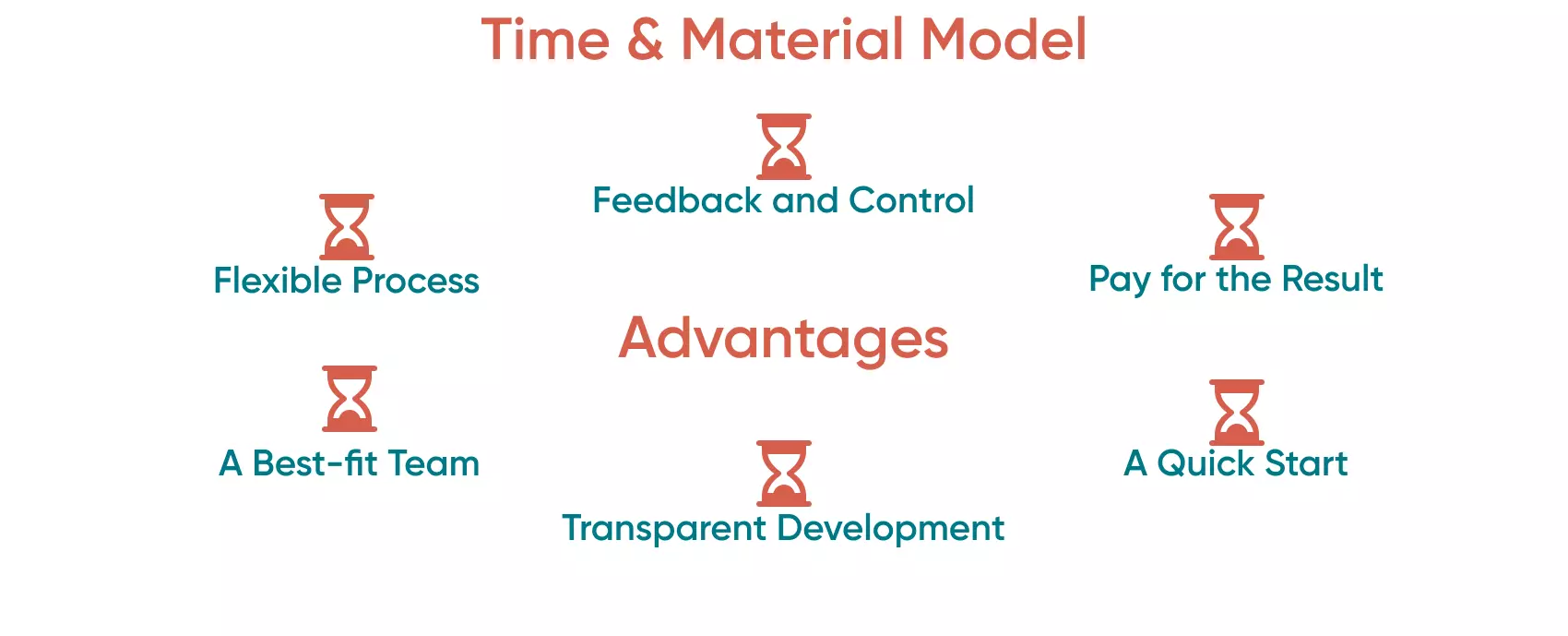
Feedback and control
You follow progress, review the result of each stage and give feedback. Regular contact with the team makes it more likely that you get the product you actually need.
A quick start
The team can start quickly because not every detail has to be agreed in advance.
Pay for actual work
You pay for the hours spent on your project and can see what each hour went into.
Flexible development
You can change the volume and order of tasks at any point; a new requirement simply goes into the backlog.
A best-fit team
You agree the team size and seniority with the project manager.
Transparent development
You have access to the task tracker and time logs. The project is split into phases, and after each one you see a working version of the software, so the team never builds for months without your feedback.
Drawbacks
Unpredictable cost
Without every detail known up front, the estimate is approximate, and the final cost can exceed the initial budget.
The timeline can move
Changes made during development can push the deadline back. At Go Wombat, we use careful planning and task prioritisation to keep deadlines.
Need a detailed estimate and analysis for your future project? Contact Go Wombat!
Why Go Wombat Chooses A Time And Material Model
A Fixed Price model can look less risky because the total cost is known. For projects whose requirements change, though, a fixed scope tends to create more problems than it solves.
The whole scope has to be contracted before development starts. Unless the project is a small MVP, this can produce a product that differs from what the client had in mind.
Go Wombat has 10+ years of experience in software development, and in our experience a Time and Material model works better in most cases.
Almost every project changes along the way, and Time and Material lets both sides adapt without renegotiating the contract.
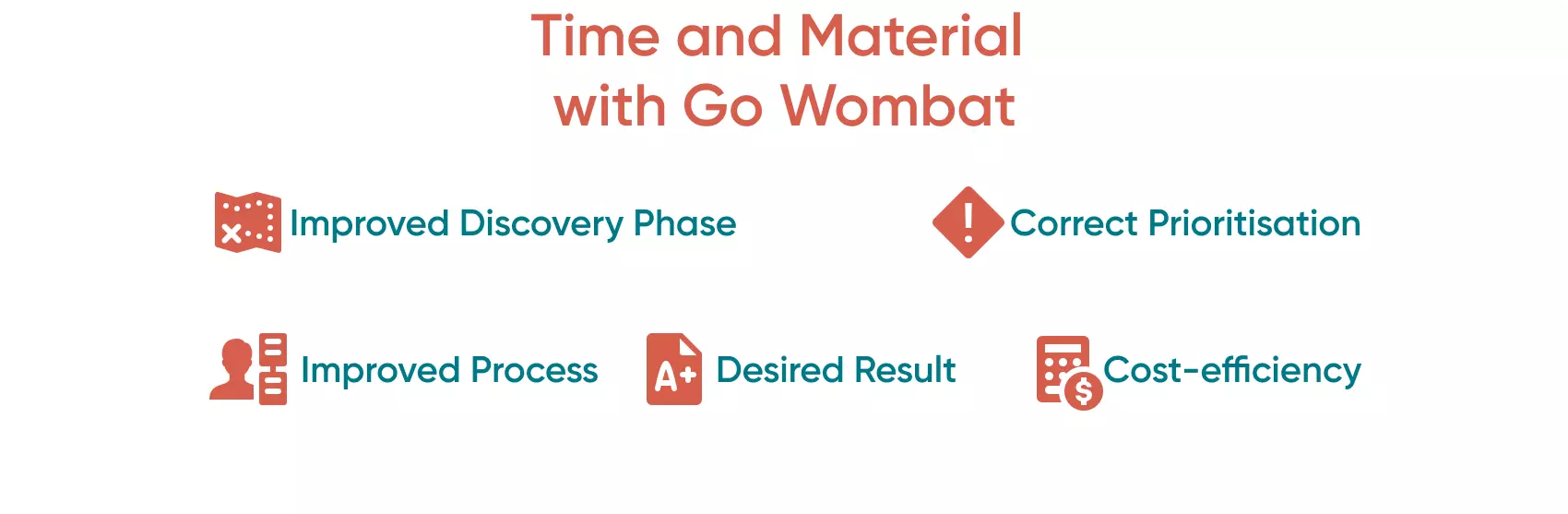
The Desired Result
You can adjust the product as business circumstances change, within the limits set by the initial analysis and risk assessment. The team can also switch to a better-suited technology if requirements shift during development.
Discovery Phase Can Be More Thorough
Our business analysts study the project in detail before development starts. The discovery phase takes from one to six weeks, depending on the project, and the more complete it is, the better the outcome.
Go Wombat can run a discovery phase for your project. Call us today to discuss the details.
Right Prioritisation
Under a Fixed Price model, you set all priorities before the project starts. In our experience, priorities change.
Under Time and Material, we reprioritise as the project evolves, and features that turn out to matter more than planned can move up the backlog.
Faster Process
Development can start while details are still being discussed. Instead of costing every feature up front, as a Fixed Price contract requires, we make a rough estimate and start. After each sprint, we review progress against the scope of work.
Cost-efficiency
A Time and Material model can cost less than a Fixed Price contract because the estimate does not include a risk buffer. You pay for the work actually done, and the team builds only what the project needs.
Conclusion
Fixed Price suits small, well-defined projects, such as an MVP you need to show investors before raising money for further development. Time and Material fits long-term and complex projects where you cannot plan everything in advance.
Contact Go Wombat, and let’s build your project together!
Share and subscribe to our blog
Related articles

CEO Role in a Tech Startup: Responsibilities and Skills
What a tech startup CEO does: vision and strategy, fundraising, hiring, finances, risk, AI strategy, and the skills the role needs.

Hiring A Full-Stack Development Company
What a full-stack development company does, the challenges of outsourcing a whole project, and three steps to hiring the right team.

Why Is the Digital Twin of an Oil Refinery the Most Complex AI System You Will Ever Build?
Why a digital twin of an oil refinery is so hard to build: seven interdependent layers from physics simulation to control system integration, results from Cosmo Oil's refinery digital twin, a look at Honeywell's planned digital-twin work at the Dangote refinery, team and data prerequisites, and why projects fail.

How can we help you ?