



AI in Supply Chain and Logistics: How It Transforms Industry


Many people use AI assistants such as Siri, Gemini, Copilot or ChatGPT every day. AI in supply chain and logistics is less visible, but logistics companies use it for forecasting, route planning and warehouse automation.
This article covers the advantages, use cases and challenges of AI in logistics.
Go Wombat uses Python as the core language for AI-based software development (see our article about Python for more).
What AI means for the logistics sector
AI helps logistics most where the same decision is made over and over: route planning, demand forecasting and damage inspection.
Before you apply AI to your supply chain, check three things.
IT infrastructure
Your IT systems need to be flexible enough to integrate new tools and data sources.
Data management
You need a single standard for data sources and reliable pipelines for real-time data.
Trained staff
You need trained staff and data scientists who can work with AI models.
Is AI worth it for logistics companies?
Logistics suits machine learning well: it produces large volumes of data and runs on repeated decisions about routes, stock and capacity.
Machine learning lets logistics companies automate many of these processes and save time.
It also reduces human error and makes workflows more accurate.
Advantages of AI for the logistics industry
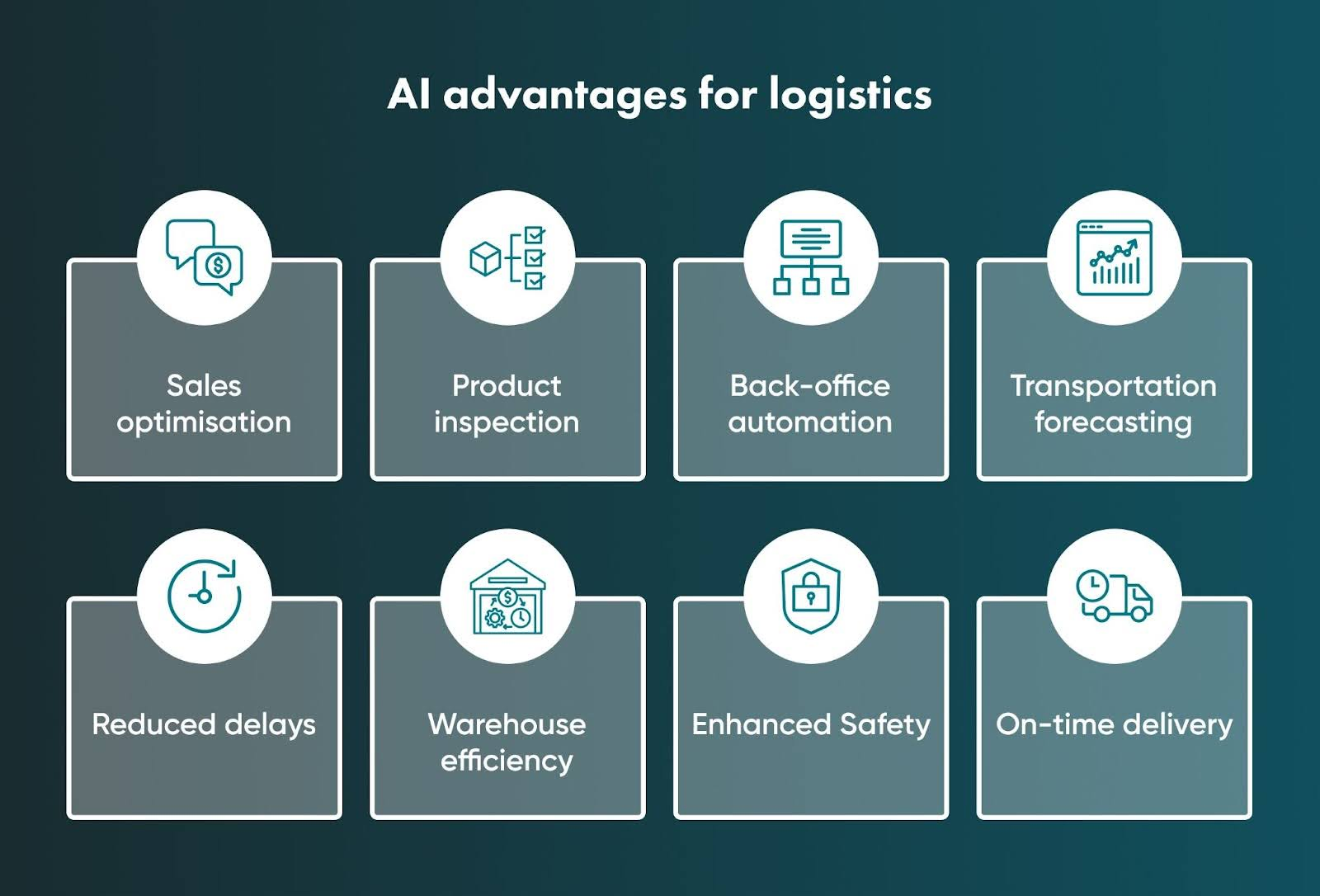
Sales optimisation
AI in the CRM improves sales forecasting and pipeline analysis, supports data-driven sales coaching and takes routine work off sales staff.
Product inspection
AI-based computer vision can inspect large volumes of goods in a warehouse, detect damaged items and assess the type and extent of the damage. Cameras and sensors around the warehouse collect the data.
Back-office automation
The back office covers departments that don’t deal with clients, such as HR and accounting. AI can automate many of their routine, repetitive tasks and make them more accurate.
Improved transportation forecasting
AI makes transport forecasts more accurate: it can predict shipping capacity needs and likely price changes in the market.
Reduced delays
AI-based demand and inventory forecasting helps you spot a potential parts shortage in your supply chain early, so you can act before deliveries are delayed. It can also predict incoming customer demand, which helps you deliver orders on time.
Warehouse efficiency
AI algorithms can speed up warehouse processes through automation and shorten the time it takes to get products from the warehouse to the customer.
Higher safety
AI can analyse workplace safety data and alert the responsible staff to potential risks, which helps companies meet safety standards and prevent accidents.
On-time delivery
Automated systems speed up routine procedures and cut paperwork, so deliveries arrive faster and more reliably.
Planning to add AI to your logistics operations? Contact Go Wombat.
AI use cases in logistics and supply chain
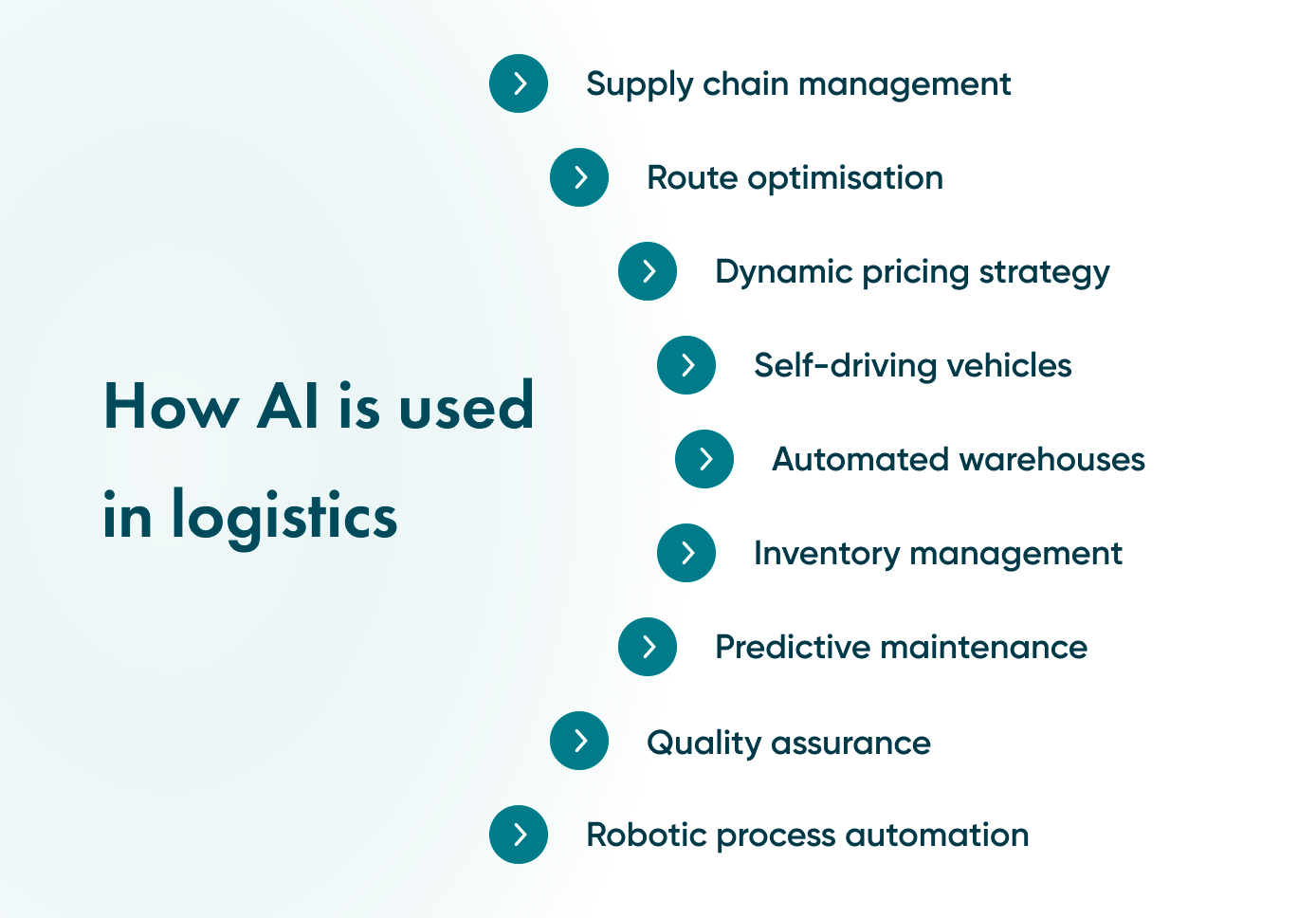
AI in supply chain management
In supply chain management, AI is used to forecast demand, logistics needs and customer behaviour.
The supply chain disruptions of the COVID-19 pandemic showed how much companies need visibility across the whole supply chain: to avoid critical failures, predict supply and demand accurately and plan deliveries.
AI and machine learning help organisations forecast potential issues and act to avoid or fix them, moving towards an automated supply chain.
Route optimisation
AI can optimise delivery routes and save time and fuel by shortening the distance driven.
It can also adjust delivery times to demand in different regions. Smart logistics systems coordinate hundreds of vehicles, which lowers fuel consumption and improves resource allocation.
Predicting customer demand also lets you match it to available transport capacity and plan deliveries more efficiently.
Dynamic pricing strategy
AI can power dynamic pricing models that take into account variables such as competitor prices, supply and demand.
The system monitors these factors so you can adjust prices quickly when the market changes.
Autonomous vehicles
Self-driving vehicles rely on AI, and some companies are developing self-driving trucks for cargo delivery.
These vehicles drive from A to B using sensors and computer vision, with algorithms processing data about their surroundings, road conditions and weather.
Autonomous trucks are expensive. Logistics companies do not build them and usually do not buy them either; they use them as a service from the companies that develop them. Over time, this can cut delivery costs and delays.
For most logistics firms, the near-term gains from AI come from routing and dispatch software rather than driverless vehicles.
Automated warehouses
When you cannot expand storage space, an automated warehouse helps you make better use of the space you have. An AI-based system controls how goods are moved, retrieved and placed on shelves.
Sensors on the shelves speed up order acceptance and the receiving of goods for storage. Automated warehouses also reduce manual labour and track stock levels and item placement.
They are also safer, because robotic equipment takes over hazardous work from people.
Inventory management
AI can also manage inventory and make sure the right quantity of goods enters and leaves the warehouse.
AI-based monitoring systems scan and record every product that enters the warehouse, so workers no longer do it by hand and can focus on other tasks.
Predictive maintenance
Predictive maintenance uses operational data and condition monitoring to predict when logistics equipment is likely to fail. Sensors inside the equipment send data to a monitoring system, so specialists can see how it is working.
Machine learning models spot signs of trouble and send an alert before damage occurs, which is usually cheaper than repairing broken equipment.
To find out where AI fits in your logistics business, contact us.
Quality assurance
AI-based computer vision can inspect goods for defects and notify workers so they can replace faulty items.
As a result, fewer damaged products reach customers. Go Wombat has experience developing AI software for quality assurance in manufacturing; see our article about it.
Robotic process automation
Robotic process automation (RPA) uses software bots to run rule-based, repetitive tasks, such as the back-office work mentioned earlier. RPA itself follows processes defined by people; combined with AI, it becomes intelligent automation that can handle less structured work.
In logistics, RPA improves accuracy and reduces human error in repetitive tasks.
Natural language processing (NLP) automates routine supply chain tasks that involve spoken or written text.
NLP is a branch of AI that lets machines understand and generate human language.
Challenges that occur with AI in logistics
Adopting AI in logistics comes with three main challenges.
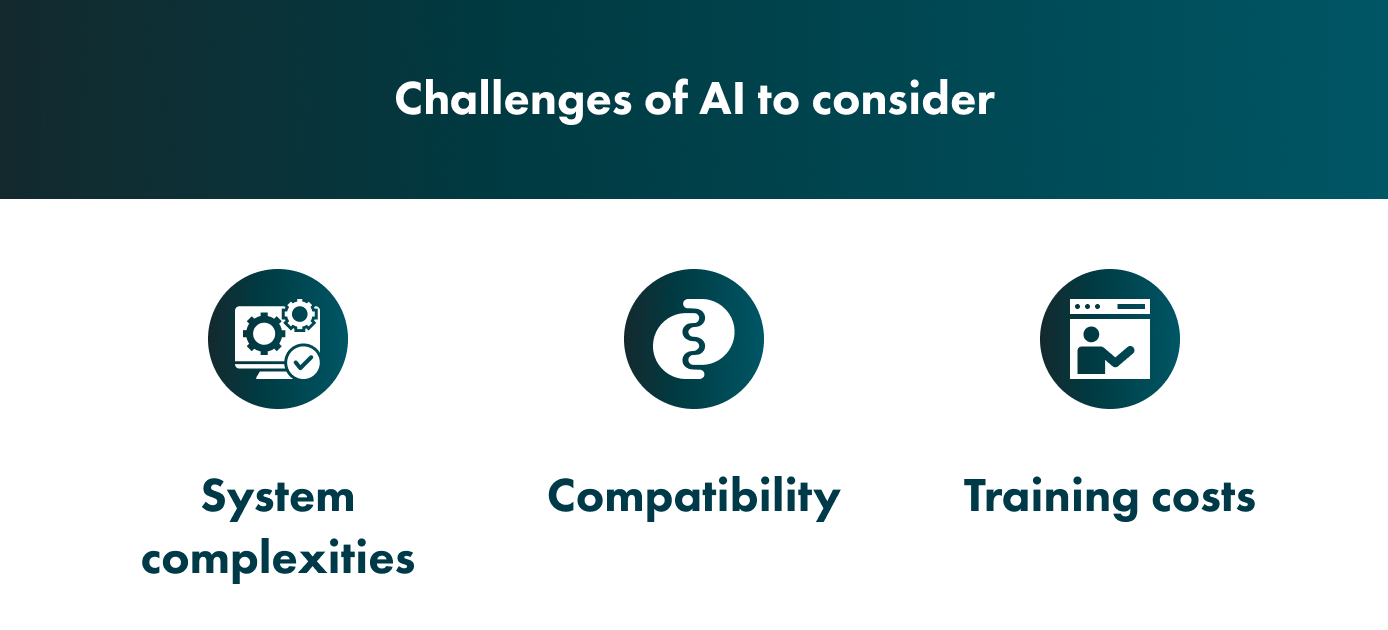
System complexities
AI systems are often cloud-based and need high bandwidth. Some also need specialised hardware, so plan for that investment.
Compatibility
Different AI systems and hardware may not work together. To avoid this, you can have one company develop all your software to a single standard, or work with a firm that documents your logistics app in detail.
Training costs
Your staff will need new skills to work with AI, so budget for training.
Final words
Integrating AI into logistics processes takes significant time and money, and the return comes over the long term.
Contact us to discuss AI for your logistics business.
FAQ
What is AI technology in logistics?
In logistics, AI is mostly used for demand forecasting, route optimisation, inventory tracking and visual damage inspection.
It lets companies monitor critical processes and respond to changes quickly.
How is artificial intelligence used in logistics and supply chain management?
The main uses are supply chain management, dynamic pricing, delivery route optimisation, self-driving trucks for cargo delivery, inventory management, quality assurance (defect detection) and predictive maintenance.
How does AI work in the supply chain?
AI analyses supply chain data to predict outcomes and run simulations, which helps you identify potential issues early.
AI also reduces delays and human errors, so operations run more accurately and efficiently.
Share and subscribe to our blog
Related articles

How Does Logistics App Development Work in 2026?
Logistics app development explained: app types, core modules and features, practical AI use cases and the build process step by step.

Cloud Data Security: Protecting Sensitive Data
What cloud data security covers in private, public and hybrid clouds, why the Capital One, Uber and Accenture incidents happened, and the controls that prevent them.

Why Is the Digital Twin of an Oil Refinery the Most Complex AI System You Will Ever Build?
Why a digital twin of an oil refinery is so hard to build: seven interdependent layers from physics simulation to control system integration, results from Cosmo Oil's refinery digital twin, a look at Honeywell's planned digital-twin work at the Dangote refinery, team and data prerequisites, and why projects fail.

How can we help you ?

