



How Can a RAG Agent Handle ISO, GDPR and EU AI Act?

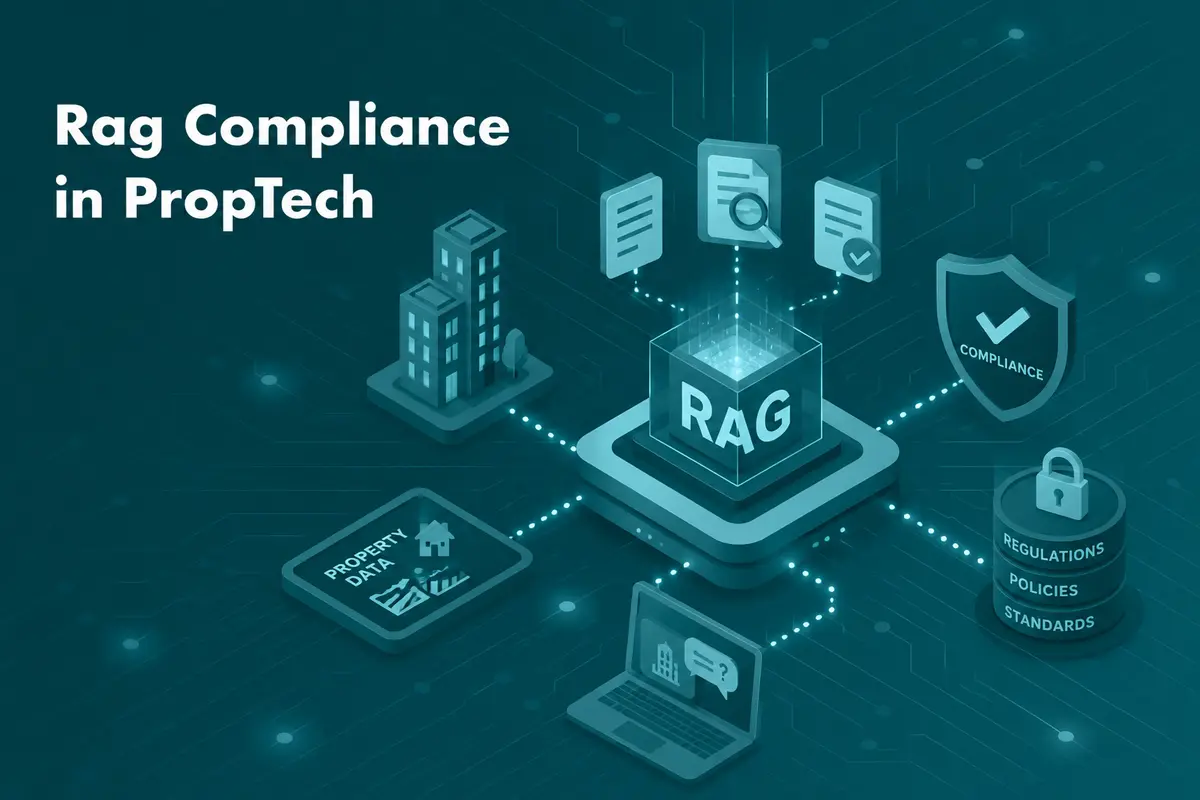
Most enterprise compliance teams have more documentation than they can manage. The hard part is finding the right document for an obligation, checking that it reflects the latest version of the framework, and working out how it interacts with a separate regulatory regime.
Managing ISO standards, GDPR, and the EU AI Act in parallel is no longer an edge case. ISO standards are voluntary, and the EU AI Act is being phased in: its bans on prohibited practices, AI literacy duties, rules for general-purpose AI models and Article 50 transparency duties already apply, while the obligations for high-risk systems start on 2 December 2027 (Annex III) and 2 August 2028 (Annex I) under the AI Omnibus amendment in force since 27 July 2026. The practical question is how to handle all three without doubling the size of the compliance team.
A RAG-powered agent does not make compliance simple, but it cuts the manual work of finding, checking and cross-referencing documents.
What Makes Multi-Framework Compliance So Difficult?
Each framework was designed independently, by different bodies, with different priorities and different vocabularies. ISO standards are built around controls, evidence, and audit cycles. GDPR is built around rights, legal bases, and accountability. The EU AI Act is built around risk classification, conformity, and transparency obligations.
The overlaps between the frameworks are rarely mapped in official documentation, so the mapping falls to the compliance team. That usually means manual reviews and knowledge held by a few people. When those people are unavailable, or a framework changes, gaps appear quickly.
When Three Frameworks Speak Three Different Languages
A data processing record under GDPR is not the same artefact as an information asset register under ISO 27001, even though both document how personal data moves through an organisation. A high-risk AI system under the EU AI Act may also be a significant system under internal ISO-aligned risk frameworks, but the classification criteria differ.
The translation work required across all three frameworks is:
- Invisible in project planning and resourcing conversations
- Entirely dependent on individuals who hold the cross-framework knowledge
- Impossible to automate with traditional document management tooling
- A source of audit exposure when those individuals are unavailable
Why Static Document Libraries Are No Longer Sufficient
The usual response is a central document repository that everyone can search. In practice, such repositories go out of date within months: policies drift from the controls they reference, framework updates invalidate assumptions in existing documents, and new systems are deployed without documentation updates.
A static library answers the question "where is the document?" A RAG-powered agent answers the question "what does the documentation tell me about this specific obligation, right now?"
The Version Control Problem
In compliance, version control usually fails for organisational rather than technical reasons. Documents are updated by different teams on different schedules, with nothing to flag when a document they depend on has changed.
A GDPR data protection impact assessment written two years ago may reference a data transfer mechanism that has since been revised. Nobody flagged it. The document still exists, still looks current, and still gets cited in audits.
What Is a RAG-Powered Agent and How Does It Work?
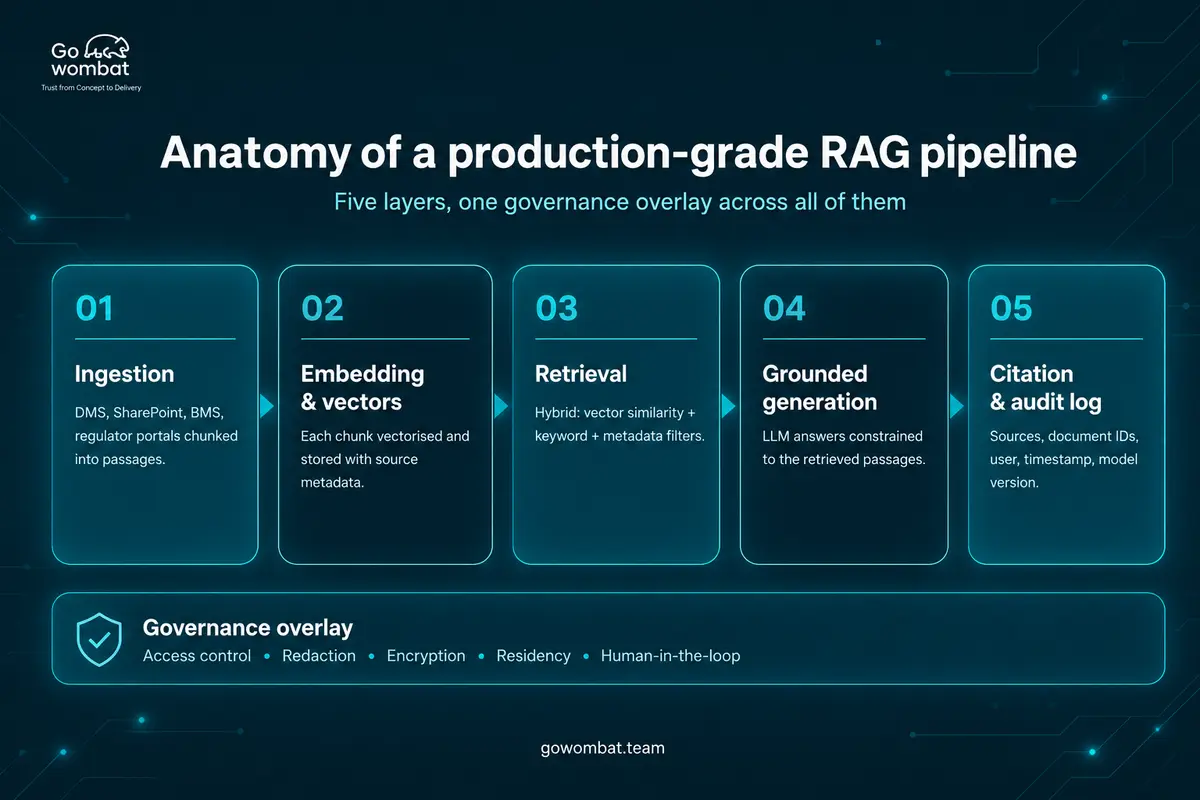
Retrieval-augmented generation is an architecture that connects a large language model to an external, version-controlled knowledge base. Rather than relying on what the model learned during training, the system retrieves relevant content in real time before generating a response.
The core components of a RAG-powered agent in a compliance context are:
- A curated knowledge base containing all relevant policy documents, framework texts, and internal procedures
- A retrieval mechanism that identifies and surfaces the most semantically relevant content for any given query
- A language model that synthesises a response grounded in the retrieved content rather than in generalised training knowledge
- An agent layer that can initiate follow-on actions based on what the retrieval surfaces
That agent layer is what separates a RAG-powered agent from a sophisticated search tool. Rather than simply answering a question, it can flag a gap in documentation, route a query to the correct policy owner, or trigger a review workflow when a retrieved document is past its scheduled review date.
The Difference Between Searching Documents and Retrieving Meaning
Standard enterprise search returns documents that contain matching terms, ranked by keyword matches, whether or not they answer the question.
LLM document retrieval works differently. The system understands semantic intent. Ask whether a particular data transfer to a US-based processor is compliant, and the agent does not return every document mentioning "processor" and "transfer." It identifies the applicable GDPR transfer mechanism, retrieves the relevant processor agreement, checks whether the transfer is documented under the correct legal basis, and surfaces the gap if it is not.
Moving from locating documents to understanding what they mean in context is what makes a RAG-powered agent useful across several compliance frameworks at once.
How Morgan Stanley Used RAG Across 100,000+ Documents
Morgan Stanley's wealth management division had a proprietary research library of over 100,000 documents. Financial advisors needed answers from it during client conversations, and manual search was too slow.
In 2023, Morgan Stanley partnered with OpenAI to deploy a RAG-powered assistant that indexed the library, made it searchable in seconds and grounded its answers in named source documents. Document retrieval efficiency rose from 20% to 80%. According to OpenAI's case study, over 98% of advisor teams actively use it, and the firm is scaling it to its institutional securities group. The firm's Head of Firmwide AI described the system as making every advisor as knowledgeable as the most informed person in the organisation. That result came from what the retrieval layer could find, and how reliably, not from the model's training.
How Does AI ISO Compliance Change With an Agent?
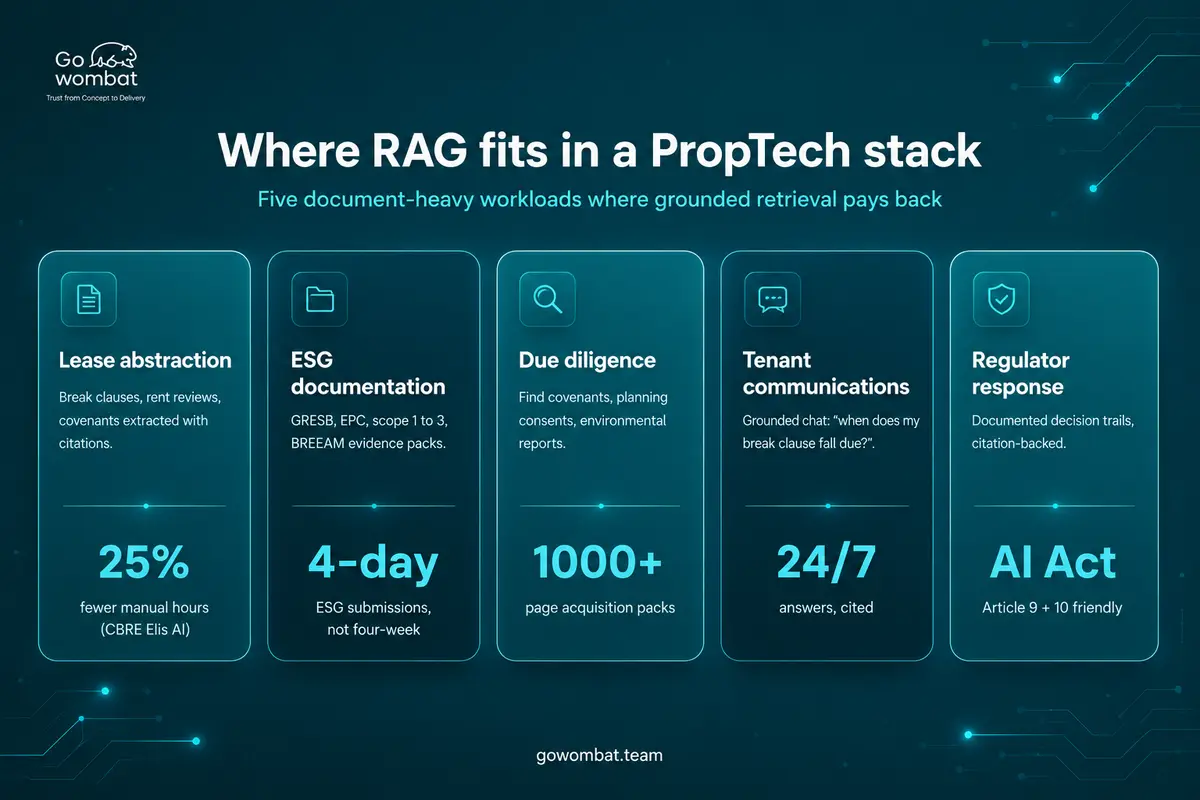
ISO standards are evidence-based. ISO 27001 defines a set of information security controls. Organisations must document how each is implemented, maintain the evidence, and demonstrate continuous effectiveness during audits. ISO 9001 applies the same logic to quality management.
The operational burden is in the assembly. Before an audit, compliance teams typically spend days pulling together evidence packs: locating the right policy version, confirming it maps to the correct control, and checking that supporting records exist and are dated appropriately.
An agent configured for ISO compliance changes that process:
- It maps each ISO control to the corresponding internal policy document automatically
- It identifies evidence documents linked to each control and checks their review status
- It flags controls where evidence is missing, incomplete, or overdue for update
- It produces a structured evidence summary that can be reviewed before the audit rather than assembled during it
Consider a professional services firm preparing for ISO 27001 recertification, with control evidence spread across four internal systems maintained by separate teams with inconsistent naming. With a RAG-powered agent connected to all four repositories through a unified control mapping, consolidation that takes two weeks by hand could be done in an afternoon. This is an illustrative scenario, but it mirrors the evidence-consolidation work we did ourselves on the way to Go Wombat’s own ISO 27001 certification, and the same work we now do for clients as part of our cybersecurity services.
Before LLMs: How JPMorgan's COiN Saved 360,000 Hours of Contract Review
JPMorgan Chase faced a similar problem with contracts. COiN (Contract Intelligence), which the bank put online in June 2016, interprets commercial loan agreements: work that, as Bloomberg reported in February 2017, had taken the bank's lawyers and loan officers about 360,000 hours a year.
COiN used machine learning and image recognition to review about 12,000 commercial credit agreements a year, extracting around 150 attributes from each in seconds. It predates generative AI and RAG, but it showed that document retrieval and classification can be automated at scale. The limit was never the number of contracts; it was the lack of a system that could read them consistently and fast enough.
Where Does GDPR Fit Into the RAG Agent Workflow?
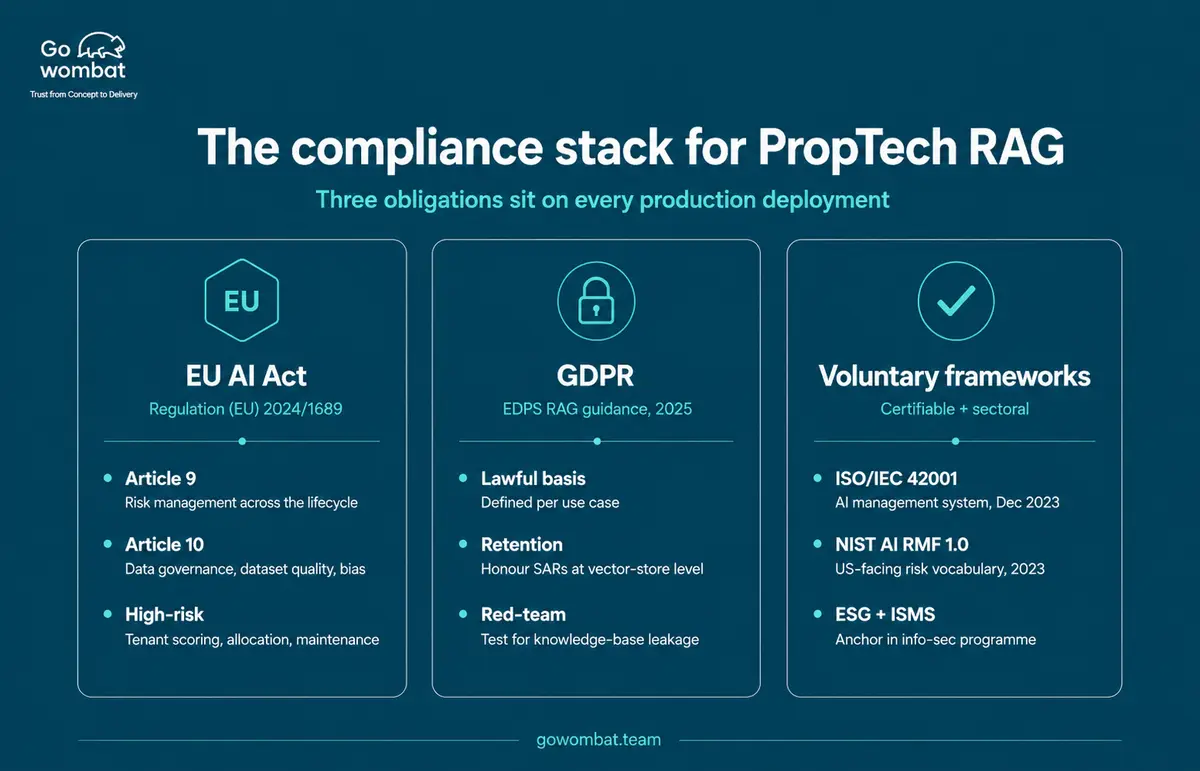
GDPR compliance generates a continuous stream of internal queries. Can this data be shared with a third-party processor in India? Does this marketing campaign rely on a legitimate interest assessment that is still valid? When did the retention schedule for HR records last receive a formal review?
Each question is answerable, but answering it correctly requires locating the right document, confirming its currency, and applying it to the specific situation at hand. Multiplied across a large organisation, that volume of query handling consumes significant compliance and legal capacity.
How the Agent Routes Queries to the Right Policy Documents
The routing is not rule-based in the traditional sense: the agent interprets what the query means and matches it against the knowledge base. For example:
- A question about cross-border data transfers surfaces the transfer mechanism documentation and the relevant processor agreement
- A question about retention retrieves the retention schedule and the legal basis documentation for the relevant data category
- A question about a specific data subject request pulls the applicable procedure and the response timeline obligations under Article 12
GDPR automation at this level does not introduce legal risk. It reduces the risk of human error, inconsistent application, and answers given from memory rather than from current documentation.
What Does the EU AI Act Add to the Compliance Picture?
The EU AI Act introduces a tiered risk classification system that cuts across existing compliance frameworks rather than sitting neatly beside them.
The four classification tiers and their core implications are:
- Unacceptable risk
Systems that are prohibited outright, including social scoring and certain biometric identification applications.
- High risk
Systems listed in Annex III are subject to conformity assessments, technical documentation, human oversight mechanisms, and EU database registration before deployment.
- Limited risk
Systems with specific transparency obligations, including chatbots and certain content generation tools.
- Minimal risk
Systems with no mandatory requirements beyond general product safety obligations.
For organisations operating multiple AI systems, tracking which system falls under which tier, and what documentation each tier requires, is a new and complex obligation on top of existing frameworks.
A RAG-powered agent configured with the EU AI Act classification criteria and the organisation's AI system register can maintain a live mapping: each system, its assigned risk tier, its documentation status, and any gaps relative to the Act's requirements.
Take a hypothetical example: an organisation has deployed an AI-assisted decision support tool within its HR function. When internal counsel began assessing EU AI Act exposure, cross-referencing the system's technical documentation against Annex III's employment and worker management provisions was not straightforward. A RAG-powered agent connected to both the system documentation and the regulatory text surfaced the relevant provisions, identified three areas where the technical file was incomplete, and flagged a secondary intersection with GDPR's automated decision-making provisions under Article 22.
Where the EU AI Act and GDPR Intersect and Why It Matters
The overlap between the EU AI Act and GDPR is not incidental. Both regulate how AI systems process personal data, make decisions affecting individuals, and document their logic. A high-risk AI system under the Act that also processes personal data will face obligations under both regimes.
Teams managing each framework in isolation are likely to miss those intersections. A RAG-powered agent that works across both knowledge bases can surface them.
What Meaningful Oversight Looks Like in Practice
The EU AI Act requires that high-risk systems be designed so that natural persons can effectively oversee their operation, intervene when necessary, and override outputs. The key documentation requirements for demonstrating that oversight capability are:
- A clear description of the human oversight measures built into the system design
- Evidence that operators and users have been provided with appropriate instructions
- Logging mechanisms that capture system outputs and any human interventions
- A defined process for suspending the system when oversight cannot be maintained
An agent can keep those documentation requirements linked to the system's current design and flag changes that affect previously documented oversight mechanisms.
What Are the Real Limits and How Should Teams Prepare?
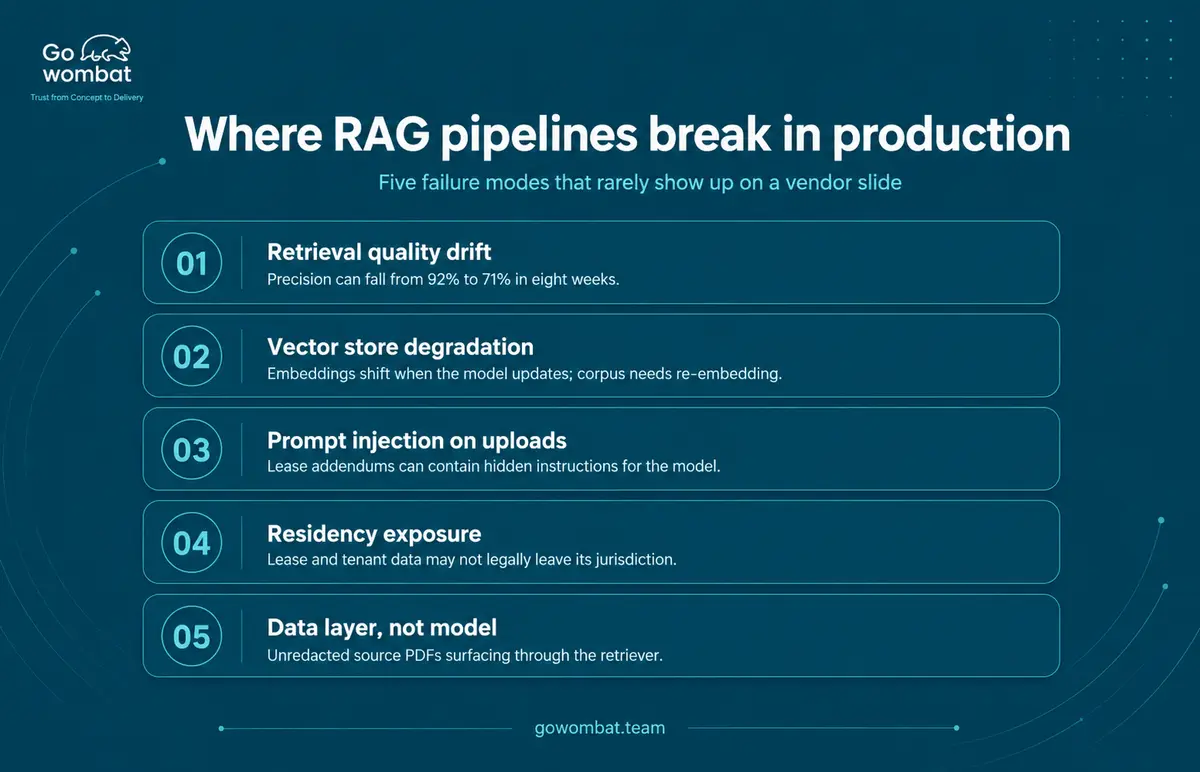
A RAG-powered agent is only as reliable as the documentation it retrieves. If the knowledge base contains outdated policies, incomplete records or inconsistently structured content, the agent will give outdated and inconsistent answers with confidence. That is worse than a system that visibly fails, because the answers look authoritative while being wrong.
The prerequisites for a working compliance agent are mostly organisational:
- A structured, consistently maintained policy library with clear ownership and review schedules
- Version control discipline across all documents in the knowledge base
- Defined escalation criteria that distinguish queries the agent can resolve autonomously from those requiring human sign-off
- Regular audits of agent outputs against source documents to identify retrieval drift
Designing Human-in-the-Loop as a Feature, Not a Fallback
The answer to these limits is to design human oversight into the workflow. Every output that informs a material compliance decision should show its source documents next to the answer, so reviewers can check the reasoning instead of accepting the conclusion.
What That Governance Layer Looks Like in Practice
In operational terms, this means defining clear escalation criteria: which query types require human sign-off before action is taken, which can be handled autonomously, and which should trigger a documentation review rather than a direct answer.
With that governance layer in place, a RAG-powered agent is a useful tool for enterprise AI compliance. Without it, the risks may outweigh the efficiency gains.
Final Thoughts
A RAG agent handles retrieval, evidence assembly and routine queries: it finds the relevant clause and shows its source. Judgement, accountability and the interpretation of ambiguous cases stay with the people who carry legal and professional responsibility for them.
Frequently Asked Questions
Can a RAG-powered agent replace a compliance officer?
No. The agent handles retrieval, cross-referencing, and routine query resolution, tasks that consume significant compliance capacity without requiring legal judgment. Decision-making authority over ambiguous or high-stakes matters remains with qualified professionals. The agent reduces the volume of low-complexity work so that compliance officers can focus on work that actually requires their expertise.
How does the agent stay current when regulations change?
The knowledge base must be actively maintained. When the EU AI Act's implementing acts are published, when ISO releases a revised standard, or when GDPR guidance is updated by a supervisory authority, the relevant documentation must be updated accordingly. Some implementations connect to regulatory publication feeds to partially automate this process, but human review of significant changes remains essential.
Is there a risk that the agent produces a confident but incorrect compliance answer?
Yes, and this is the most important limitation to design around. RAG architecture significantly reduces hallucination compared to a model operating from training knowledge alone, because responses are grounded in retrieved documents. However, if the retrieved document is itself outdated or incomplete, the answer may be wrong. Every output used to inform a compliance decision should display its source documents, enabling reviewers to verify the reasoning.
How long does implementation typically take for a multi-framework compliance deployment?
It depends mainly on the state of the existing documentation. Organisations with well-structured, centralised documentation reach a working proof of concept much sooner than those whose documents are scattered. Full production deployment across ISO, GDPR and EU AI Act knowledge bases, with routing logic, oversight workflows and governance controls in place, takes longer and depends on the complexity of the existing documentation environment.
Does the EU AI Act apply to the RAG agent itself?
Potentially. If the agent is used in a context the Act classifies as high-risk, for example, supporting decisions that affect individuals' employment, creditworthiness, or access to essential services, the system itself may be subject to the Act's documentation and oversight obligations. This question should be addressed during the design phase with legal counsel familiar with the Act's scope provisions.
Share and subscribe to our blog
Related articles

A Big Step Forward for Our Security: ISO 27001:2022 Certification
Go Wombat is now ISO 27001:2022 certified. What the information security standard requires and the steps we took to get certified.

How to Achieve ISO 27001 Certification in 2026?
How ISO 27001 certification works in 2026: ISMS scope, risk assessment, Stage 1 and Stage 2 audits, costs, surveillance audits and recertification.

6 GDPR Compliance Principles You Need to Master
Organisations may face serious financial, legal, and reputational risk if they do not comprehend and implement GDPR compliance principles. GDPR requirements adherence is a board level concern rather than just legal, technical and organisat…

The Impact of the GDPR on SMEs
How has the law changed since the Data Protection Act, and how does the GDPR affect SMEs? The GDPR concept is not new. We have already touched on it in our and hipaa certification covering some details…

Similarities, Differences, and Everything You Need to Know About GDPR and HIPAA Compliance
If your company leverages digital tools it means that you have to comply with the regulations of the region you work in. For example, if you are gathering, storing, or processing the personal information of European Union (EU) residents, y…

How Can MCP Agents Run a Smart City Grid in Real Time?
How Model Context Protocol agents can coordinate a smart city's energy grid in real time — reading from EMS, DERMS and market feeds, while hard real-time control stays on physical controllers.
-blogCardMobile-480x320.webp)
Is Smart Cities Agentic AI A Missing Infrastructure Layer?
Smart cities collect plenty of sensor data but act on little of it. How AI agents can turn that data into real-time responses, and what it takes to deploy them.

How Smart Stadiums Are Evolving into Digital Ecosystems
How AI, IoT, digital twins and custom software are changing stadium operations, security, fan engagement and revenue in 2026.

How can we help you?

