



Project Discovery Phase in Software Development


Why a discovery phase matters
According to PMI’s 2014 Pulse of the Profession report on requirements management, 47% of unsuccessful projects failed to meet their goals because of inaccurate requirements management.
A discovery phase reduces that risk: it defines the requirements and development steps before development starts.
What is The Discovery Phase Of A Software Development Project?
A discovery phase in software development is a detailed analysis of a future product that defines its features and its business and technical requirements.
The team studies the client’s business and the needs and pain points of its users. The client ends up with a prototype and the documentation needed to start development.
When changes are needed during development, the discovery documents show what can be changed, what the change will affect and how it will alter the plan. This keeps the project on course instead of slowing it down.
A discovery phase is still useful if development has already started. It can find critical issues that were missed, so they are fixed before they harm the final product.
Goals Of a Discovery Phase
A discovery phase helps you:
- Determine the scale and objectives of the project to have a more accurate estimation;
- Make sound decisions about the project based on analytical data, not on assumptions;
- Improve return on investment (ROI);
- Create a customer-oriented product;
- Avoid unexpected costs during the project development;
- Involve the right specialists in analysing the problem early.
To start a project discovery phase with Go Wombat, contact us.
Do You Always Need The Project Discovery Phase?
In some form, yes. For a simple user interface or landing page, we can prepare an offer with a detailed estimate, team, deadline and quality criteria without a long discovery phase.
A complex product needs more detailed analysis, so its discovery phase takes longer.
At Go Wombat, we pay attention to three things during discovery.
Design
A designer should join from the start, so the client can see and comment on mockups early.
Client’s team
We get to know the client’s whole team early and identify the key people and their requirements.
Meetings
The more we meet with the client and their team, the more details we learn about the project.
Benefits Of Software Development Discovery Phase
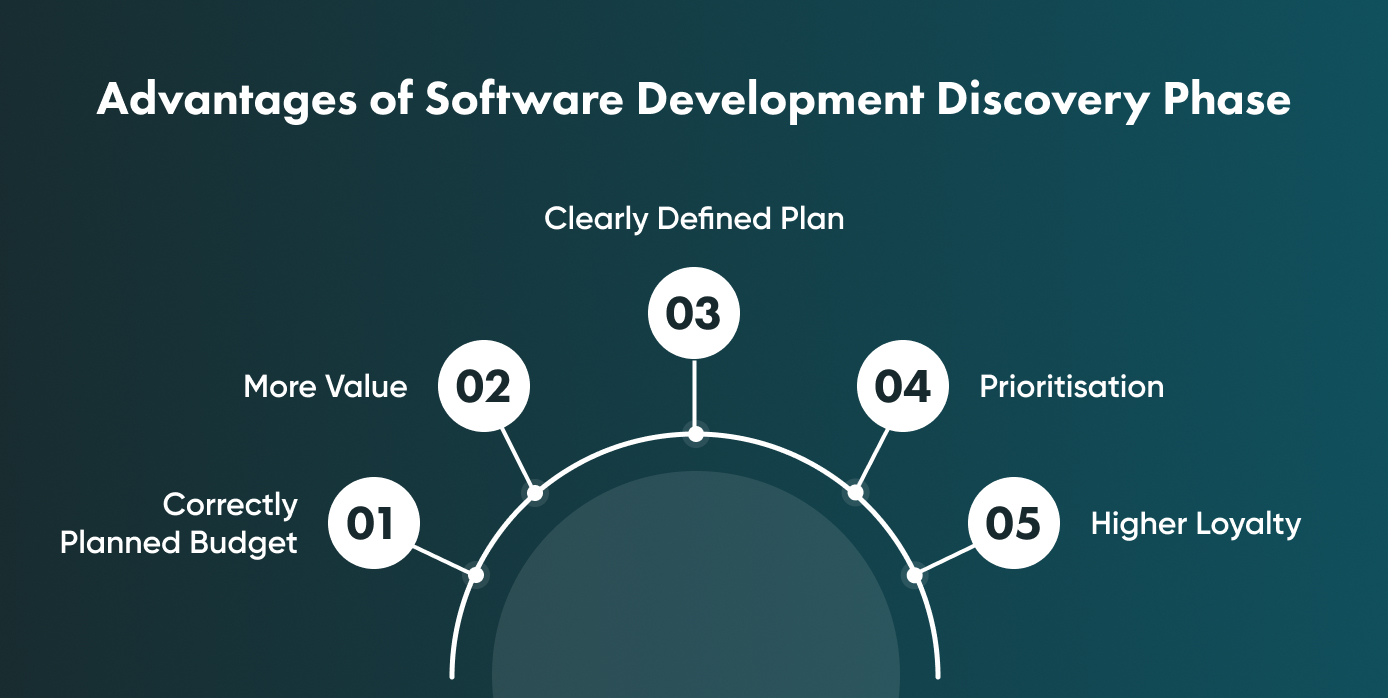
Correctly Planned Budget
During discovery, the business analyst writes user stories and the designers produce wireframes, both based on detailed discussions with you. Because your requirements are agreed before development starts, you save time and avoid paying for work that misses them.
More Value
Workshops with your team surface conflicting assumptions early, before they turn into rework. Together, you and the development company get a better understanding of your market and target audience and can make the product customer-centric.
Clearly Defined Plan
After discovery, developers start with a clear plan, agreed requirements and specifications, and known goals and deliverables. This reduces the risk of missed deadlines and budget overruns.
Prioritisation
At the start of a project, every feature can seem critical, and it is hard to know where to begin.
Discovery helps you rank the features, so developers build the most important ones first.
Tight Collaboration And Higher Loyalty
If you skip discovery, you still get an estimate and a specification, but no way to judge whether you have picked the right company. During discovery you spend many hours with the vendor discussing the critical parts of the product, which shows how well you work together and builds trust.
What About The Benefits For A Vendor?
A discovery phase also helps the development company in two ways:
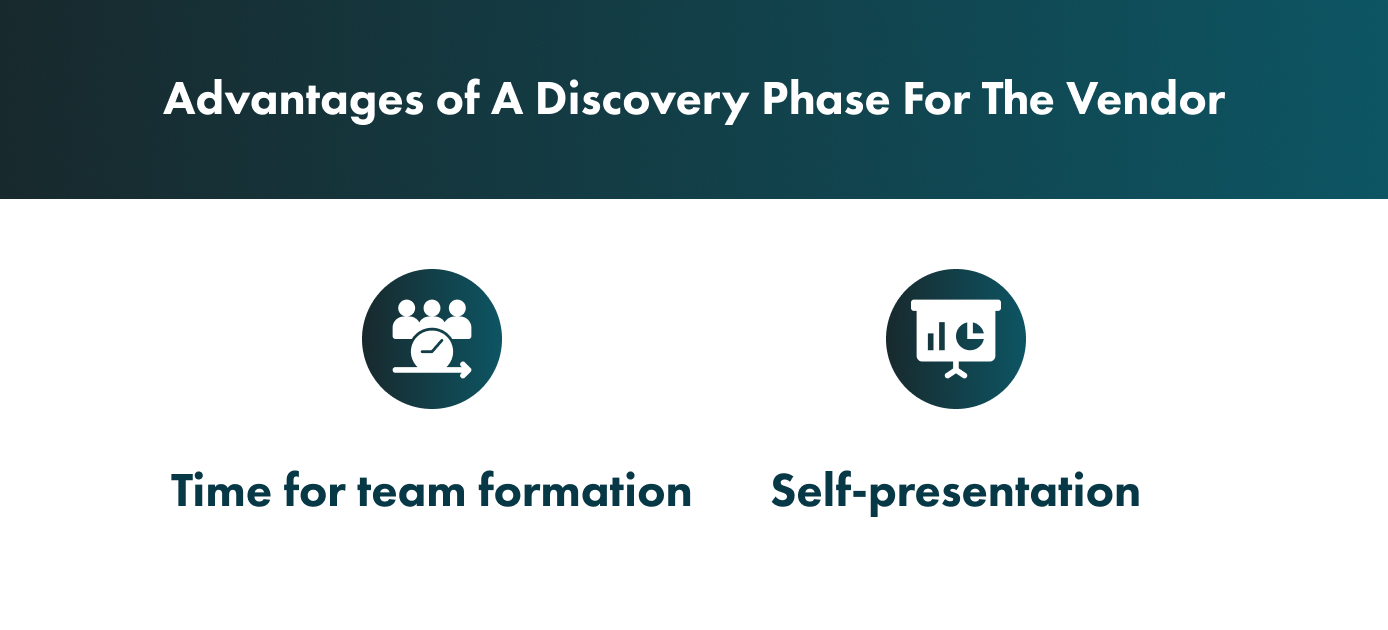
Team formation. The company can use discovery to choose the specialists best suited to your project.
Self-presentation. Discovery lets the company show how it works and give the client the information they need to decide.
Most projects need a market analysis and a feasibility study. Go Wombat can help: contact us.
Main Stages During The Discovery Phase
The exact stages depend on the company’s processes, but most development companies go through these five.
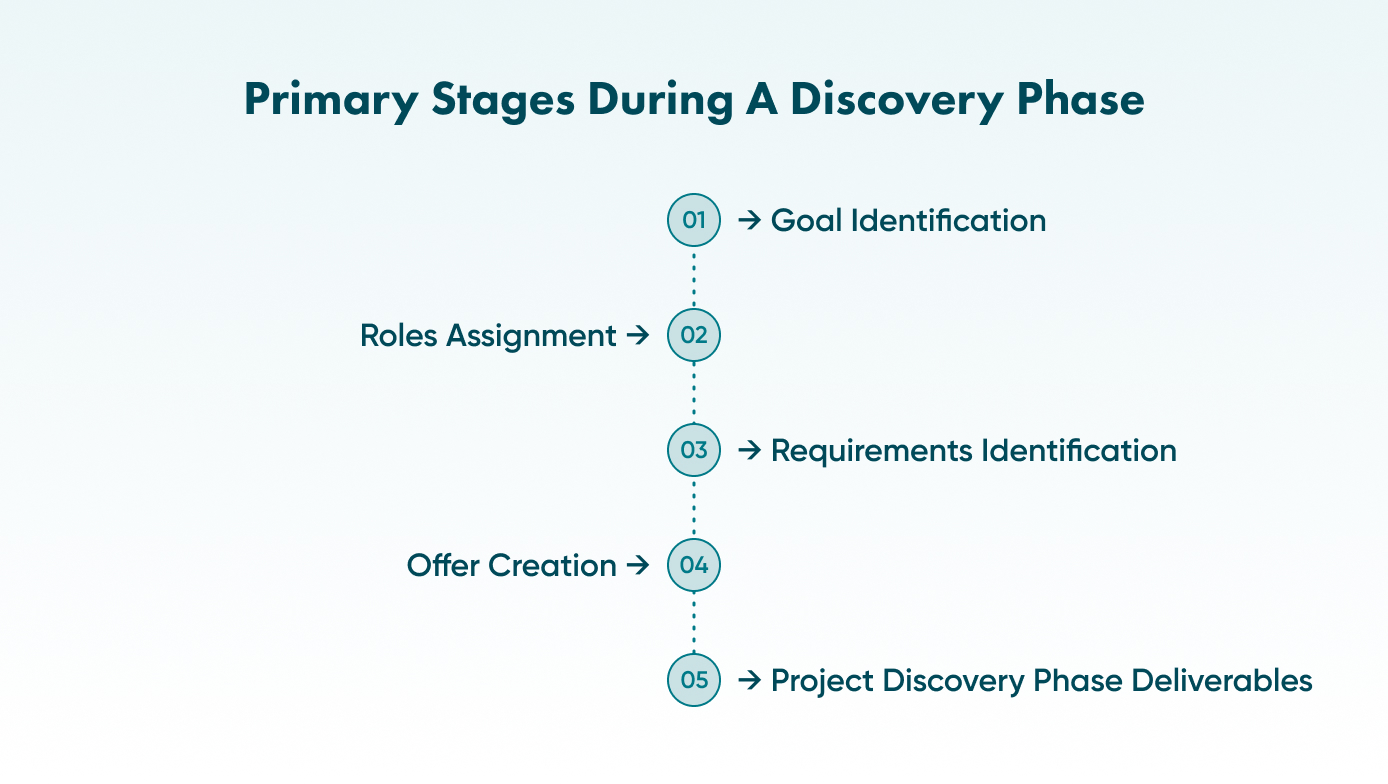
Goals Identification
The team learns about the client’s business, its current state, goals and main requirements, and discusses how the two companies will work together. The aim is to establish what the client needs and how it can be built. Business analysts and project managers lead this stage.
Roles Assignment
A discovery phase usually involves four specialists: a business analyst, a UI/UX designer, a project manager and a software architect.
A business analyst identifies requirements and turns business goals into functional and non-functional requirements.
A designer creates a user interface and user experience.
A project manager runs the project: assigns roles, organises the work, communicates with the client, reports progress and keeps to deadlines.
A technical specialist, or software architect, checks that the business logic can be implemented and proposes the best architecture.
Requirements Identification
The team works out technically how to reach the expected result: functional and non-functional requirements, sketches and mockups, technical assessments and the architecture of the future product. Designers, business analysts and software architects work together at this stage.
Offer Creation
The company analyses the software development lifecycle (SDLC) for the project, prioritises the development stages, reviews the architecture with the client and prepares the offer. The goal is to give the client a clear, well-founded proposal. Project managers and technical specialists work on it.
Project Discovery Phase Deliverables
The client receives a detailed offer with costs, deadlines and technologies, plus a defined scope of work for the first product version. Project managers, software architects and business analysts prepare it.
Ignoring A Discovery Phase: What It May Lead To
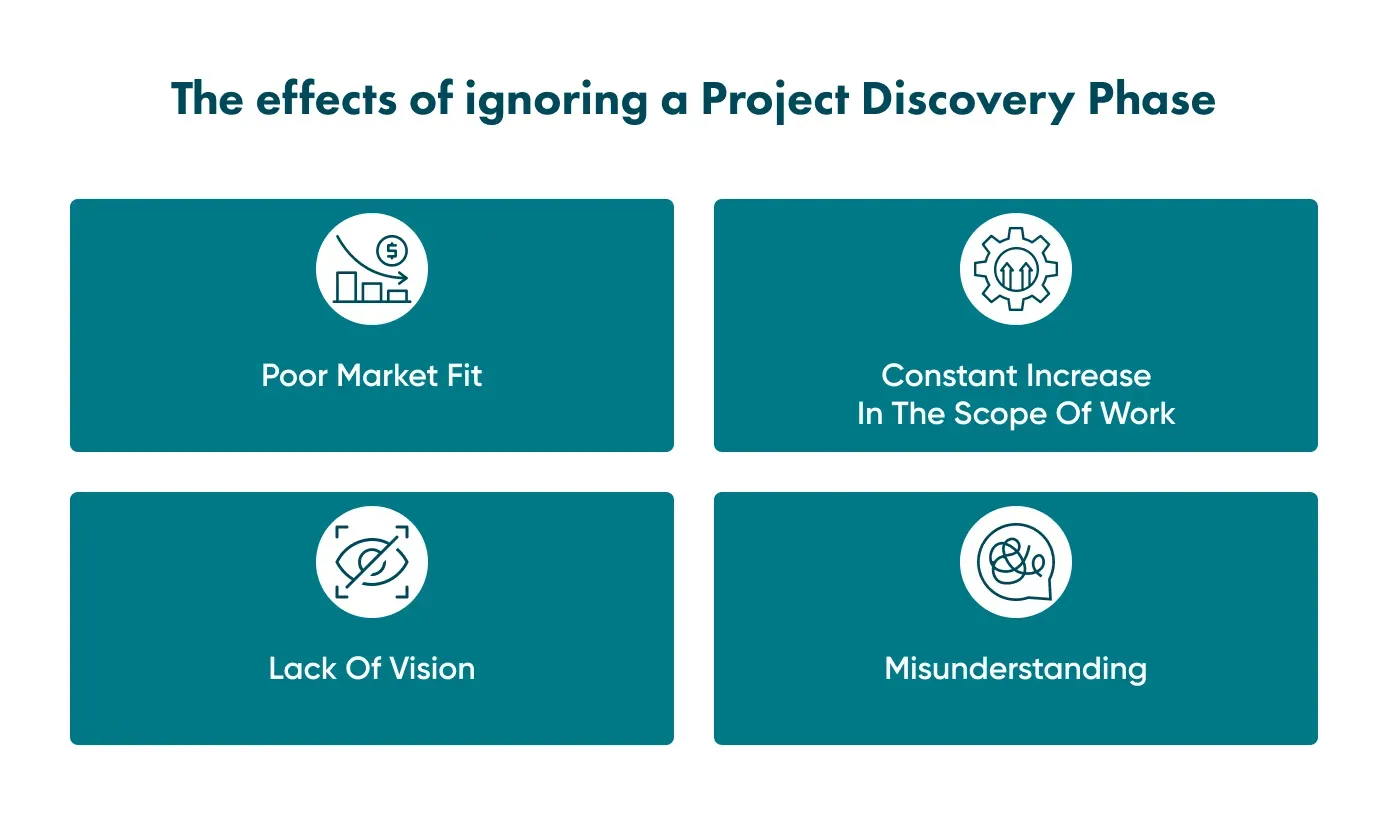
You can skip discovery to save money, but you may later find that the product does not meet your audience’s expectations or has security issues. These are the most common problems.
Poor Market Fit
Idea validation, the first step of discovery, shows whether your idea is feasible and how it can be built. Analysing competitors and the market supports risk reduction and makes a good market fit more likely.
Lack Of Vision
Discovery gives the team a shared vision of the product, because each step of development is discussed in advance. That shared vision also makes communication easier.
Constant Increase In The Scope Of Work
Without detailed analysis, the scope keeps growing during development, deadlines keep moving and costs rise.
Misunderstanding
Misunderstandings between the development team and your management lead to confusion, mistakes and extra costs.
Summing Up
A discovery phase in software development is the first step in turning an idea into a working product.
We often hear from clients who have an idea but no technical vision of the product or plan for building it.
Go Wombat offers a project discovery phase as a separate service or as part of any software development project. We run two main types: Initial Discovery and Audit.
Contact Go Wombat to plan your project’s discovery phase.
Share and subscribe to our blog
Related articles

Understanding CI/CD in Software Development
What continuous integration and continuous delivery are, how they differ, the practices they rely on, and the four stages of a CI/CD pipeline.

The Importance of Cybersecurity
Why cybersecurity matters for businesses, the most common types of cyberattacks, and practical steps to protect your company against them.

Our Community Projects: The Dnipro Botanical Garden
How Go Wombat supports the Oles Honchar Dnipro National University Botanical Garden: donations, a volunteer-built website, QR-code plant stands and a digitised plant archive.

How can we help you ?