



Thriving in the European Travel Tech Startup Scene: Overcoming Data Challenges


Travel technology is a growing market: IMARC Group puts the global travel technology market at USD 11.3 billion in 2025 and forecasts USD 18.7 billion by 2034. For startups in Europe, as elsewhere, one of the hardest parts of building a product in it is data.
Go Wombat has built software for travel tech companies. One of the main challenges we have found is working with big, fast-changing data, without which travel services cannot work.

The dynamic nature of big data in travel tech
Travel products deal with large amounts of data: hotel bookings, flight tickets, financial transactions.
The volume grows with the market: a startup targeting a global audience handles far more data than one serving a small niche.
For example, the ski booking system we built for Hellasgården, an outdoor recreation centre near Stockholm, needs only a small data set compared with a startup offering bookings worldwide.
Whatever the scope, travel data changes constantly. You need a system that processes it fast enough to show users accurate, up-to-date information.
By the time you finish downloading a data set, part of it may already be out of date.
The high cost of data sources
Quality data comes at a price, and for many startups, the cost of accessing reliable data sources can be prohibitive.
Scraping popular booking websites or free data sources often isn't sufficient for the needs of a travel tech startup.
Premium sources, such as global distribution systems and the travel technology provider Amadeus, save development time and provide more accurate and complete information.
However, these sources can have limitations such as small data caps and slow response times due to high demand.
Differentiating through smaller data providers
When many startups rely on the same data sources, it is hard to build an offering that stands out.
One way to stand out is to partner with smaller, specialised data providers, such as Cangooroo (a platform now integrated into the Juniper ecosystem) or Sunny Cars, which offers all-inclusive car rental.
Smaller providers are more flexible, offer less common data and are often willing to adapt their data output to your needs.
The downside is that their data is usually fragmented or niche, so you need several sources to build a complete data set.
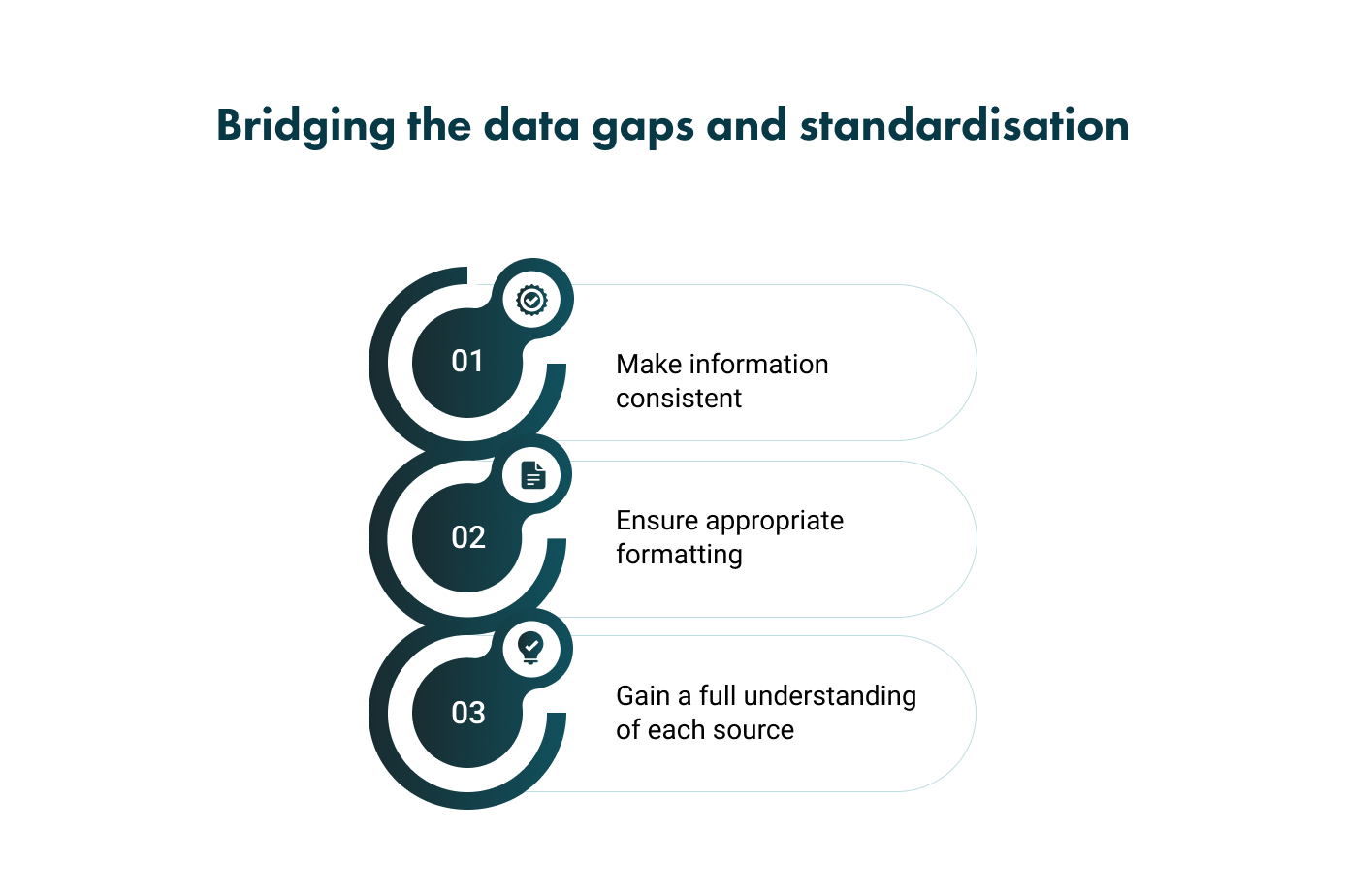
Bridging the data gaps and standardisation
To use data from several sources, you have to fill the gaps between them and normalise what you collect.
Matching and standardising data is hard: providers use their own terminology, data structures and formats.
You need to understand each source in detail and build a normalisation process that handles these differences.
In practice: identify the data elements that all sources share and agree on one standard format; write a data dictionary or schema that describes the structure of your data and the relationships between data points; and automate normalisation with scripts that handle each source’s quirks.
Preparing for data provider failures and incomplete documentation
Data providers make mistakes: they can send incorrect or outdated information or return errors. Their API documentation may be incomplete or out of date.
Startups often spend hours with the provider’s developers to understand and fix errors. Even after your integration is finished, a source can change and force you to redo the matching from scratch.
To deal with this, startups should:
- Build good working relationships with data providers so that issues get resolved faster.
- Regularly review data sources, APIs and documentation to catch integration issues early.
- Implement a system for tracking changes in data sources and APIs, allowing for proactive adjustments when necessary.
- Build error handling and data validation into their systems to protect data integrity and limit the impact of provider failures.
Using custom software to handle travel data
Custom software is one way to handle these problems, because it can be built around your specific providers and your large, non-standard data sets.
It helps in three ways.
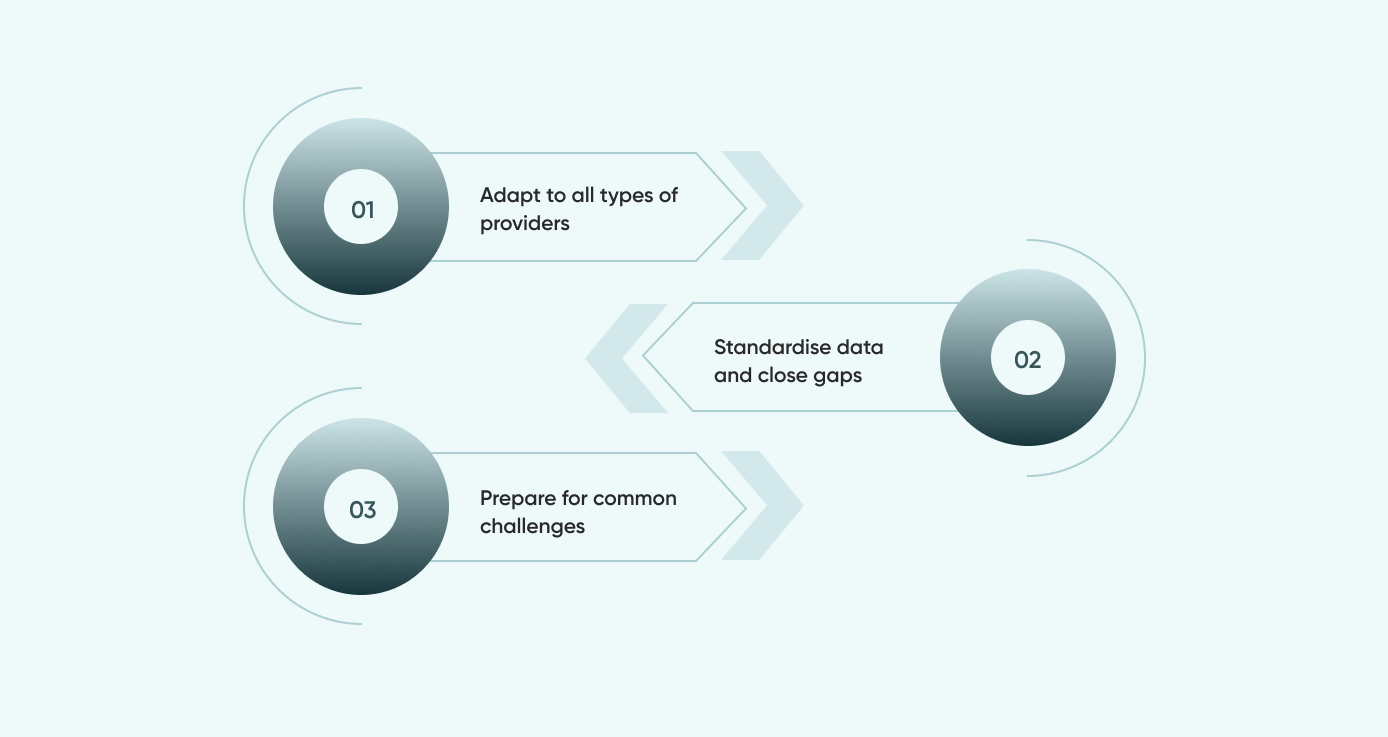
Adapt to all types of providers
Custom software can be adapted to each provider’s data volume, format and quirks, so you can work with any provider and get more accurate and complete data.
Standardise data and close gaps
Standardising data as it enters your system simplifies every process after it. Custom software can convert each provider’s data into your standard format and fill the gaps between sources.
Prepare for common challenges
Storing, processing and protecting the data you collect all bring their own problems. A custom system can be designed with these problems, and the provider failures described above, in mind.
Conclusion
In short: combine a premium source such as Amadeus with specialised providers, normalise everything into one schema, and monitor providers for API changes and errors.

Go Wombat has experience helping travel tech companies with data challenges. Contact us for a consultation.
Share and subscribe to our blog
Related articles

How Can Travel and Hospitality Software Solutions Boost Your Business
How custom software helps travel and hospitality businesses: the main benefits, the types of systems companies build, and the technology trends to watch in 2026.

Essential Things To Consider When Building A Travel Website
What to consider when building a travel website: the main types, why a website matters for travel businesses, revenue models and practical planning tips.

How to Streamline ETL Processes in Travel and Hospitality with Luigi?
How ETL pipelines work in data warehousing: the five stages, ETL vs ELT, batch vs streaming, cloud stacks, and the tools teams use in 2026.

Preparing for the Future with Go Wombat at The Next Web
Written ahead of TNW 2023 in Amsterdam (15–16 June): the conference themes, why they matter to Go Wombat, and what our team planned to learn there.

How can we help you?

