



Transform Your Business With ChatGPT Integration Service


ChatGPT integration connects OpenAI’s language models to your own systems (booking, CRM, ticketing and others) so that they can answer customers and staff using your real data. Here is how it can be used in different industries, and where it needs other tools alongside it.
Personalised Experiences in Travel
In travel, ChatGPT can help with tailored recommendations, instant support and follow-up after the trip.
Connected to your booking data, ChatGPT can suggest hotel packages, activities and restaurants that match a customer’s preferences.
ChatGPT can also provide real-time support for booking changes, amenity requests, or local recommendations.
After the trip, a chatbot can ask customers for feedback and reviews, so you hear about problems they might not report on their own. Other ways to use ChatGPT in travel:
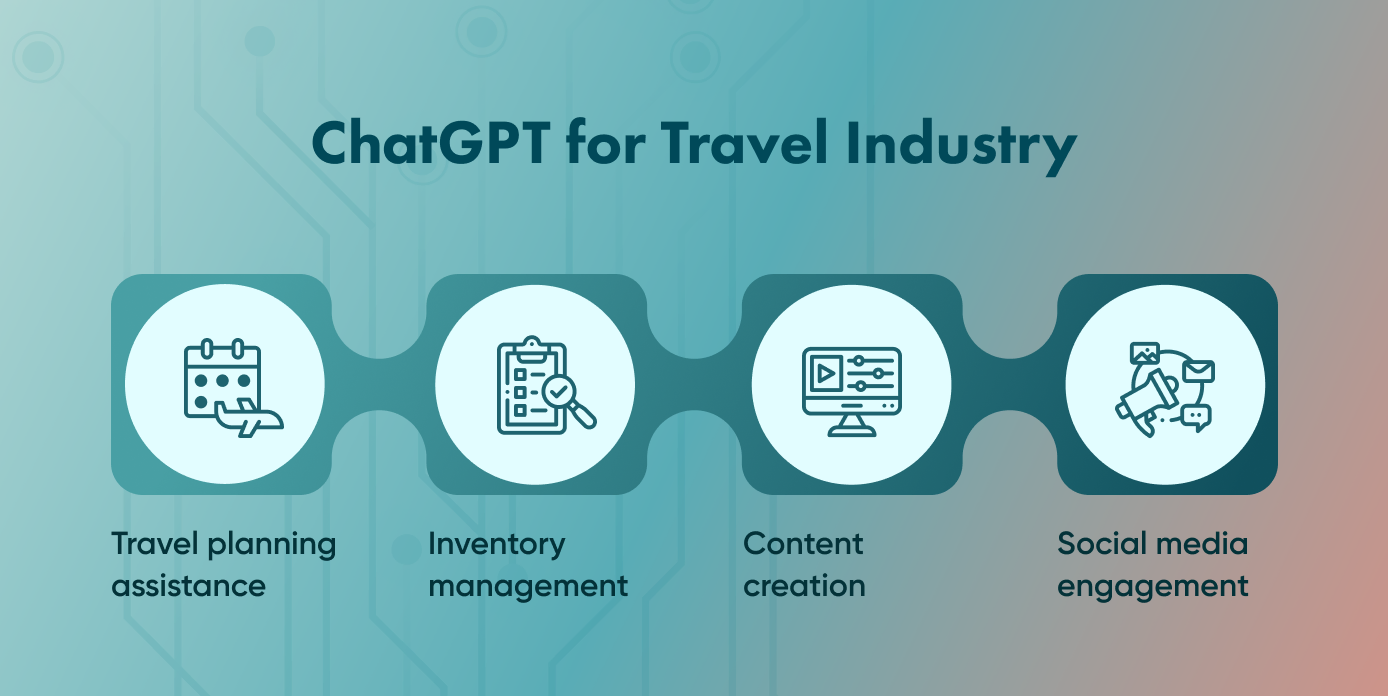
- Travel planning assistance - assist users in creating tour plans, suggesting activities, and providing information about local attractions.
- Inventory management - on top of your booking analytics, ChatGPT can summarise trends and draft pricing and availability suggestions for staff to review.
- Content creation - generate travel-related content, such as blog posts, itineraries, and travel tips, to engage and inform website visitors.
- Social media engagement - ChatGPT can engage with travellers on social media platforms by responding to comments, answering questions, and providing travel-related insights.
Tracking and Paperwork in Logistics
In logistics, ChatGPT can answer tracking queries, draft paperwork and explain the output of route-planning systems.
Route optimisation itself needs a dedicated optimisation engine that works with traffic, weather and inventory data. ChatGPT can sit on top of it and let dispatchers query and adjust routes in plain language.
For status updates, ChatGPT can respond to customer queries on shipment locations and expected arrival times based on real-time data.
By drafting paperwork and forms, ChatGPT can also reduce manual errors that delay shipments. According to McKinsey, generative AI and other current technologies could automate work activities that take up 60–70% of employees’ time; that estimate covers work in general, not logistics documentation specifically.
Other uses of ChatGPT in logistics:
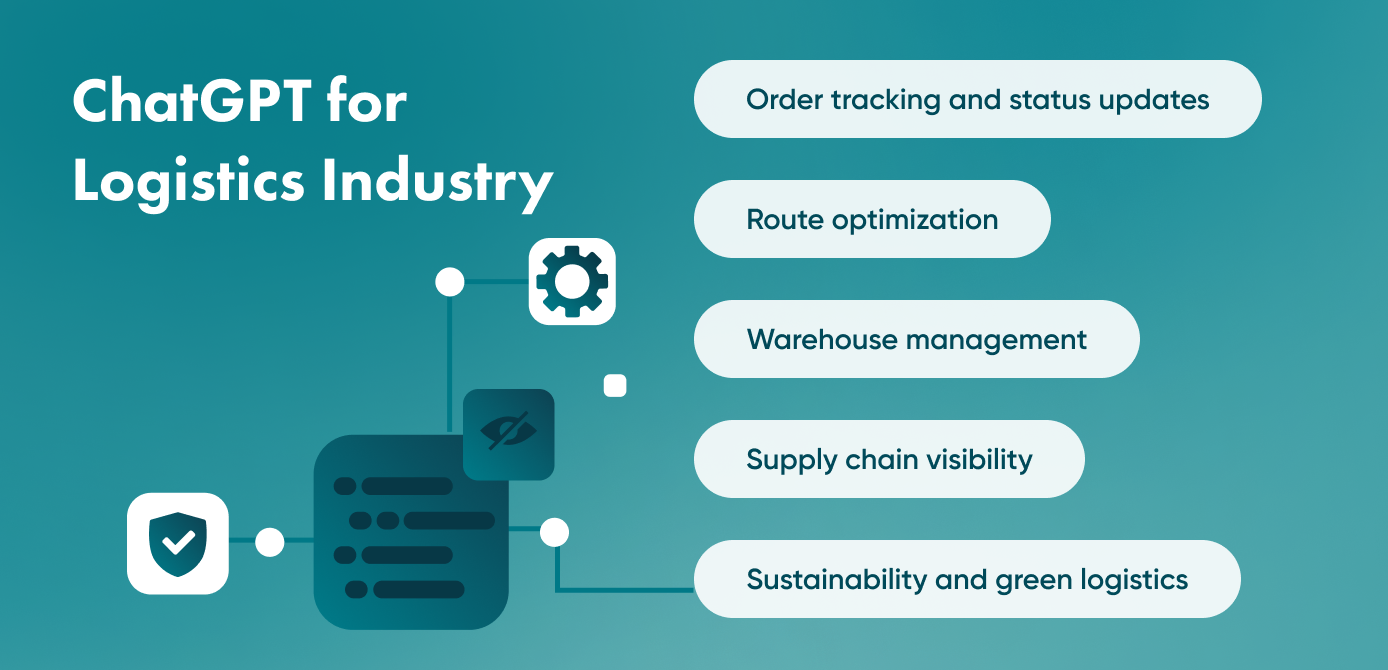
- Order tracking and status updates - ChatGPT can fetch real-time tracking information from your logistics systems and provide customers with up-to-date information on their orders.
- Route optimisation - connected to a routing engine, ChatGPT can explain and compare route options by cost, time and environmental impact.
- Warehouse management - integrated with a warehouse management system, ChatGPT can give staff picking, packing and shipping instructions and answer their questions.
- Supply chain visibility - ChatGPT can report the status of goods in transit from your tracking data, so businesses and customers learn about delays early.
- Sustainability - ChatGPT can present emissions data from your routing and fleet systems so teams can choose lower-emission options.
Virtual Assistance in Healthcare
In healthcare, ChatGPT can act as a virtual assistant for general health information and appointment management.
Main use cases:
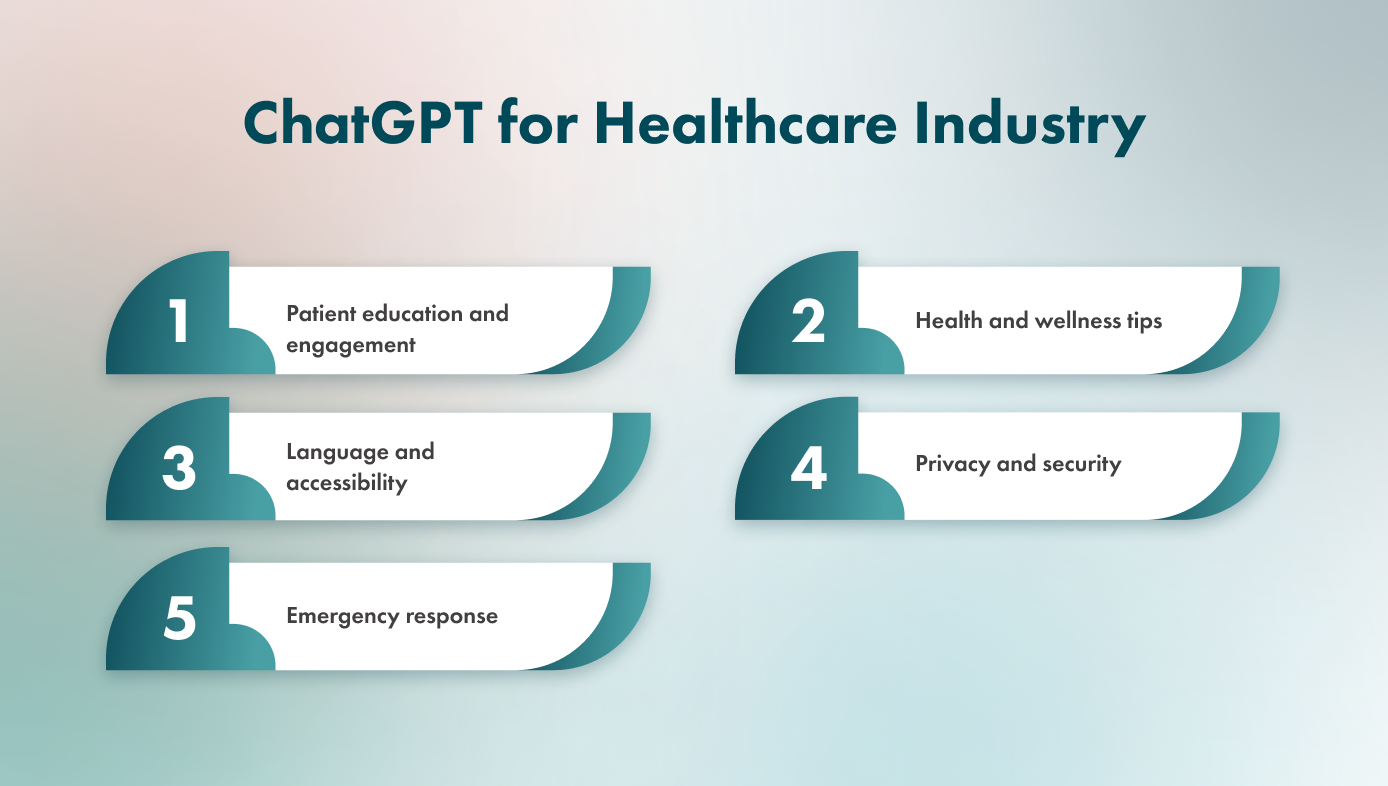
- Patient education and engagement - ChatGPT can explain general information about conditions and treatments in plain language and answer routine questions. Under OpenAI’s usage policies, tailored medical advice requires the involvement of a licensed professional.
- Health and wellness tips - ChatGPT can offer general health and wellness advice, including diet and exercise recommendations, stress management, and preventive care tips.
- Language and accessibility - real-time translation helps healthcare professionals communicate with patients who speak other languages.
- Privacy and security - Ensuring that patient data is handled securely and in compliance with healthcare regulations is critical. ChatGPT can be designed to meet these requirements.
ChatGPT can field routine customer inquiries to free up staff.
For health advice, ChatGPT can offer generalized tips on topics like nutrition, exercise, and preventative care.
ChatGPT can also book appointments: it asks what the patient needs and schedules a consultation based on provider availability.
Employee Experience in HR
In HR, ChatGPT can help with onboarding, feedback and training.
It can guide new hires through company policies, benefits registration and equipment set-up, and answer their questions quickly, which helps them get up to speed.
For existing staff, it can collect feedback and log grievances, giving management a direct view of morale and engagement.
It can also draft training content for different roles.
Other uses in HR:
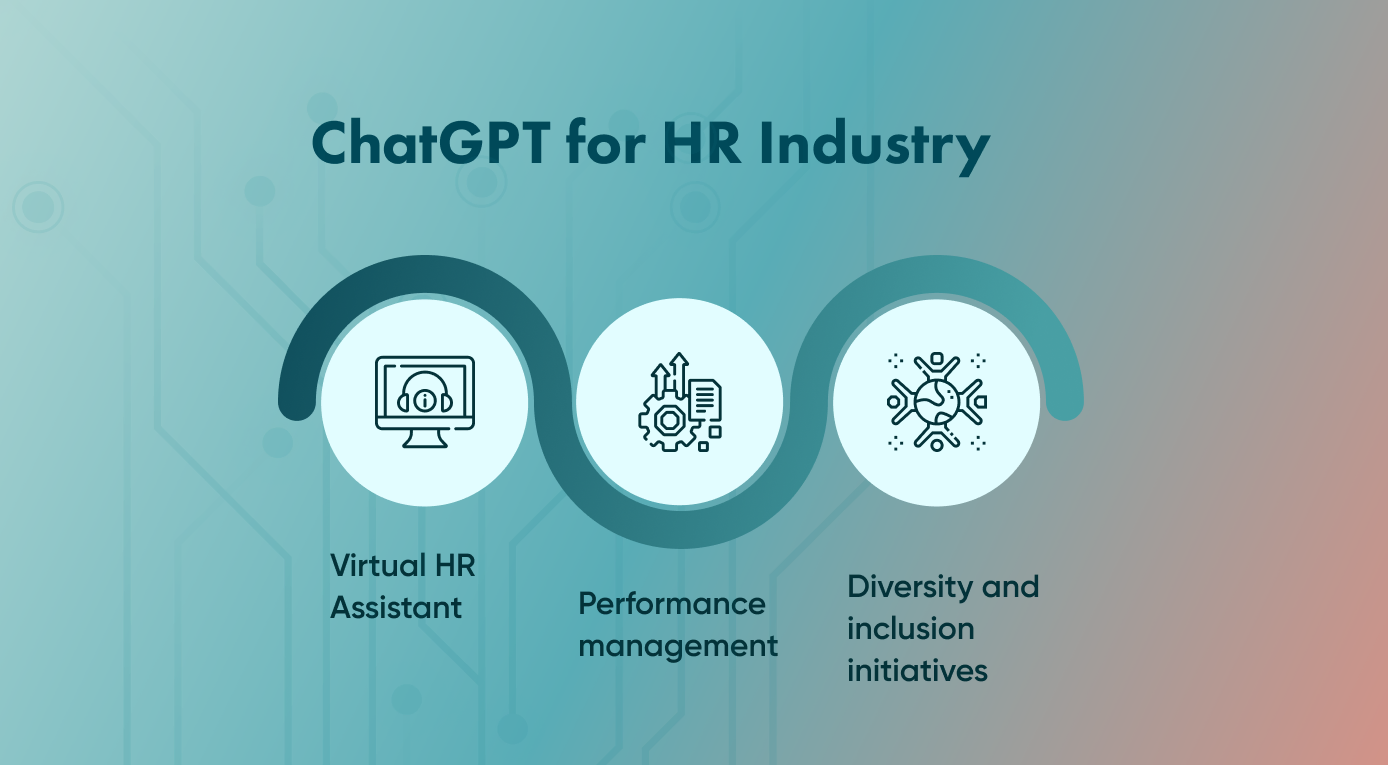
- Virtual HR Assistant - a chatbot powered by ChatGPT handles routine HR inquiries from employees. This can include questions about company policies, benefits, leave requests, and more, freeing up HR staff for more complex tasks.
- Performance management - ChatGPT can help facilitate performance reviews by guiding employees and managers through the process, providing tips, and explaining the evaluation criteria.
- Diversity and inclusion initiatives - ChatGPT provides information and resources related to diversity and inclusion in the workplace. It can help employees understand the importance of these initiatives and provide information on related events and programs.
Oil and Gas
In oil and gas, ChatGPT can support safety, supply chain and sustainability work.
It can give staff equipment operating instructions and safety reminders, and keep records of safety drills.
Connected to inventory and logistics systems, it can report stock levels at refineries and help coordinate deliveries of equipment, raw materials and fuel.
For sustainability, it can summarise operational and emissions data and help teams look for ways to cut emissions and waste.
Other uses in oil and gas:
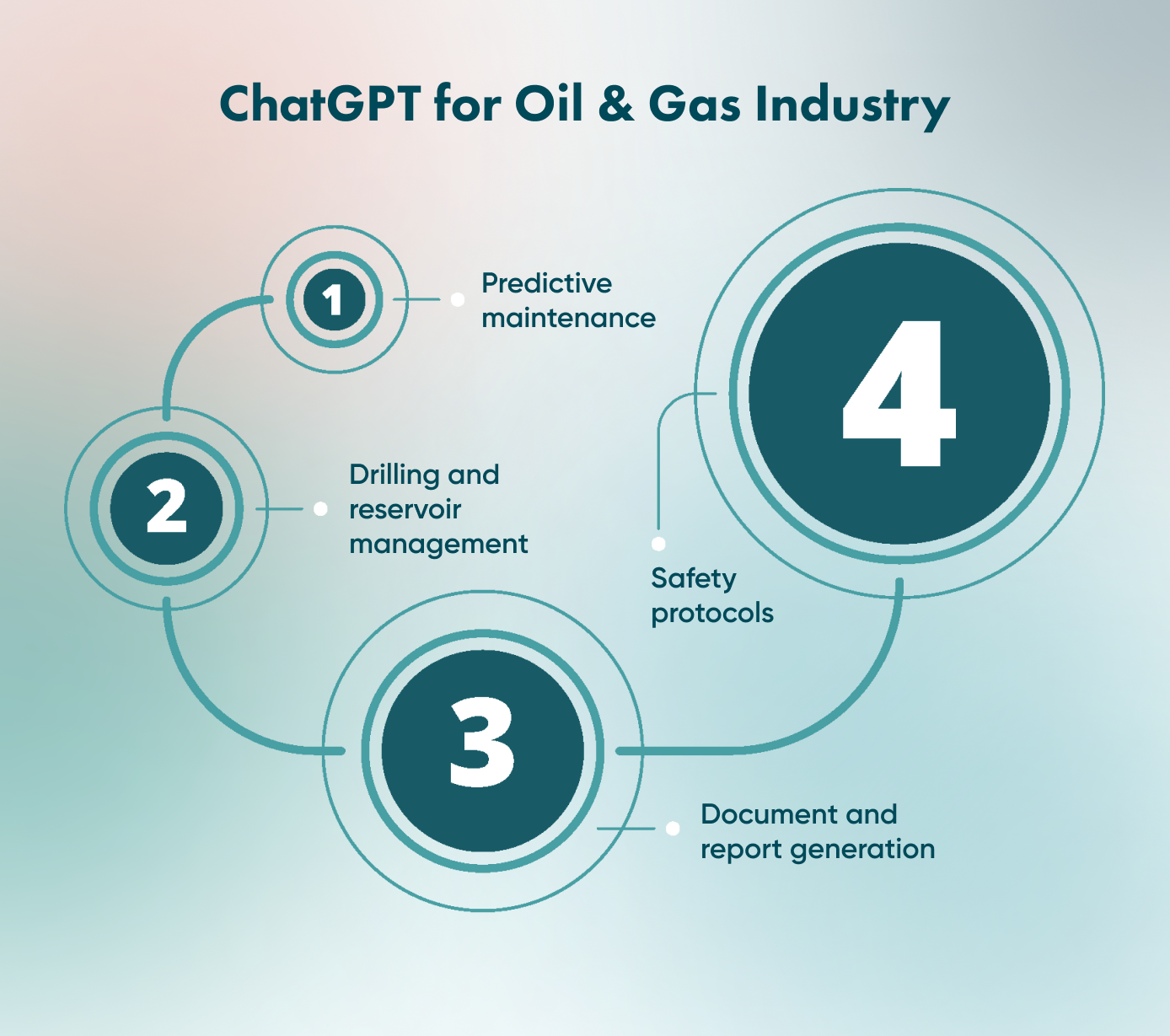
- Predictive maintenance - predictive models built on equipment sensor data forecast when maintenance is needed; ChatGPT can explain their alerts to engineers and help plan maintenance schedules.
- Drilling and reservoir management - ChatGPT can give engineers quick access to historical drilling and reservoir data and documentation; the optimisation itself relies on specialised engineering software.
- Document and report generation - ChatGPT can automate the generation of reports, technical documents, and documentation for regulatory compliance, saving time and reducing errors.
- Safety training - ChatGPT can help draft safety procedures, train staff on them and run emergency scenarios as training exercises.
Advertising
In advertising, ChatGPT can help with campaign analysis, content and audience engagement.
Connected to your ad analytics, it can summarise performance across channels and point out which platforms, messages and segments work best.
Based on customer data, it can also suggest content ideas and creative variations.
For budget allocation, ChatGPT can explain the output of forecasting models and help plan spending across campaigns.
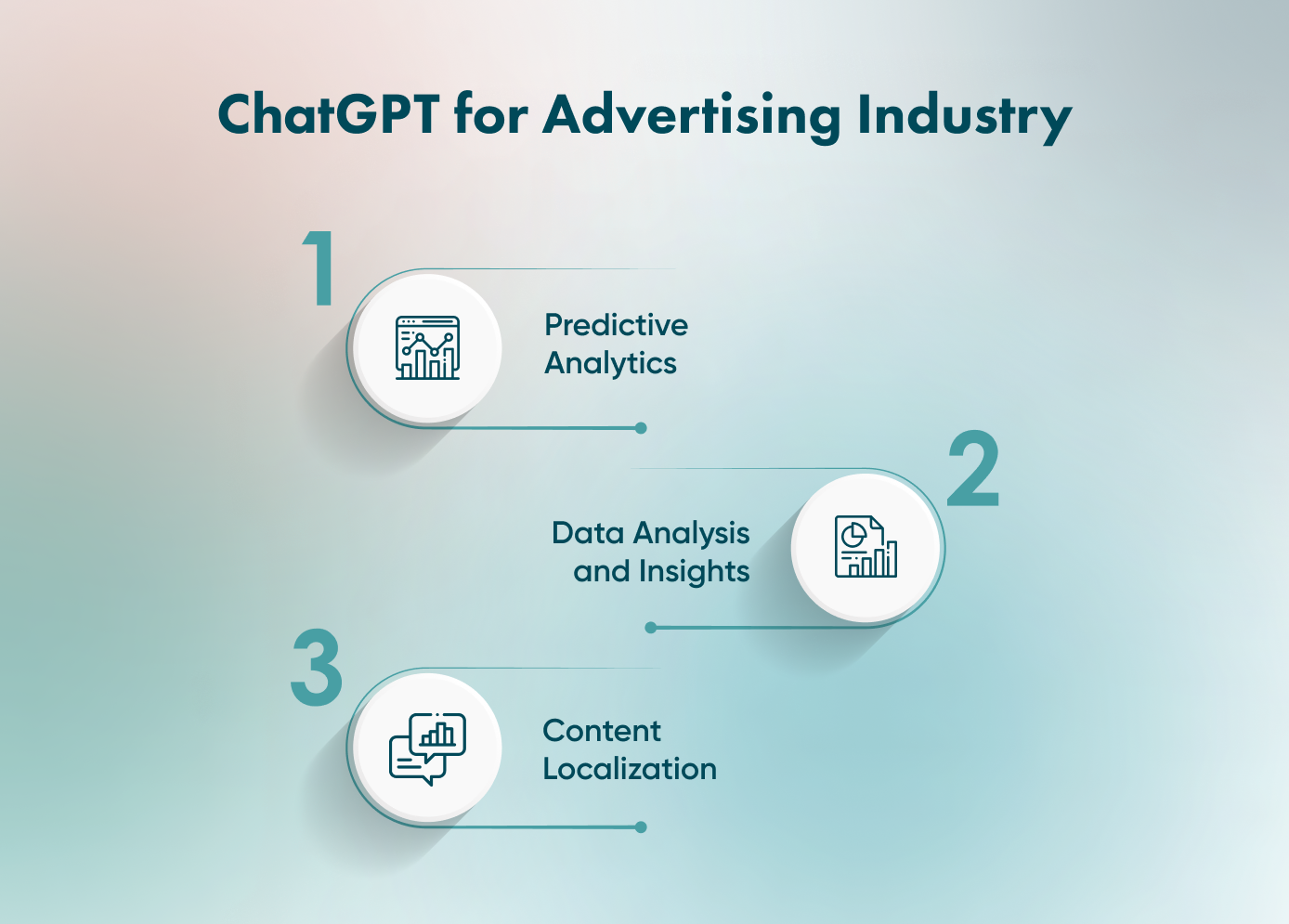
- Predictive analytics - purchase and churn predictions come from dedicated machine learning models; ChatGPT can make their results easy to query and explain.
- Data analysis - ChatGPT can help marketers query and summarise data on customer behaviour, trends and market conditions.
- Content localisation - ChatGPT can help translate and localise marketing content for different regions, with human review for cultural relevance.
Integrating AI with Industry Expertise
Go Wombat integrates AI into business software for clients in different industries, starting from the use case rather than the technology.
Schedule a consultation to discuss AI for your industry.
Share and subscribe to our blog
Related articles

AI CRM Software Development: The 2026 Complete Guide
How AI and machine learning change CRM software: benefits, key applications, agentic AI, data readiness, implementation steps, and when to build custom.

The Future of Chatbots for Marketing: How AI is Changing the Industry
How AI chatbots for marketing work, where they help (support, lead qualification, sales, feedback) and where they still fall short.

AI in Supply Chain and Logistics: How It Transforms Industry
How AI is used in supply chain and logistics: forecasting, route optimisation, warehouse automation, inventory, predictive maintenance and quality control, plus the challenges of adopting it.

How can we help you?

