



What is AdTech? A look at its influence on industries


AdTech examples, trends and privacy issues
Advertising technology, or AdTech, is the software that buys, sells, targets and measures digital ads: ad servers, demand-side and supply-side platforms, ad networks and ad exchanges.
AdTech is now a standard part of digital advertising campaigns. It relies heavily on Big Data: audience data drives targeting and measurement. Advertisers use it to buy digital advertising and measure what each placement returns.
AdTech emerged to simplify the increasingly complex process of buying and selling digital ads. Publishers and advertisers no longer negotiate every placement directly; much of the buying is automated.
This article explains what AdTech means, how businesses benefit from it and which regulations apply.
Go Wombat has built several AdTech projects; one of them is described at the end of this article.
What Is Advertising Technology (Ad Tech)?
AdTech is a broad term for the tools and software platforms used to set up and serve ads during advertising campaigns. With them, advertisers collect audience data, identify their target audience, set targeting parameters and measure the return on campaign spend.
Customer data lets advertisers personalise ads and show them to the right audience at the right time.
Why is AdTech Important?
Ad agencies, advertisers and publishers use AdTech to track, manage and monetise ad campaigns. It automates buying and selling ads and helps decide where each ad is shown.
Audience analysis, ad delivery and channel measurement are the basis of digital advertising, for advertisers and publishers alike. The websites of hotels and tour operators, for example, benefit from the audience insight. Owners of ad platforms, in turn, can sell display ads and ad space at a better price.
AdTech also makes it easier to match advertisers' demand with publishers' supply in ad networks.
What are examples of AdTech?
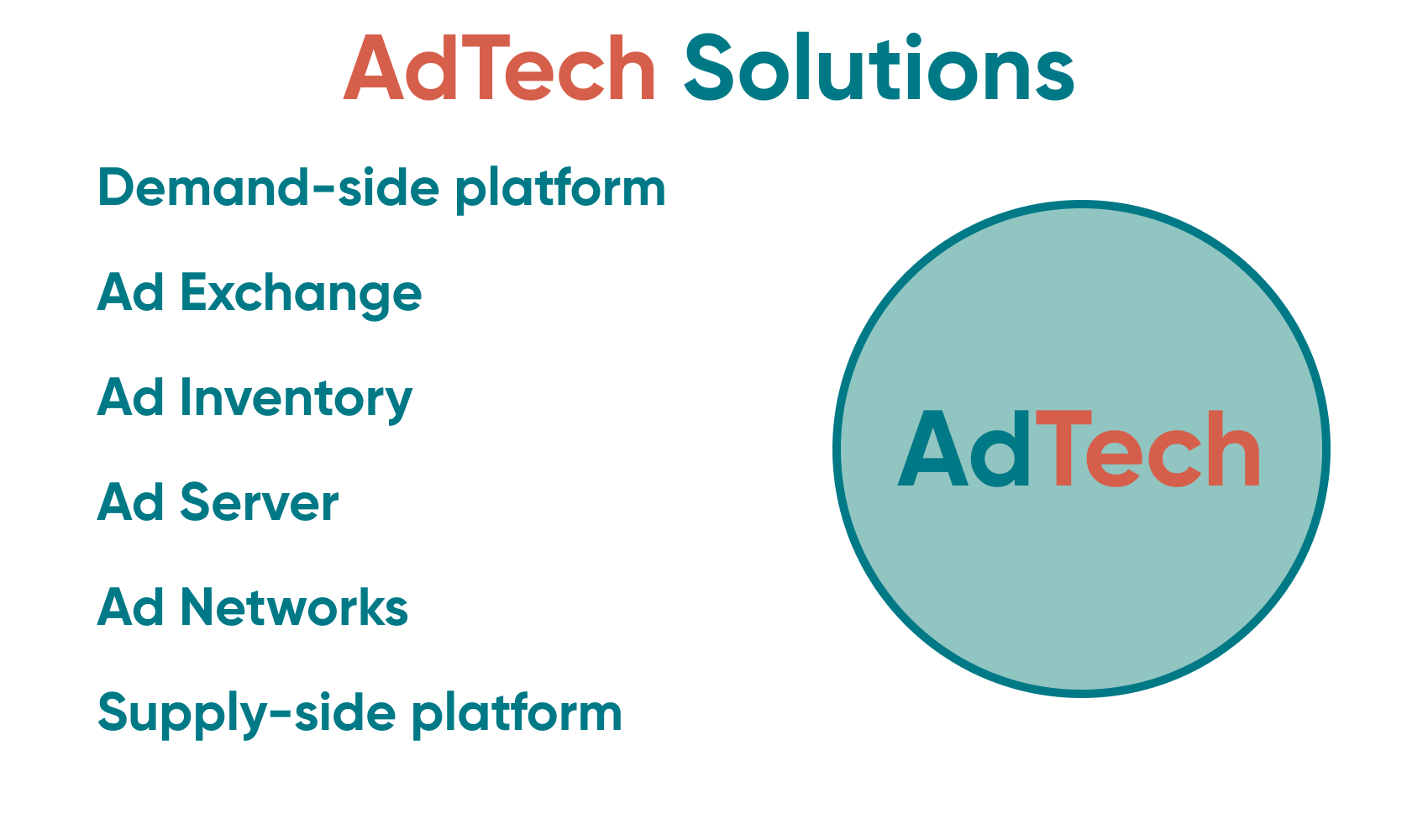
The main building blocks of AdTech:
Ad Inventory
The ad space a publisher offers to advertisers. Depending on how it is sold, it is either guaranteed inventory or remnant inventory. Guaranteed inventory is reserved for a specific advertiser in a direct sale, without intermediaries. Remnant inventory is sold through ad networks in open or closed auctions, often programmatically, that is, bought automatically by software, for example through real-time bidding. Ad networks consolidate the inventory of different publishers and offer it to advertisers.
Ad Exchange
A marketplace where ad space, including video advertising, is bought and sold.
Ad Network
A platform that aggregates ad space from many websites and sells it to advertisers.
Ad Server
Software that stores ad content intended for placement on publishers' websites and mobile apps.
Demand-side platform
Software that buys ad space automatically according to the buyer's settings, as an alternative to buying through ad networks.
Supply-side platform (SSP)
Software that represents publishers and sells their ad inventory, aiming for the highest price.
The Benefits of Advertising Technology (AdTech)
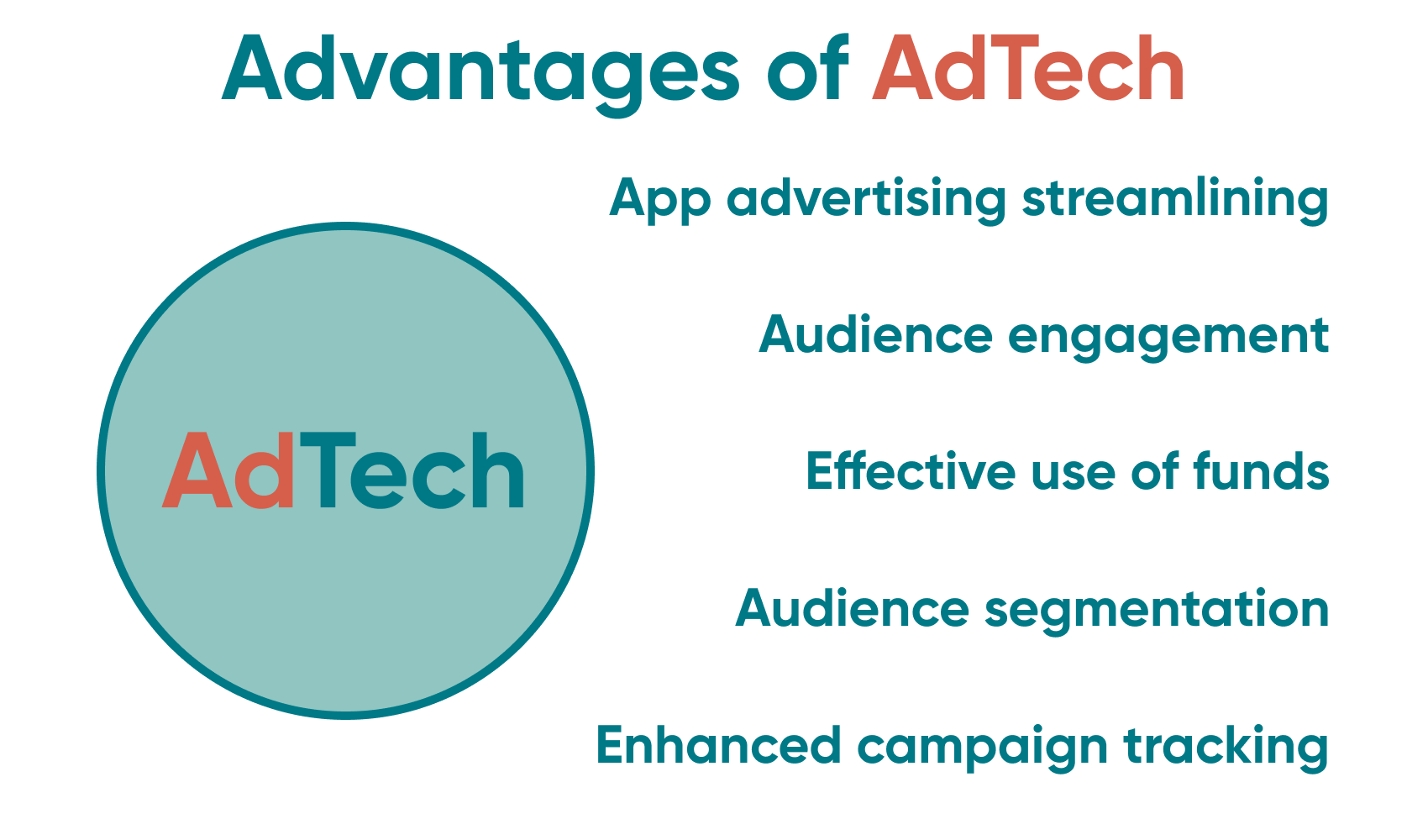
AdTech makes programmatic advertising campaigns more efficient and their targeting more precise, which matters for any business that relies on digital marketing.
Effective use of funds
AdTech algorithms show which content works for which audience and when to show it, so media buyers spend less on ads that do not perform and keep better control of the budget.
Enhanced campaign tracking
Ad servers report detailed campaign results, so companies can see which campaign works where. That makes media buying simpler.
Audience segmentation
One ad does not suit everyone, and customers need different ads at different stages of the marketing funnel. AdTech makes it possible to show each audience segment a relevant ad.
Audience engagement
Relevant ads attract and keep potential customers, and higher engagement means better monetisation.
App advertising streamlining
AdTech tools also help promote mobile apps and target app users with relevant ads.
To build your AdTech product with Go Wombat, contact us.
Advertising Technology Trends
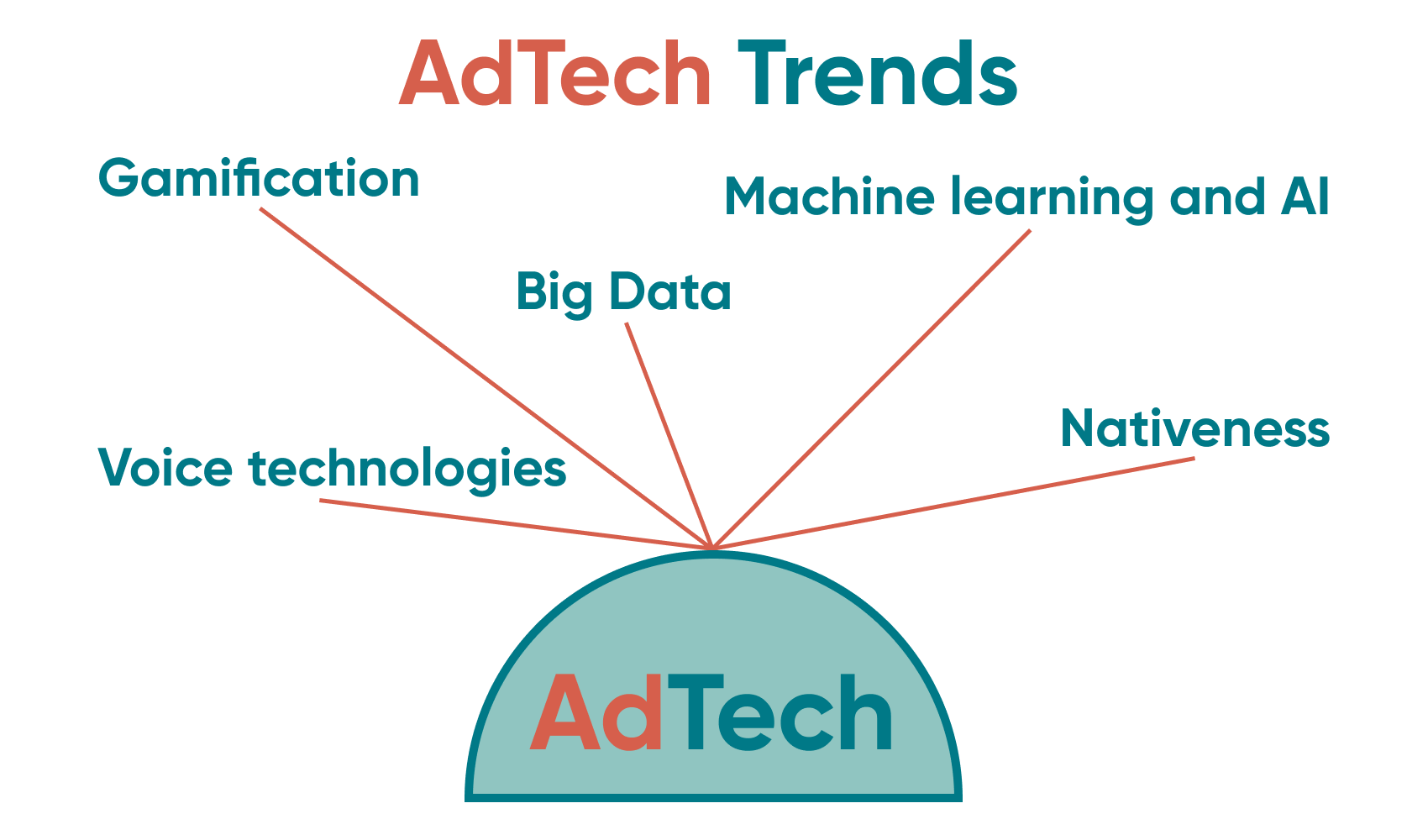
Trends worth following:
Machine learning and AI
AI is widely used by advertisers. AI algorithms analyse customer data to set up targeting and choose relevant ad content, and computer vision is used to analyse the content an ad appears next to.
Big Data
Analytics matter at every stage of the sales funnel, so many advertisers use Big Data algorithms, including predictive analytics that estimate the target audience's preferences. Go Wombat builds Big Data tools and integrates them into the software it develops.
Gamification
Entertaining content is popular, so gamification works in advertising too, and VR and AR are used to make ads more engaging. Gamification can also support customer loyalty.
Voice technologies
Many users listen to podcasts, and audio platforms offer advertisers interactive formats beyond standard playlists and video clips. For example, Google has been testing dynamic advertising. Advertisers are also adapting websites for voice search. Voice SEO is the practice of optimising content for queries people speak to voice assistants such as Siri, Alexa and Google Assistant. According to some SEO experts, voice SEO is required for websites to show up in results for searches conducted through voice assistants. At Google I/O in May 2016, Sundar Pichai said that 20% of queries on Google's mobile app and on Android devices were voice searches, as reported by Search Engine Land.
Native and Contextual based
Users do not like ads that interrupt the content they are watching or reading. AdTech platforms let advertisers integrate ads natively into content such as videos.
Privacy Protection Issue In AdTech: How To Deal With It
Advertising lets website and app owners monetise their products and reach their target audience, while users get the products for free.
But AdTech has become more invasive over the years. Targeted advertising needs large amounts of data about people.
Advertisers track online activity, preferences and visits to build user profiles, and it is increasingly hard to tell how personal data is used and where it ends up.
The Severity Of The Problem
AdTech can be intrusive and sometimes discriminatory: for example, a woman may not be shown some job ads because of her gender, or someone may not see rental ads because of the neighbourhood they live in.
Users have little control over how their data is used, and nobody can guarantee that their personal information is not sold or shared with third parties.
The results are privacy breaches, higher security risks and a loss of user trust in websites and apps. When a social media app makes private information public, it can even put people in danger.
A Solution Has Come
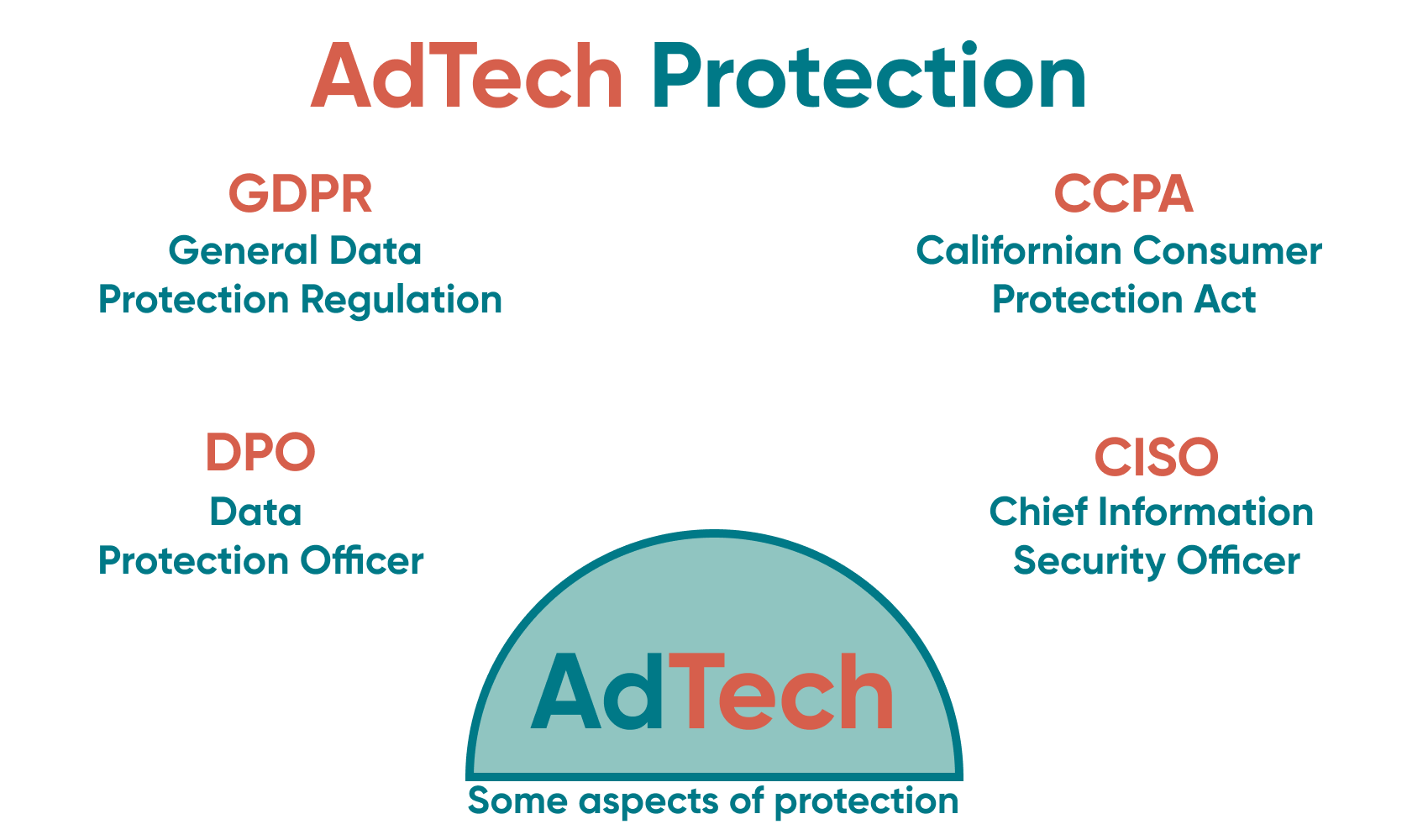
Therefore, new regulative standards are on a governmental level. Governments created such regulations as GDPR, HIPAA, and CCPA to protect personal information and oblige service providers to work, with personal data carefully, following all legal aspects.
To discover more on this topic, read GDPR and HIPAA certification. This is an informative article on the process and technical compliance of GDPR at Go Wombat. In addition, we have a Chief Information Security Officer, and a certified Data Protection Officer to ensure the compliance of software we create with GDPR.
To make your AdTech project secure and reliable, contact us.
A Compliance Monitoring Tool
As we noted, companies working with customers’ data must comply with existing regulations. If they violate rules, they will need to pay penalties. To ensure respect for the customers’ rights, service providers are looking for software development companies like Go Wombat. We can help develop tools for monitoring and full compliance.
About The Project
One of the GDPR rules states that users should give consent to personal data processing. All websites that process information of every user who visits a website must receive consent from users. If users decline to use their data, websites cannot use it. Previously, web services haven’t adhered to any rules.
Go Wombat has also worked on an AdTech project for Sourcepoint. This project involves a scanner that checks a website's compliance with GDPR when collecting personal data.
The specialised AdTech tool verifies whether there is correct consent and that a website doesn’t violate the GDPR rules. This product collects and tracks all traffic that comes out of a website. Also, it explores how vendors work with a website and what cookie files it stores.
It is crucial that only when a user accepts the processing of personal information, that any advertising can be displayed.
Functionality
The product lets customers see details about the behaviour of each vendor on a page and get recommendations on how to fix each issue. Vendors here are the third-party AdTech and analytics companies whose code runs on the page.
It helps customers use the information about requirements compliance by vendors, and customers can prioritise vendors by their privacy risks, review changes, and apply updates to your content marketing platform.
The product enables tracking of compliance journey. It is possible to see compliance progress over time compared with specific benchmarks. Also, using selected compliance metrics, it is possible to track vulnerabilities.
Challenges
The product had to grow from a startup-stage tool into a full product, so we spent a lot of time on software architecture. We built the functionality iteratively and reworked parts of it at specific stages.
We built cloud-native microservices, so parts of the product could change without affecting the rest.
Tech Stack
The microservices run on AWS. As usual, Python was our main back-end language; React and Vue.js were used on the front end.
Docker containers give each service an isolated environment with the required OS.
We also used the serverless platforms AWS Lambda and Fargate.
We used Selenium, an open-source library for automated web application testing.
Proxy servers were used for confidentiality and security.
Result
Sourcepoint now has a ready-made product for its customers. As with many of our projects, we continue to maintain the product together with the company’s management team.
Why Should You Work With Go Wombat?
At Go Wombat, we provide full-stack development and everything around it, from the first idea onwards: business analysis, consultancy, quality assurance and maintenance. Our goal is a reliable product that serves your target audience.
Go Wombat has been building web and mobile applications for 10+ years. We work across industries including healthcare, travel and hospitality, logistics, oil and gas, and marketing and advertising.
To start your project, hire Go Wombat.
Share and subscribe to our blog
Related articles

10 Key Software Development Trends In 2022
The software development trends we expected to matter most in 2022, from automation and AI to blockchain and PWAs, and what they mean for custom software.

Cloud Data Security: Protecting Sensitive Data
What cloud data security covers in private, public and hybrid clouds, why the Capital One, Uber and Accenture incidents happened, and the controls that prevent them.

Similarities, Differences, and Everything You Need to Know About GDPR and HIPAA Compliance
If your company leverages digital tools it means that you have to comply with the regulations of the region you work in. For example, if you are gathering, storing, or processing the personal information of European Union (EU) residents, y…

How can we help you ?