



A Guide to Technological Development in the Tourism Industry


Since the pandemic, the travel industry has adopted new technology quickly. According to IMARC Group, the global travel technology market was worth $11.3 billion in 2025 and is expected to reach $18.7 billion by 2034, a compound annual growth rate of 5.75%.
Travel aggregators and platforms such as Booking.com have changed how people plan and buy trips, and how travel companies manage information and market their services.
This article looks at recent technology in tourism and its benefits, the challenges we met while building a travel platform at Go Wombat and how we solved them, and emerging trends in the travel sector.
Technological advancements in the tourism industry
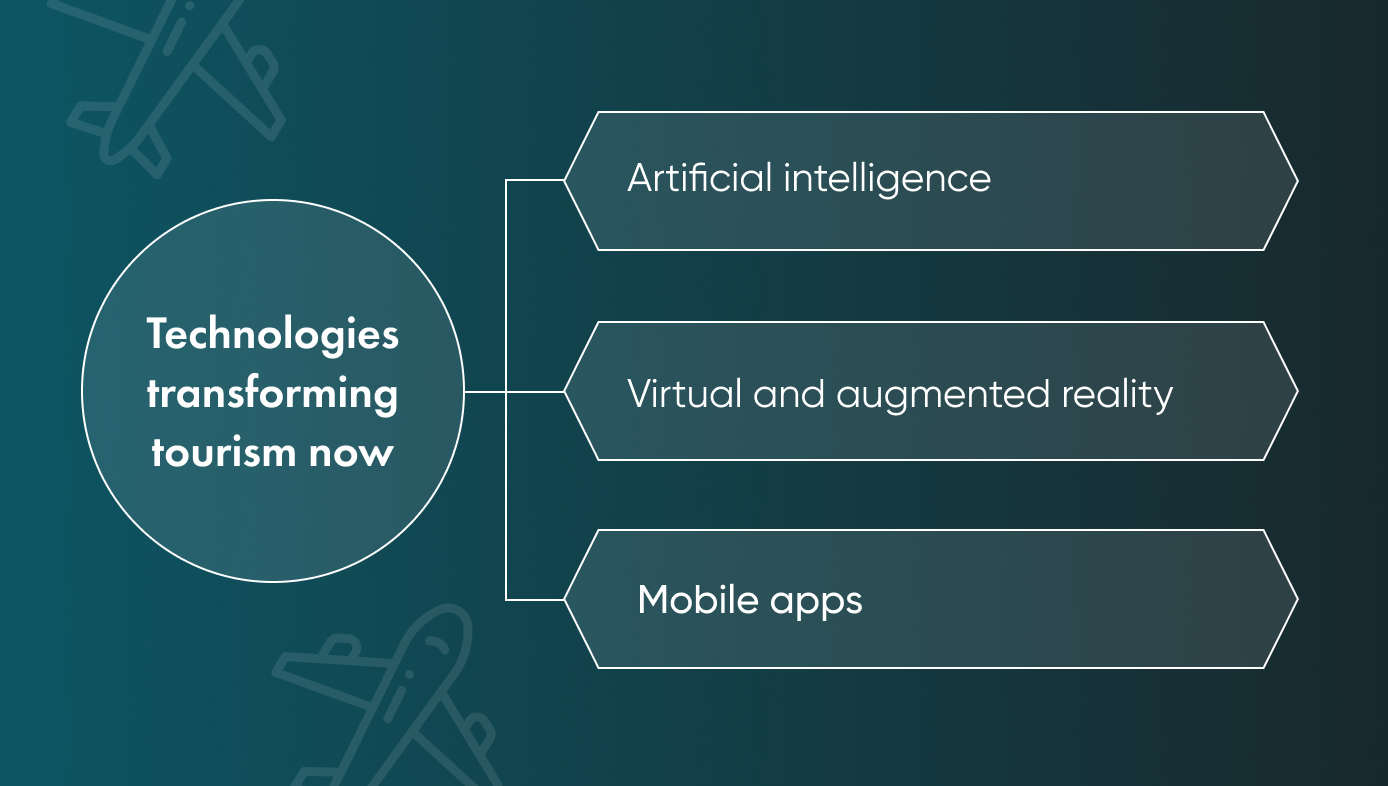
The main technologies changing tourism are AI, VR/AR and mobile apps.
Examples of technology that have made an impact on the tourism industry
Online reservation platforms, property management systems and mobile apps have made booking travel easier for consumers and businesses, and have simplified the work of travel company staff.
The role of AI in tourism
AI gives travellers personalised recommendations and helps businesses segment customers and target marketing campaigns. AI chatbots let travel companies answer customer questions 24/7, and travellers now use generative AI tools to plan whole trips around their budget and preferences.
Virtual and augmented reality in tourism
People planning a trip can take virtual tours of hotels and of sites such as museums from home, and some tourist attractions offer AR experiences to visitors on site.
Mobile applications for tourism
Travellers use their phones for maps, tickets and reservations on the go, schedules, weather, banking and flight check-in.
Benefits of technology in the tourism industry
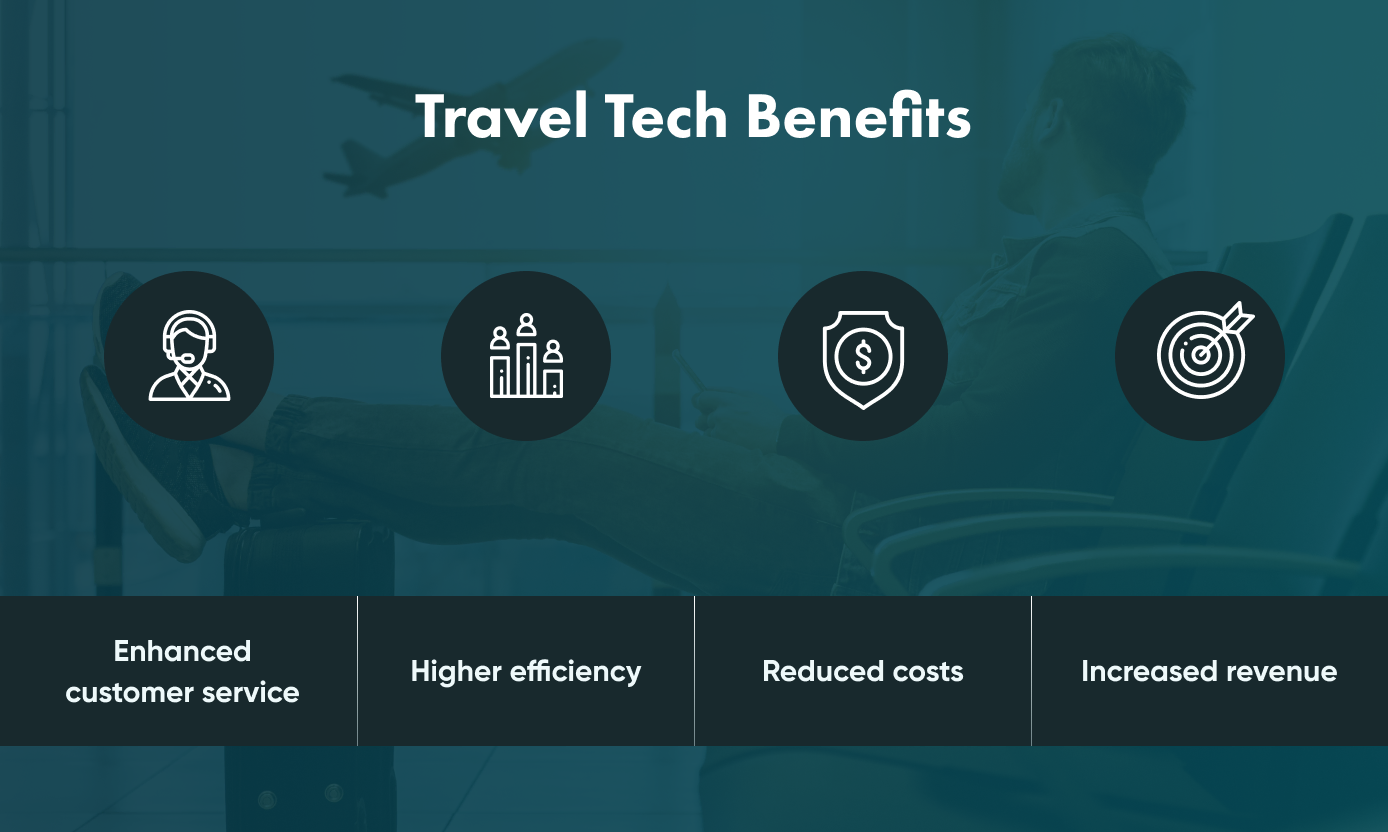
Implemented well, these technologies improve service and cut costs. The main benefits are below.
If you are planning to introduce new technology in your business, Go Wombat can advise you. Contact us.
Improvement in customer service
Companies can offer customers more personalised options. Chatbots let them handle more enquiries and provide support at any time, and past data helps them anticipate customer needs before the customer gets in touch.
Increase in efficiency
Automating tasks that used to be done by hand reduces errors and speeds up processes. Bookings can be made from anywhere, and travellers can check in from their phones.
Reduction of operational costs
Automation cuts overheads by reducing the time and labour needed. Marketing teams reach more prospects at lower cost through social media and email.
Boost in revenue
Better search improves the customer experience and leads to more bookings, and AI-driven dynamic pricing adjusts prices to demand in real time. Together with lower costs, this can increase revenue.
Challenges in adopting technology in the tourism industry
Here are the challenges we met on one of our own travel projects and how we dealt with them.
A client asked us to build a service for travel agencies that would let them build and sell flights, hotels, car rentals, transfers and excursions.
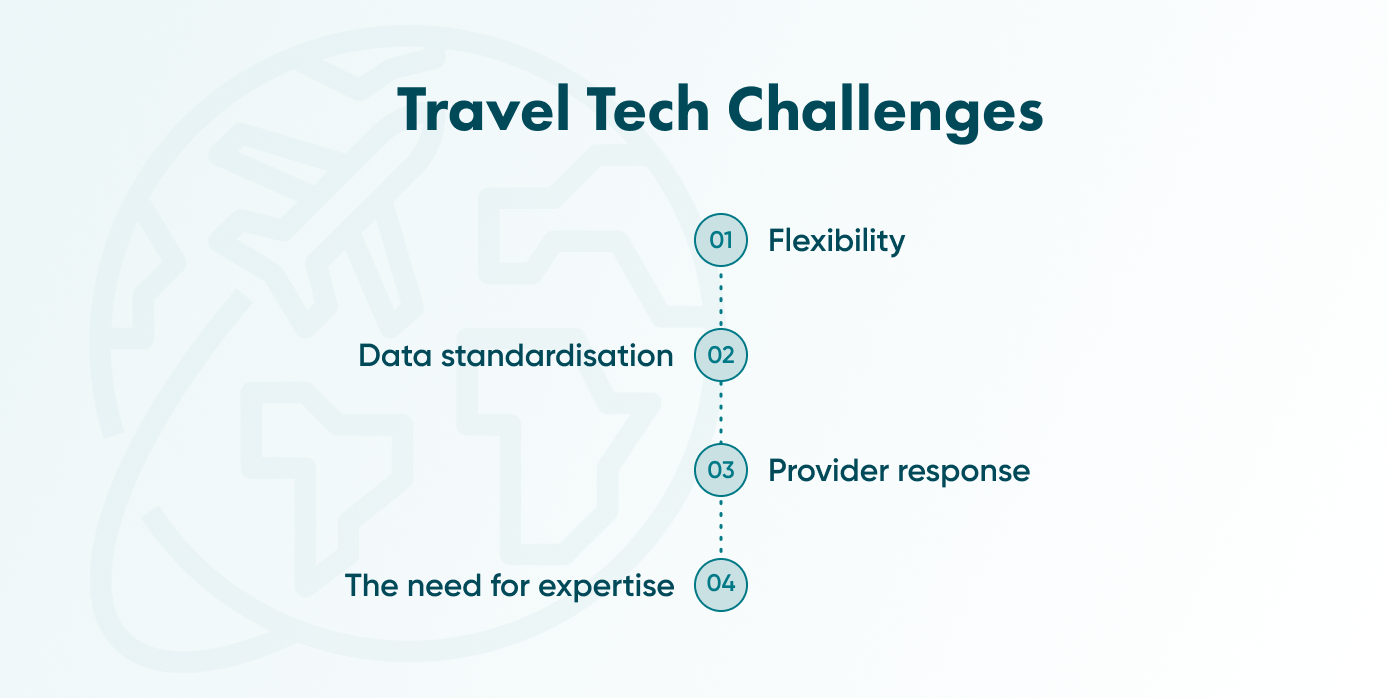
Flexibility
Each travel agency had its own vision for the look, feel and functionality of its website, so the solution had to be highly flexible.
Data standardisation
The platform needed data from many providers, each with its own data formats and standards.
We built a mapping system to translate between these formats and made the solution resilient to provider disruptions.
Our interactions with major travel agencies provided valuable feedback on the specific data they require and desire access to. Based on this feedback, we developed a standardised data framework for the travel industry, which we integrated into our service.
\- Andrii Sokolov, Backend Team Lead at Go Wombat
Response from providers
In this project, we had to work with both large and smaller-scale providers.
Large providers caused delays through slow management processes and unannounced changes to their APIs.
Smaller providers were easier to work with. They answered our questions and even adapted their APIs to our needs.
The flexible mapping system we developed handled the different API responses and datasets.
The need for expertise
Our previous experience in aggregating data from different providers helped us find solutions that fitted the client's vision.
Andrii explains why planning mattered:
Prior to initiating the project, we thoroughly planned and defined the technology stack and architecture to be used throughout the development process, both for the minimum viable product (MVP) and production stages.
This meticulous planning enabled us to optimise development time and ensure a smooth implementation, mitigating potential issues that could have arisen during the course of development.
What the tourism industry needs now
This project showed us what travel businesses need most.
- Businesses want solutions that make it easier to sell packages combining accommodation, transportation and activities.
- On the development side, data standardisation is crucial. Andrii also lists these requirements:
- Data security
- Service flexibility (allowing for individual customisation, payment system selection, and travel package builders)
- System resilience
- Data processing speed
- Scalability
For more about data challenges in the travel tech scene, read our CEO’s insights.
The future of technology in the tourism industry
AI and AR/VR will keep changing the industry, and other technologies are emerging too.
An overview of current technology trends
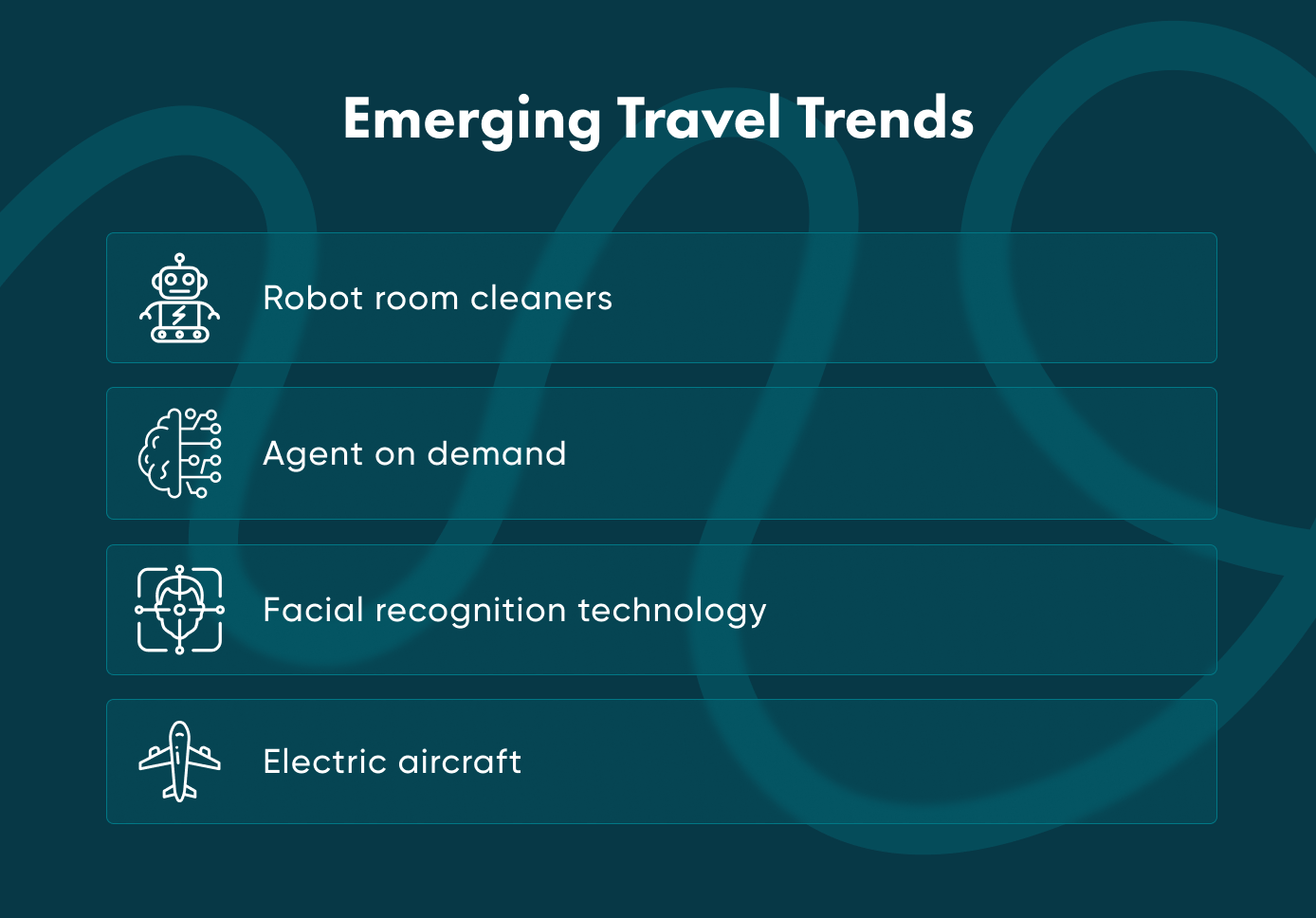
Emerging trends to watch:
- United Airlines has introduced “Agent on demand”: scanning a QR code at the airport connects you with a customer service representative by video chat, instead of queuing at a desk.
- Airports may use more facial recognition, although the technology faces pushback over privacy concerns. Supporters say it improves travel safety.
- Electric aircraft have been in development for years: magniX and AeroTEC flew their all-electric eCaravan in May 2020, and Eviation's Alice first flew in September 2022, although Eviation put the Alice programme on hold in February 2025.
The potential impact of emerging technologies
These technologies could make customer service more efficient, shorten multi-step processes and reduce the environmental impact of travel.
The need for continued investment in technology
Like any new technology, they will have bugs and rough edges at first, and they need continued investment to improve with each iteration as early adopters give feedback.
They also need careful planning, development and integration work, which is what custom software developers such as Go Wombat do.
Conclusion
Reflections on the current state
Travel keeps getting faster and easier, but customer service and matching offers to customer preferences still need work.
Travel companies already hold a lot of data and keep collecting more, but many struggle to use it.
Companies that can process and standardise large amounts of data will be able to offer customers more personalised options and keep them coming back.
Final thoughts on the future
Nobody knows exactly how these trends will develop, but flexible, well-built software makes it easier to adapt.
At Go Wombat, we analyse your business and design the solution that fits your requirements.
Book a consultation to discuss your travel project.
Share and subscribe to our blog
Related articles

Thriving in the European Travel Tech Startup Scene: Overcoming Data Challenges
Travel tech startups depend on fast-changing data from many providers. Here is how to deal with its cost, gaps, standardisation and provider failures.

Essential Things To Consider When Building A Travel Website
What to consider when building a travel website: the main types, why a website matters for travel businesses, revenue models and practical planning tips.

How Can Travel and Hospitality Software Solutions Boost Your Business
How custom software helps travel and hospitality businesses: the main benefits, the types of systems companies build, and the technology trends to watch in 2026.

How can we help you ?

