



How Is Big Data Transforming Logistics in 2026?

Every parcel, pallet and delivery van leaves a trail of data: GPS pings, warehouse sensor readings, customer orders, fuel logs. Most logistics companies still use only part of it.
Big data in logistics is the practice of turning that trail into decisions. Done well, it changes how freight is planned, how warehouses run and how quickly a company spots problems before they become expensive. The results depend on what you build and how consistently you use it.
This article explains what data analytics in logistics means in practice, which benefits to pursue first, and what real deployments have achieved, including one that failed.
What Is Data Analytics in Logistics?
Data analytics in logistics is the process of turning raw operational data (routes, sensor readings, orders, inventory counts) into information a business can act on.
A late shipment, a failing conveyor belt or an unexpected demand spike usually shows early signals in the data. Analytics lets a transport or warehousing business catch those signals before the problem becomes costly.
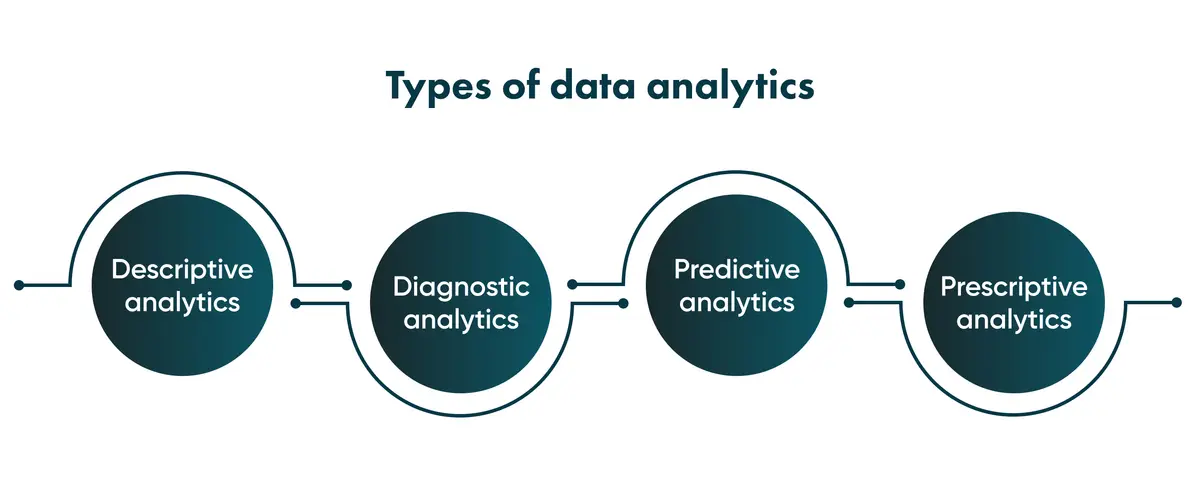
There are four recognised types of analytics used in this context. Each answers a different question:
- Descriptive analytics: what happened. Tracking vehicle mileage over a set period is a simple example.
- Diagnostic analytics: why it happened. Teams trace the root cause of a delay or failure through audit logs.
- Predictive analytics: what's likely to happen next, such as demand spikes, equipment failures or route delays.
- Prescriptive analytics: what to do about it. A forecast becomes a concrete plan rather than just a warning.
Descriptive analytics is the easiest to implement and usually delivers the smallest returns. The bigger gains come from the predictive and prescriptive layers. Our guide to the types of business analytics covers the same framework outside logistics.
Why Big Data Matters for Logistics in 2026
According to IDC figures published by Statista, about 181 zettabytes of data were forecast to be created, captured, copied and consumed worldwide in 2025 alone. According to Maersk, logistics is now the third-largest user of generative AI of any industry sector.
Adoption on the ground is far behind: only 3% of logistics decision-makers say AI is fully implemented in their operations, according to Maersk's Logistics Trend Map survey of 570 global logistics leaders, while 85% of the same group rate the Internet of Things as important to their business.
The gap between interest and implementation is not down to unproven technology. Building analytics properly takes money and patience, and many companies have not yet committed either.
Chemical manufacturer BASF is a useful contrast. It ties IoT sensors to its ERP system to track fluctuations in customer orders and forecast demand, according to Tilly Liu, Senior Supply Chain Manager Asia at BASF, speaking to Maersk. When inventory drops below a set threshold, the system raises an alarm automatically, without anyone having to watch a dashboard.
How Big Data Works in Logistics
Companies with large budgets build their own custom ERP systems and analytics infrastructure. Most use ready-made tools instead, which generate reports and track basic metrics with little customisation.
Off-the-shelf tools soon reach their limits. Some can suggest a competitive shipping rate from public data, but that rate ignores your costs, fleet and contracts. Security and performance are often secondary on these platforms, which adds risk.
A custom analytics platform costs more upfront. It can pay for itself faster because it is built around your operation rather than a generic template. Building one draws on many of the same disciplines as big data in software development and often starts with migrating legacy data out of your current system.
Start with a discovery session and we will map where your data already lives and what it would take to put it to work.
Key Benefits of Big Data in Logistics
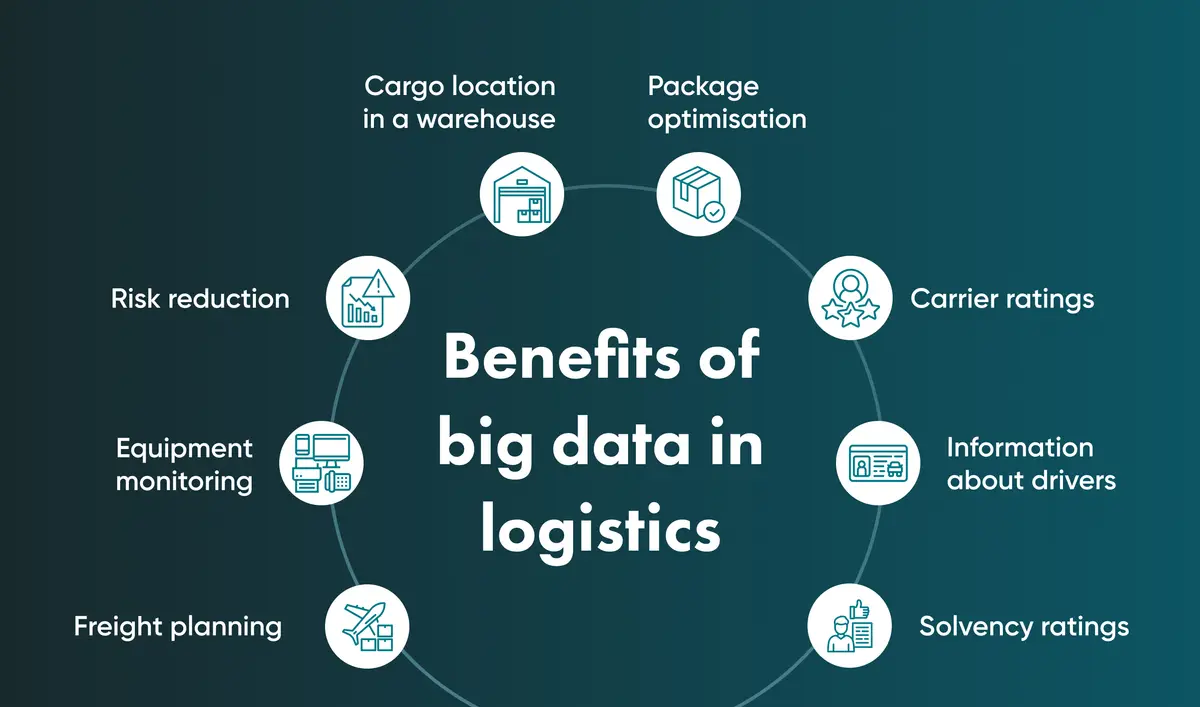
Smarter route and freight planning. Traffic, road conditions, warehouse throughput and fuel stops all affect how quickly a vehicle gets from A to B. Combining these data sources lets a company plan routes on evidence rather than guesswork.
Last-mile delivery is usually the hardest part: drivers lose time every day working out the fastest route to a door, and small inefficiencies add up across a fleet of a hundred vehicles. Live traffic and road data help drivers on that final stretch.
Predictive equipment maintenance. Without it, a company either repairs too often and wastes money, or too rarely and risks a breakdown mid-route. Sensors on trucks and machinery track wear and vibration continuously and flag problems before a driver notices them. Manufacturing businesses running mixed fleets of forklifts and delivery vehicles benefit as much as pure logistics operators.
Warehouse and cargo visibility. With sensors and video monitoring across a warehouse, a company can locate any item at any stage of processing. Computer vision for warehouse monitoring extends this to packaging, for example choosing the right box size before a shipment reaches the loading dock, which means fewer damaged goods and less wasted truck space.
The same visibility shows demand shifts early: if orders for a destination are set to spike in July, the warehouse manager can see it in June.
Reduced operational risk. Weather, road conditions and equipment wear all feed into accident risk, and thermometers, acoustic sensors and visual inspection tools can detect problems before a vehicle leaves the yard. Driver history matters too: many logistics companies keep databases of driver performance and safety records and use them to decide who drives the riskier routes.
Carrier and vendor performance scoring. Tracking carrier performance over time, rather than reacting to a single bad delivery, shows when to switch vendors before a problem becomes a pattern. Applied consistently across all vendors, risk analytics reduces losses from theft, damage and missed delivery windows.
Stronger financial resilience. Analytics can flag clients with unresolved obligations to other carriers before a new contract is signed, which protects cash flow.
For a platform built around your fleet and freight patterns, talk to our engineers about what a custom build would involve.
Real-World Examples of Big Data and AI in Logistics
Here are several deployments at scale, including one that failed.
UPS and route optimisation
UPS's ORION system is one of the most cited examples of big data in logistics. The original rollout cut driver routes by roughly eight miles each. A later dynamic routing upgrade, reported by Supply Chain Dive, added a further two to four miles in savings per driver and reached 97% of the company's van fleet. It is an older case, but still a common reference point.
SkyCell and cold chain logistics
Transporting temperature-sensitive pharmaceuticals is harder than moving standard freight. Swiss company SkyCell builds containers with sensors that track temperature and vibration in near real time. Its 6500X multi-pallet container runs for up to 300 hours at +20°C without external power. In September 2025, IAG Cargo approved SkyCell's 1500X series, which offers up to 270 hours.
Hormel Foods and demand forecasting
Hormel rolled out AI-based forecasting software from o9 across more than 70 sites between March and December 2025. "We are shifting from reactive problem-solving to more proactive, data-driven planning," said Chief Supply Chain Officer Will Bonifant, as reported by Supply Chain Dive in April 2026. The system models demand drivers and has reduced manual forecast overrides, a common source of forecast errors.
Amazon Robotics and warehouse automation
Amazon has deployed more than one million robots across its fulfilment network since acquiring Kiva Systems back in 2012, according to Amazon's own reporting. Its Sequoia system identifies and stores inventory up to 75% faster than previous methods, using AI and computer vision to consolidate stock and speed up fulfilment.
DHL and agentic AI
DHL Supply Chain now uses AI agents built by HappyRobot to handle appointment scheduling, driver follow-up calls, and warehouse coordination on their own. The partnership, expanded in November 2025, already covers hundreds of thousands of emails and millions of voice minutes a year.
Go Wombat's own work
We have built this kind of infrastructure ourselves. For Cybord, we developed an AI-powered system that traces electronic components across the supply chain, processing a few million images daily to catch counterfeit or defective parts before they reach production. For Demco, a US equipment manufacturer, we built a custom CRM that connected an existing ERP system to the company's dealer network, cutting equipment configuration and pricing lookups down to under a minute.
Not every deployment succeeds. Starbucks scrapped a computer vision inventory counting tool in mid-2026, just nine months after launch, after employees flagged it as unreliable, Supply Chain Dive reported. The company has since gone back to a single, consistent manual process. A big data project works only if the underlying system is built and tested properly.
Is a Custom Big Data Platform Worth It for Your Logistics Business?
It depends on scale.
Companies moving large shipment volumes, running a large fleet or managing several warehouses are the most likely to see a return. For smaller operations the case for a fully custom platform weakens, and off-the-shelf supply chain analytics tools may cover the basics.
Gartner projects that 70% of large organisations will adopt AI-based supply chain forecasting by 2030. Companies that build the data foundations now will have a head start.
We work across AI services for logistics, machine learning models and custom logistics software development. If a driver-facing or customer-facing app is on your roadmap, our logistics app development guide walks through the practical steps. To see where your business stands, book a scoping workshop.
What Logistics Leaders Should Remember
Big data in logistics is an ongoing practice rather than a single tool or project: collecting the right data, reading it honestly and acting on what it shows.
Having the most data matters less than having systems that turn data into decisions quickly, and being willing to drop deployments that do not work.
Whether you need business intelligence and data visualisation on top of existing data or a fully custom platform, start by understanding what you already collect.
Frequently Asked Questions
What is data analytics in logistics?
It is the process of turning large volumes of operational data (routes, sensor readings, orders and inventory records) into information a logistics business can act on. The work splits into descriptive, diagnostic, predictive and prescriptive analysis, each answering a different question about what happened and what to do next.
How is big data used in logistics?
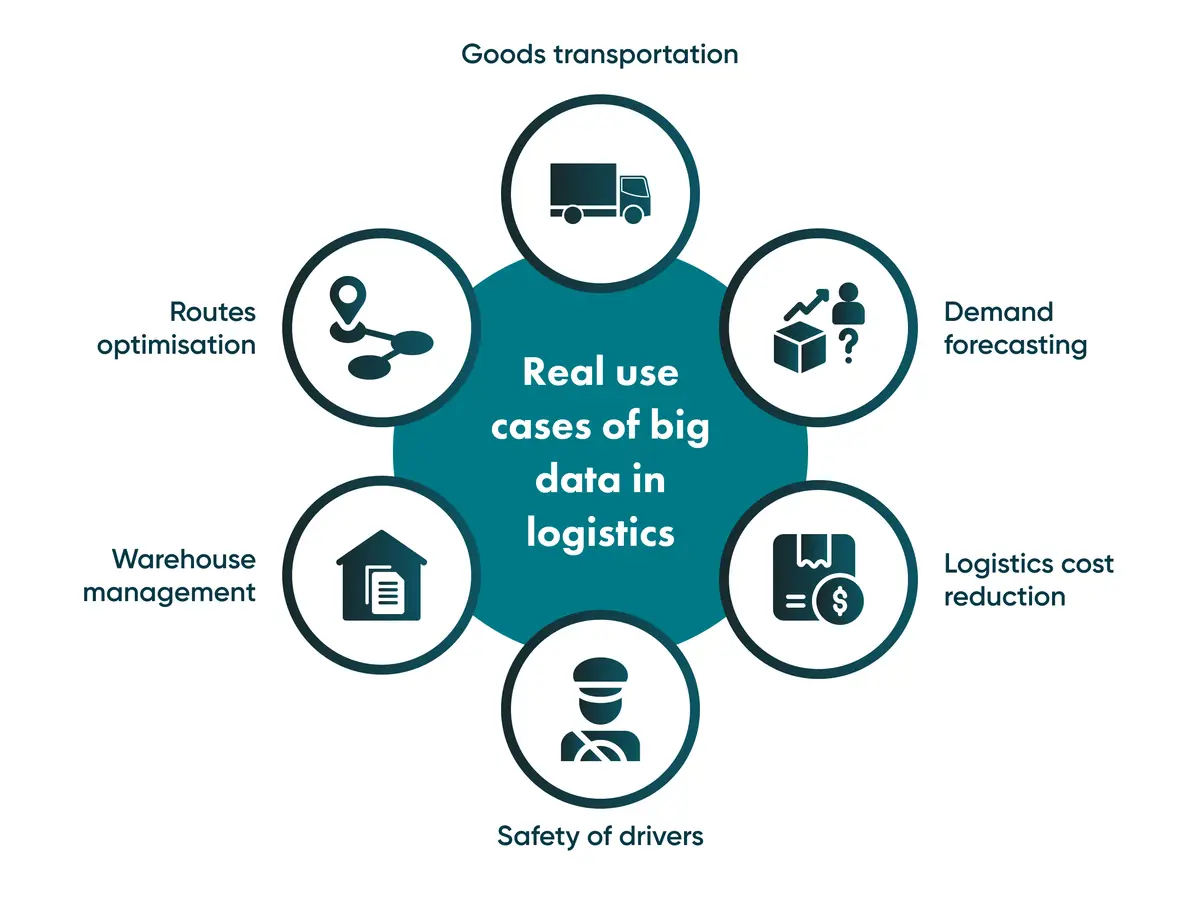
Route optimisation, freight planning, predictive equipment maintenance, warehouse and cargo visibility, and demand forecasting are the most common applications. Carrier performance scoring and financial risk assessment get less attention but are also valuable.
Why is big data important in logistics?
It lets companies catch problems while they are still cheap to fix, whether that is a failing conveyor belt or an unplanned demand spike. The same data also improves customer service and forecasting.
How is generative AI changing logistics analytics in 2026?
Generative AI is moving beyond forecasting into planning and procurement. DHL and similar companies already use AI agents to automate operational communication, and other logistics firms are testing generative tools for more complex route and capacity planning. Adoption is still early: in Maersk's survey, only 3% of logistics decision-makers reported AI as fully implemented.
What does a big data analytics platform cost for a logistics company?
It depends on fleet size, data sources and whether you build from scratch or on top of an existing ERP system. A custom platform needs more upfront investment than an off-the-shelf tool, but it can pay back faster because it is shaped around your operation.
What's the difference between big data and predictive analytics in logistics?
Big data is the raw material: the large, varied data sets a logistics company collects, from GPS pings to sensor readings. Predictive analytics is one way of using it: applying models to forecast what is likely to happen next (a delay, a breakdown, a demand spike) before it occurs.
Share and subscribe to our blog
Related articles

Big Data in the Hospitality Industry
Big Data in the hospitality industry: what it is, how hotels, restaurants and travel companies use it, and the limitations to plan for.

What Role Does Big Data Play in Software Development?
What Big Data is, its main types and analytics methods, and how it helps software teams decide what to build, test features and manage risk.

How Does Logistics App Development Work in 2026?
Logistics app development explained: app types, core modules and features, practical AI use cases and the build process step by step.

How can we help you?

