



Big Data in the Hospitality Industry


Big Data can help hotels, restaurants and travel companies set room rates, plan supplies and personalise their service. This article explains what Big Data is, how the hospitality industry uses it and what limitations to plan for.
Big Data In A Nutshell
Big Data refers to datasets too large or varied for traditional tools, and to the technologies used to process them. The data is collected, stored and analysed so that specialists can find patterns and make predictions. The more relevant data a system learns from, the more accurate its predictions become.
Every time someone opens an app, visits a website, signs up for a service or types a search query, some data about that action is collected.
Multiply that by everyone who is online at any given moment, and you get a continuous stream of data that has to be stored and processed.
If you are planning a Big Data project, contact us.
Big Data Use Cases In The Hospitality Industry
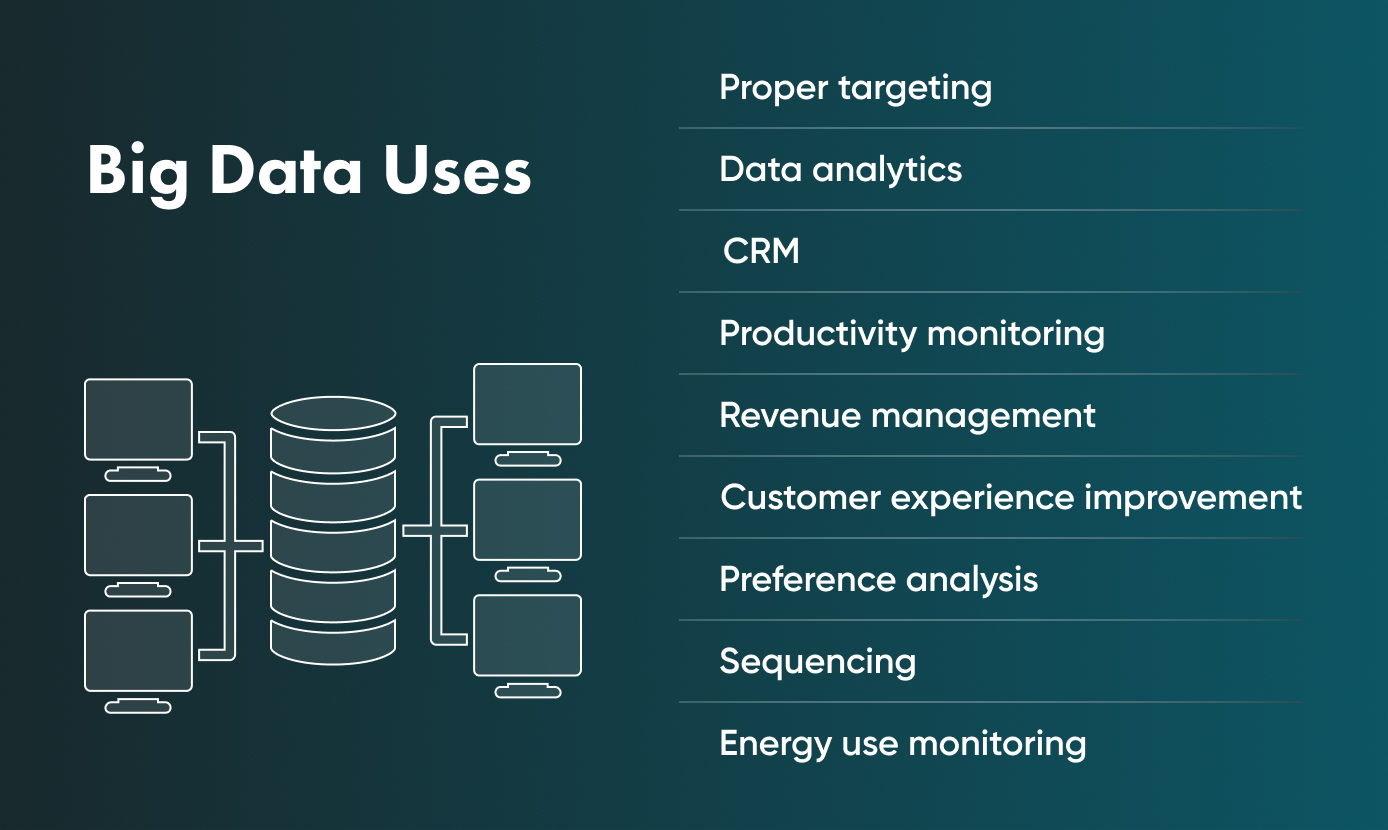
Targeting and personalisation
Hospitality businesses analyse booking and browsing data to personalise their websites and tailor offers to each audience segment. The same data shows which offers and channels bring customers and which do not.
Data analytics
Depending on its needs, a hospitality business can use three types of analytics: descriptive (what happened, for example last season's occupancy), predictive (what is likely to happen, such as demand in the coming months) and prescriptive (what to do about it, such as which room rates to set). The same data also helps you decide where robotics can take over routine hotel tasks.
Customer Relationship Management (CRM)
A CRM system stores each customer's bookings, preferences and communication history. With Big Data analytics, staff can process this data quickly, personalise communication, target discounts and plan promotions around what customers actually book.
Productivity monitoring
Managers can analyse data on staff performance and on specific processes, such as room turnaround or order handling, to find bottlenecks and organise work more efficiently.
Revenue management
Hotels, restaurants and travel agencies use Big Data for revenue management. Predictive analytics forecasts demand, which helps them order the right amount of supplies, avoid unnecessary costs and adjust room rates to increase revenue.
Customer experience improvement
Data on the services guests use, together with reviews and other feedback, shows where the customer experience falls short. Complaints that keep recurring point to the problems worth fixing first.
Preference analysis
Besides data on the services customers already use, collect data on the services they ask for in feedback and requests. This shows which new services are worth offering.
Sequencing
Big Data lets you analyse the order in which each customer uses services. Knowing these sequences, you can offer customers the combinations of services they order most often.
Energy use monitoring
Big Data software can monitor and forecast energy consumption in a hotel or restaurant, which helps reduce costs. Go Wombat can build software of this kind.
To discuss software for your hotel or restaurant, contact Go Wombat.
Limitations Of Big Data In Hospitality
These are the main problems you may face when introducing Big Data solutions in a hospitality business.
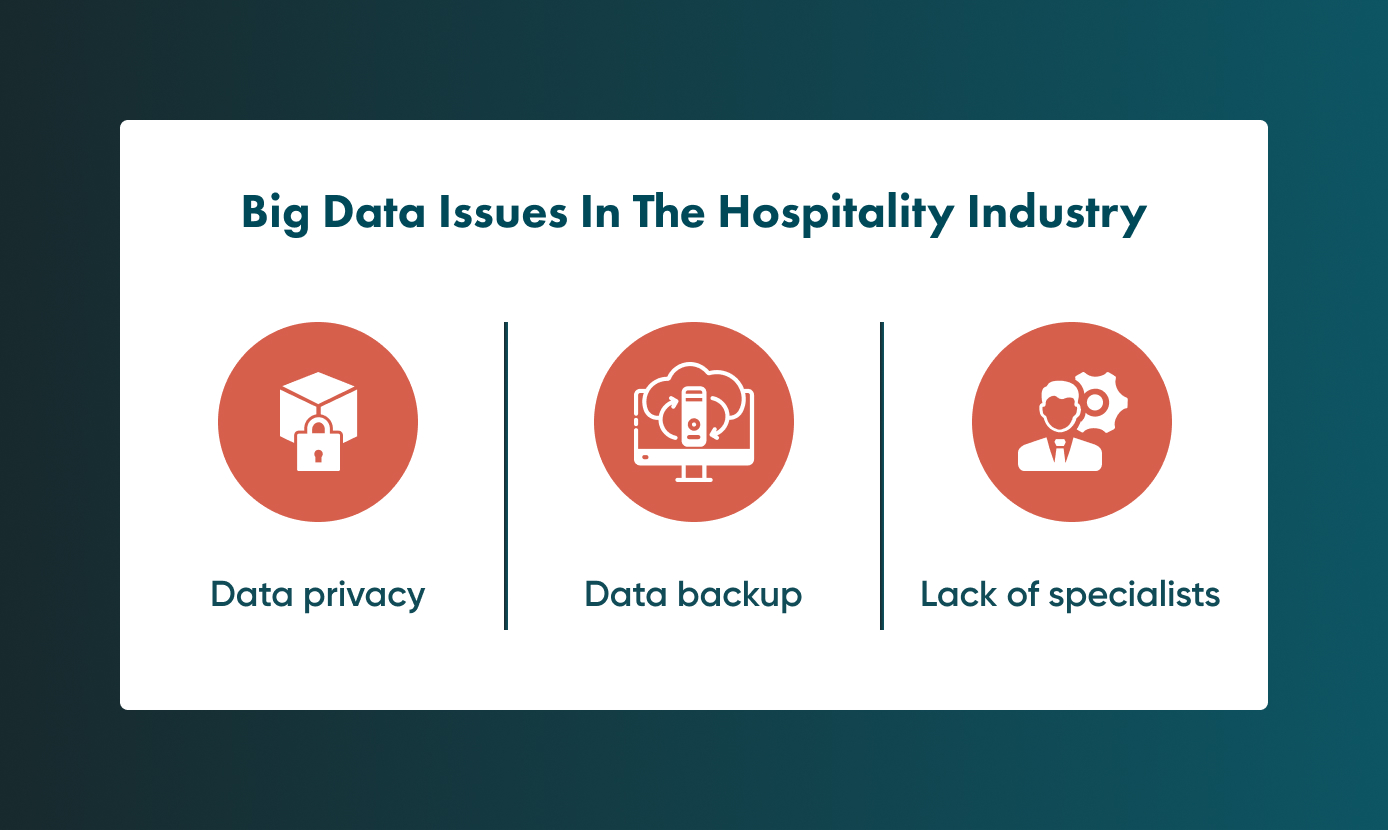
Data privacy
Data processing means working with confidential data that should not be disclosed to third parties. Cyberattacks and fraud can compromise your data infrastructure and cause significant losses.
These areas need consideration of both cybersecurity and regulations such as GDPR, within Europe.
To find out more, take a look at our articles on cybersecurity, and GDPR regulations.
Customers need to trust that their data is safe. Use current encryption methods and make sure that only authorised people can access the data.
At Go Wombat, we pay careful attention to data protection: our Chief Security Officer makes sure encryption is built into all the software we create.
Data backup
You also need to make sure that data is not lost to malware or network failures. Storing data on cloud servers does not back it up automatically: under AWS's shared responsibility model, the customer, not the provider, is responsible for managing its data, including backups and encryption. Set up regular automated backups, keep copies in a separate location and test that you can restore them.
Lack of specialists
A development partner can build the software, but your business still needs data specialists to analyse the data. We maintain the software we create, so we can work with your specialists to keep it running and integrated with your other systems.
Plan for the cost as well: software, data specialists and changes to business processes all require investment.
Conclusion
With Big Data systems in place, hoteliers can predict demand and guest preferences more accurately.
Contact us to discuss your idea.
Share and subscribe to our blog
Related articles

Cloud Data Security: Protecting Sensitive Data
What cloud data security covers in private, public and hybrid clouds, why the Capital One, Uber and Accenture incidents happened, and the controls that prevent them.

The Importance of Cybersecurity
Why cybersecurity matters for businesses, the most common types of cyberattacks, and practical steps to protect your company against them.

Similarities, Differences, and Everything You Need to Know About GDPR and HIPAA Compliance
If your company leverages digital tools it means that you have to comply with the regulations of the region you work in. For example, if you are gathering, storing, or processing the personal information of European Union (EU) residents, y…

How can we help you?

