



Business IT: Exploring AR, VR and MR Technologies

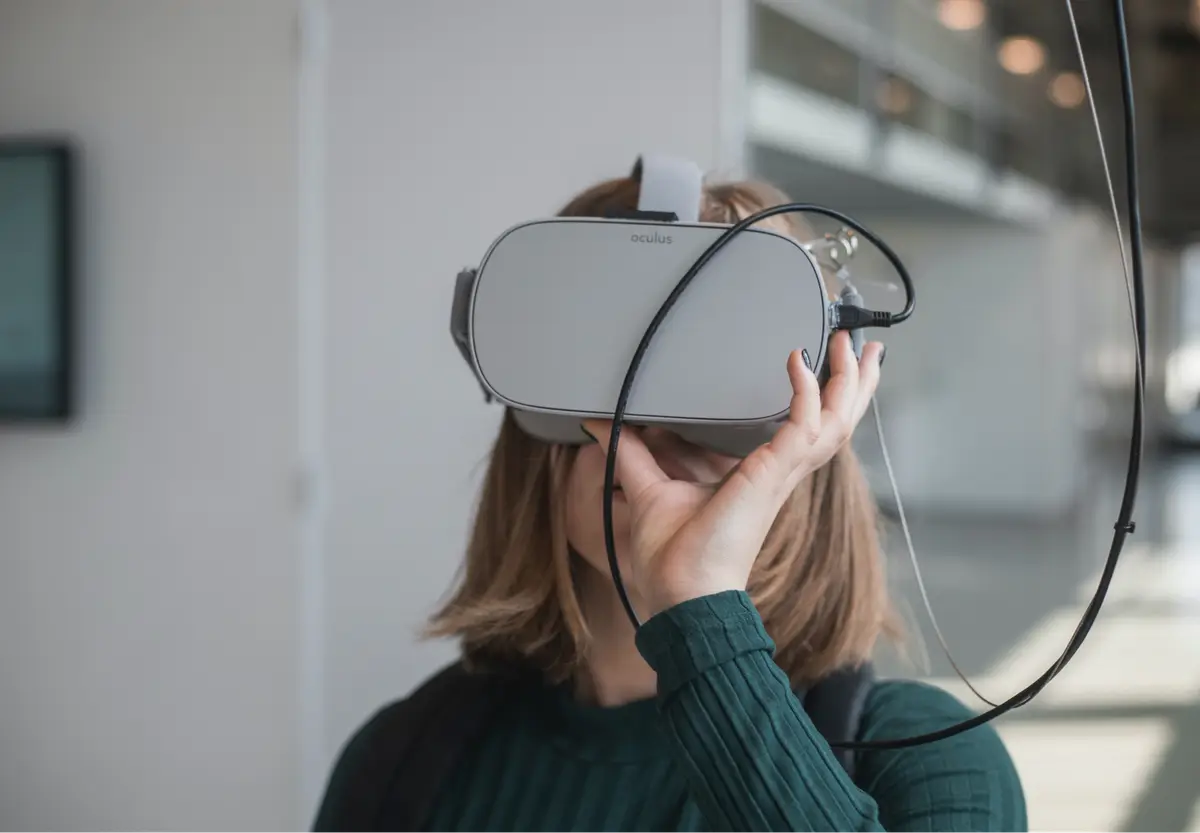
Filmmakers and video game developers have used computer-generated images for decades. Today, augmented reality (AR), virtual reality (VR), mixed reality (MR) and other immersive technologies are also used in business software.
This article explains what AR, VR, MR and other extended reality (XR) technologies are, what hardware they need and what challenges to expect when you adopt them.
Understanding augmented reality
Augmented reality layers digital images and other information on top of the real world. In business, it adds useful digital information to what the user already sees.
AR apps add to the user's surroundings but do not replace them with a digital world.
Besides images, AR software can use sound, video and, in some cases, touch.
Integration with the real-world
AR places digital content in the user's real environment, so they see digital and physical elements at the same time. This is useful for training and simulation software.
Contextual responses and interactions
AR also lets users interact with these partly virtual environments. For this, the app has to understand the user's physical location and context, so it can place elements such as arrows and other signals correctly.
Marker-based and markerless AR
Marker-based and markerless AR differ in how the app tracks the environment. Marker-based AR apps show digital content only when the camera recognises a QR code or a similar marker. Markerless AR works without special images or other triggers.
Exploring virtual reality
Virtual reality creates fully digital worlds that users can explore and interact with. Unlike AR, VR replaces the user's surroundings completely.
VR worlds usually use 3D-rendered, high-definition graphics, but you decide on the style, so animations and other elements can match your brand.
Full immersion and virtual interactions
A VR environment can be anything, from a replica of a real place to an invented world. Because VR blocks out the user's physical surroundings, it has different uses and technical requirements from AR.
Stereoscopic display and comfort
VR headsets use stereoscopy: each eye sees a slightly different image, which creates the illusion of depth. In VR, user experience also means comfort. Frame rate, field of view and the way movement is rendered all affect whether users feel sick, so getting them right keeps users engaged and safe.
Motion tracking
Besides how users see the virtual world, you need to fine-tune motion tracking. The system follows the user's viewpoint, head position and body movements and updates the scene to match, which keeps the experience consistent.
Introducing mixed reality
Mixed reality (MR) combines traits of AR and VR. It mixes the physical world with digital elements so that the two coexist and interact.
MR platforms have three distinctive traits.
The blending of realities
Like AR, MR blends digital and real-world elements. The difference is in how the two interact.
AR adds information to physical objects, such as directional markers, descriptions and instructions on roads and walls.
In mixed reality, digital objects also react to changes in the physical environment.
AR and VR in action
MR has elements of both AR and VR because an MR experience can move between partial and full immersion.
An experience can start with physical objects in view and move to a fully digital environment, depending on what your game or product needs.
Real-time interaction
MR only works if the interaction happens in real time.
Users need to see a response to their actions immediately. Any noticeable lag breaks the experience.
Other extended reality (XR) technologies
Extended reality (XR) is the umbrella term for AR, VR, MR and related immersive technologies.
XR uses fully digital content, or a mix of digital and physical content, to extend what people can perceive.
Haptic feedback
Haptic feedback adds the sense of touch.
Haptic gloves and similar devices imitate tactile sensations to make the experience more immersive.
Other types of sensory feedback devices
Sensory feedback devices go beyond the sensation of touch.
Researchers are also working on devices that stimulate smell and taste, but these are at an early stage.
Full panoramic photography and filmography
Panoramic (360-degree) photos and video let viewers explore a specific location. In tourism, they help with:
- Evaluating accommodation options before booking.
- Previewing tourist attractions.
- Remote visits to attractions.
The hardware behind immersive technologies
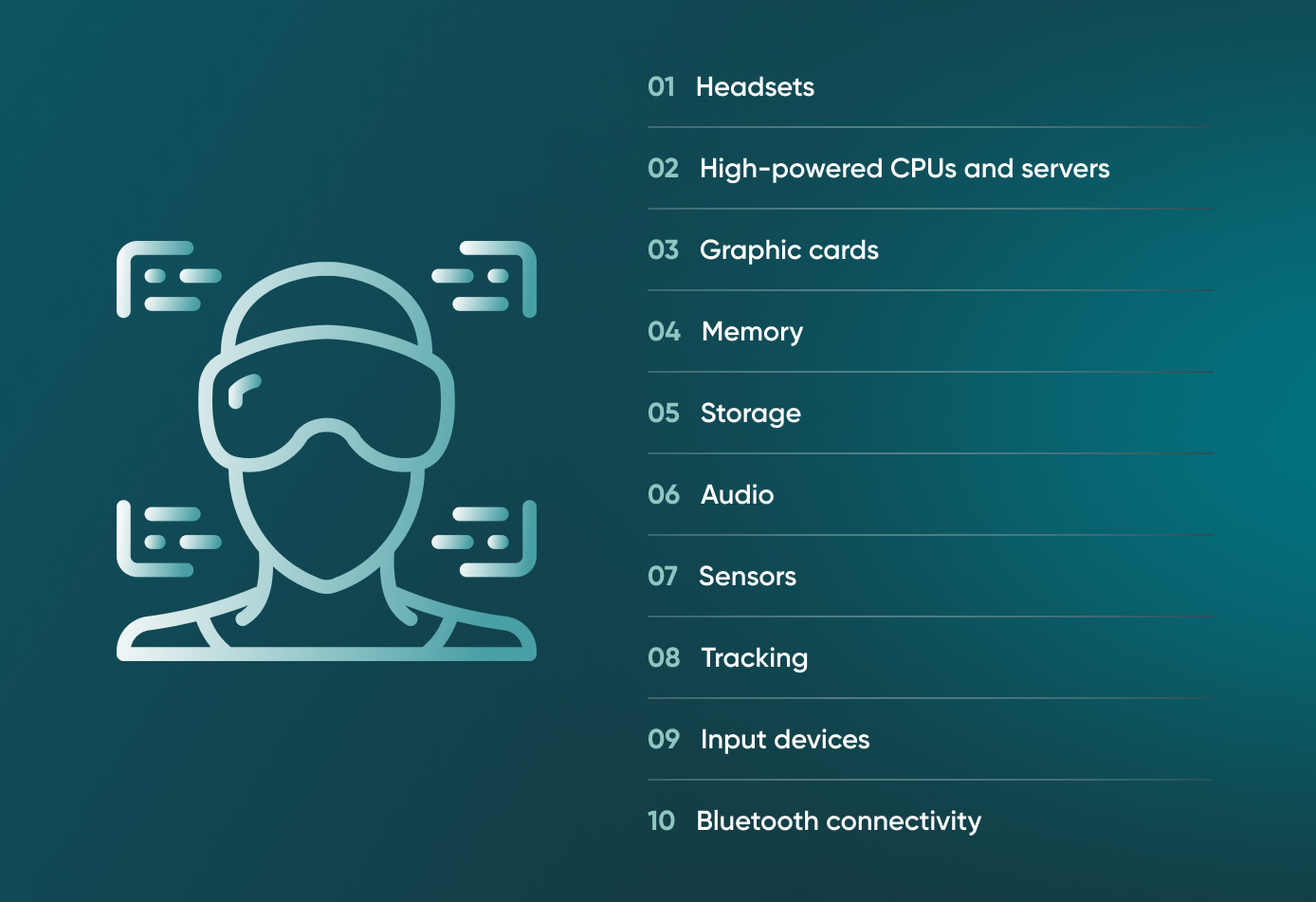
Whichever of these technologies you use, plan for the hardware it needs.
Hardware you may need to consider and write software for:
- Headsets
- High-powered CPUs and servers
- Graphic cards
- Memory
- Storage
- Audio
- Sensors
- Tracking
- Input devices
- Bluetooth connectivity
Applying AR and MR to your product
Which applications make sense depends on your product or project.
Our team can help you find where immersive technology will improve your user experience, and build tools that support your customers and team members.
To learn more, contact Go Wombat.
Challenges and limitations of immersive technologies
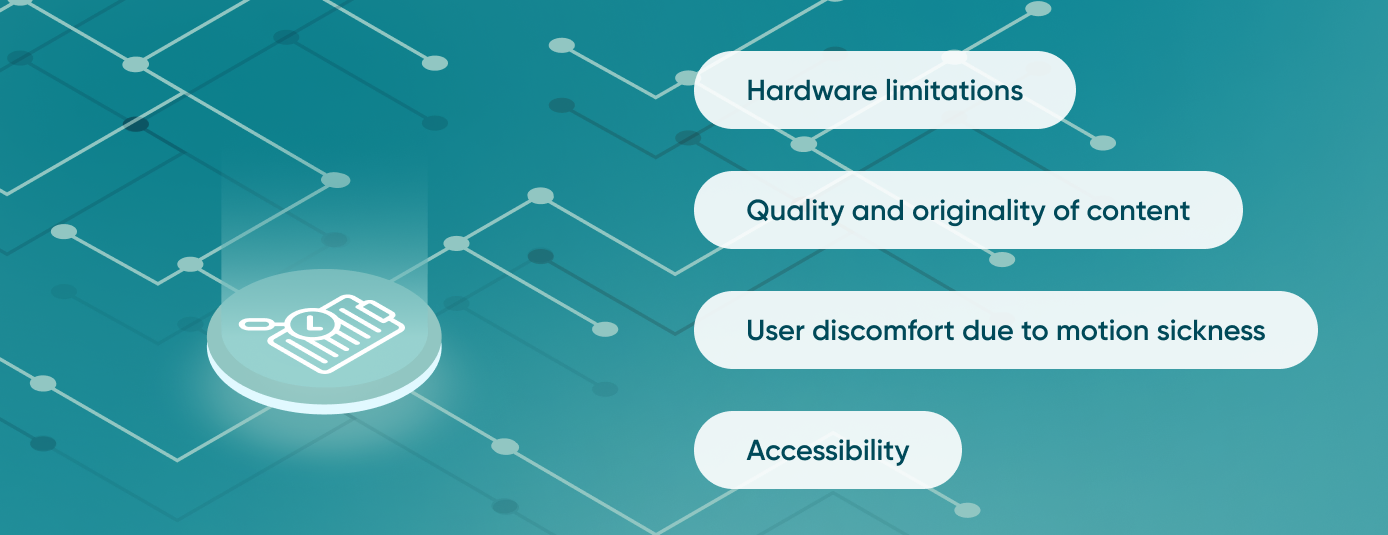
Immersive technologies still face several obstacles.
Hardware limitations
Immersive technologies need specific hardware, which is expensive to buy and may also be expensive to run or rent.
Quality and originality of content
In both AR and VR applications, users expect high-quality, original content.
This matters most in virtual worlds designed for users to spend long periods in.
User discomfort due to motion sickness
Immersive experiences can cause motion sickness, depending on how long people use them and on the sensory stimuli the devices deliver.
Software cannot always prevent it, so also give users advice on how to avoid it.
Accessibility
Developers need to adapt immersive platforms for people with different visual, auditory and mobility abilities.
The exact steps depend on the product, but the goal is an experience that everyone can use.
Ethical and social considerations
Companies that build VR business applications also need to understand and reduce the ethical and social impact of the technology.
Some of the areas you need to focus on include:
- Privacy and security.
- Manipulation of information.
- Emotional well-being.
- Potential for virtual harassment or abuse.
- Overuse and addiction.
- Potential impact on real-world interactions.
Conclusion
XR technologies pay off when they solve a specific task, such as training staff or showing a location to remote visitors.
The success of an immersive platform depends on its software architecture, code quality, and how well it handles stereoscopic rendering, motion tracking and real-time interaction.
If you need a team to design, build and support an immersive product through its whole life cycle, contact Go Wombat to book a consultation.
Share and subscribe to our blog
Related articles

AI CRM Software Development: The 2026 Complete Guide
How AI and machine learning change CRM software: benefits, key applications, agentic AI, data readiness, implementation steps, and when to build custom.

The Benefits of Machine Learning in Manufacturing
Where machine learning helps in manufacturing, and how we used it to detect used and counterfeit components on electronics assembly lines.

Python - The Best Programming Language for AI and ML
Why Python suits AI and machine learning: readable code, mature libraries, portability and a large community, with examples from fintech, transport, healthcare and our own projects.

How can we help you?

