



What Are the Three Pillars of Information Security for Enterprises

“The three pillars of information security” usually means the CIA triad: confidentiality, integrity and availability. These are objectives. This article is about the controls that achieve them in an enterprise, grouped into three types: operational, technical and personnel controls. ISO/IEC 27002:2022 uses four themes (organisational, people, physical and technological controls); physical controls are not covered here.
For enterprises in regulated or trust-sensitive sectors, the difference matters. Regulators, external auditors and enterprise customers do not judge security by stated principles or by isolated technical measures. They look for controls that can be demonstrated, clear accountability and processes that work the same way every time.
Why a Control-Based View of Information Security Matters for Enterprises
Enterprise information security is judged by how controls are executed, not by declared principles. Three factors drive this shift:
- increased regulatory requirements across data protection, privacy, and resilience;
- complex digital ecosystems spanning cloud platforms, third parties, and remote teams;
- rising expectations for audit evidence, incident management, and accountability.
Security policies are judged by how well they are implemented, not by their intent. Companies have to demonstrate:
- How risks are identified, assessed and accepted.
- How security controls are enforced at system and team level.
- How incidents are detected, managed and reviewed.
- How security is continuously improved.
A control-based view of the information security management system (ISMS) matches these requirements. It turns security strategy into everyday business processes, so that security standards are consistent, measurable and defensible.
How the Three Pillars of Information Security Differ from the CIA Triad
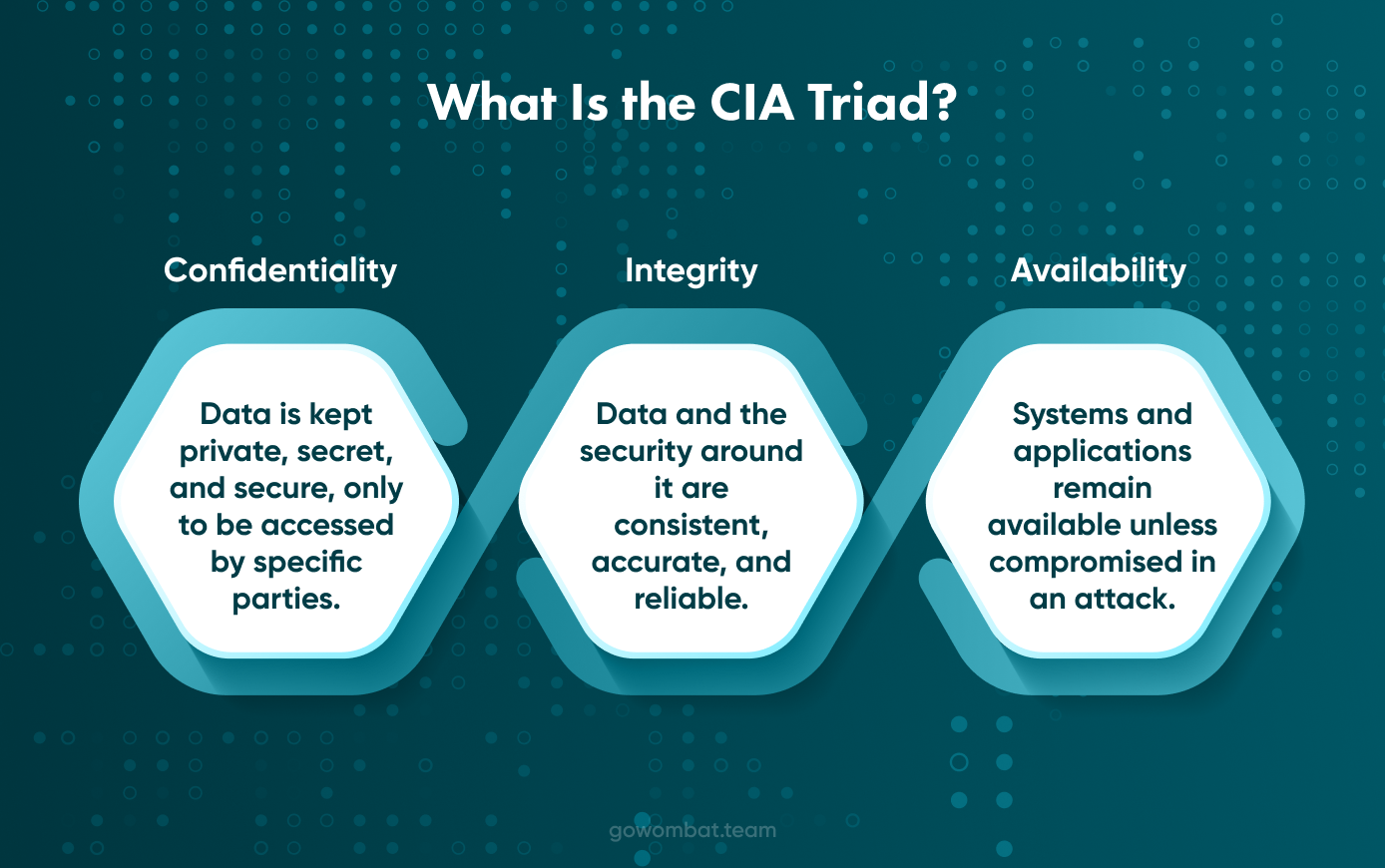
The CIA triad remains an important conceptual model, but it does not tell an enterprise how to execute security.
What the CIA Triad Represents in Modern Security Programmes
Confidentiality, integrity and availability define what secure information systems must achieve. They help decide what must be protected and why. Organisations use the CIA model to:
- set high-level security objectives;
- prioritise protection of critical or sensitive information;
- frame discussions around the risk treatment plan and impact.
They do not say how security requirements are implemented or enforced.
Why Principles Alone Are Insufficient for Enterprise Risk Management
Principles alone lack operational clarity. They do not:
- allocate ownership and accountability;
- establish processes for incident handling or access review;
- produce evidence for internal and external auditors, regulators, or customers;
- help in continuous improvement or maturity measurement.
Companies that rely on principles alone struggle in audits, certification and incident response.
How Control-Based Pillars Map to ISO 27001 and PIMS Requirements
ISO 27001, privacy management standards such as ISO/IEC 27701 and similar frameworks check how well controls are implemented, followed and evaluated. They focus on:
- documented processes and responsibilities
- technical enforcement and monitoring
- personnel competence and awareness
- repeatability and improvement
What Are Operational Controls in Information Security
Operational controls define how information security is governed, executed, reviewed and improved across the organisation. They keep security policies consistent, traceable and aligned with business goals.
Operational Controls and Information Security Risk Management Processes
Operational controls rest on information security risk management, a structured process for:
- identifying potential threats and vulnerabilities;
- assessing likelihood and impact;
- defining treatment measures;
- accepting or transferring residual risk.
In an ISMS and a PIMS, this is a continuous process, so security keeps up with new threats and changes in laws and regulations.
Policies, Procedures, and Governance as Security Enablers
Operational controls are implemented through the policies, procedures and governance that direct everyday behaviour. Typical examples:
- information security policies;
- incident response procedures;
- change management processes;
- third-party and vendor governance;
- business continuity planning.
Together, these controls turn the security strategy into routine work.
Operational Controls in the ISO 27001 Certification
ISO 27001 auditors look for operational consistency and evidence. Among other things, they check whether:
- the controls have been documented and approved;
- the procedures are followed in practice;
- reviews and improvements are recorded;
- management is actively involved in overseeing security performance.
Isolated technical solutions without operational support rarely meet certification requirements.
What Are Technical Controls and How Do They Enable Secure Systems
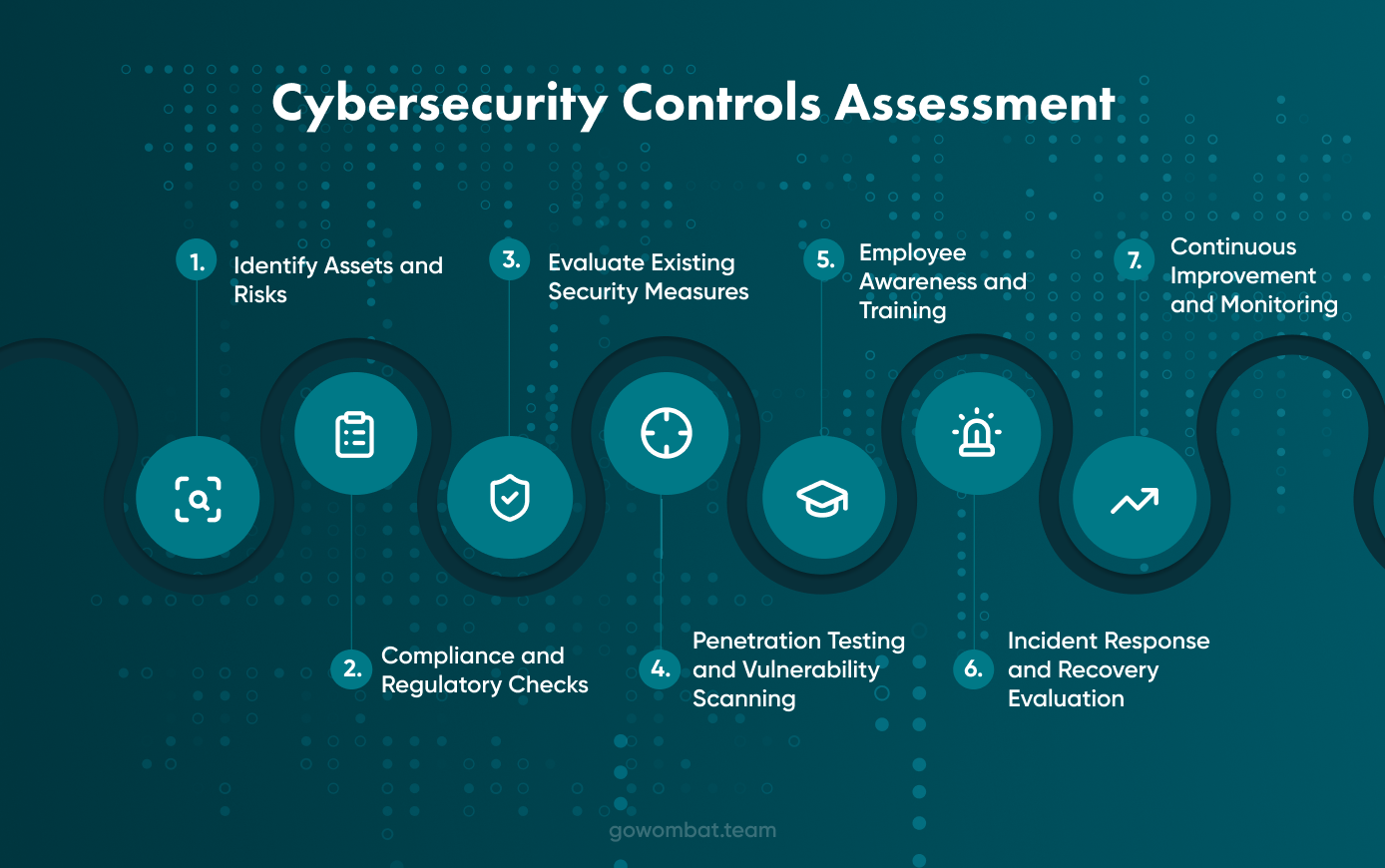
Technical controls are enforceable mechanisms that protect sensitive data, systems and services at scale. They bring automation, consistency and visibility to complex environments.
Technical Controls Within ISMS and PIMS Frameworks
A technical measure is considered a control when it:
- is aligned with defined security objectives;
- is properly configured and documented;
- is continuously monitored;
- is regularly reviewed and improved.
ISMS and PIMS frameworks explicitly require this governance around technical measures.
Core Technical Controls in Enterprise Environments
Most enterprises rely on a core set of technical controls:
- identity and access management;
- encryption for data both at rest and in transit;
- logging and monitoring;
- vulnerability and configuration management;
- secure cloud and application architectures.
Technical Controls and Privacy Management Under GDPR
Technical controls are one of the mechanisms through which the compliance of the following can be achieved under GDPR:
- restricting access and minimising data;
- accountability through audit trails;
- breach detection and response;
- ensuring the protection of personal data processed.
Privacy management can neither be demonstrated nor defended if there are no efficient technical controls.
Strengths and Limitations of Technical Controls
Technical controls offer:
- scalability over large environments;
- real-time detection and response;
- less dependence on manual intervention.
Without governance, they also bring risks: misconfiguration, complexity and false confidence.
Why Personnel Controls Are the Most Critical Pillar
Human behaviour is still the main cause of security incidents, and personnel controls are the most direct way to manage that risk.
What Personnel Controls Mean in Practice
Personnel controls cover the whole employee lifecycle:
- onboarding and role definition;
- access assignment and review;
- training sessions and awareness;
- performance management and accountability;
- offboarding and access removal.
These controls make sure staff know their security duties and have what they need to carry them out.
Human Resource Security in ISO and ISMS Models
Insider threats and human error, including falling for phishing and social engineering, cause many security breaches. They are reduced by:
- ongoing security awareness;
- role-specific training;
- defined escalation routes;
- clear responsibility within each team.
ISO 27001 treats human resource security like any other control area. Internal audits (clause 9.2) check whether the company has methods for raising awareness, enforcing rules and verifying staff competence, rather than informal or occasional training.
How the Three Pillars Work Together in an ISMS and PIMS Framework
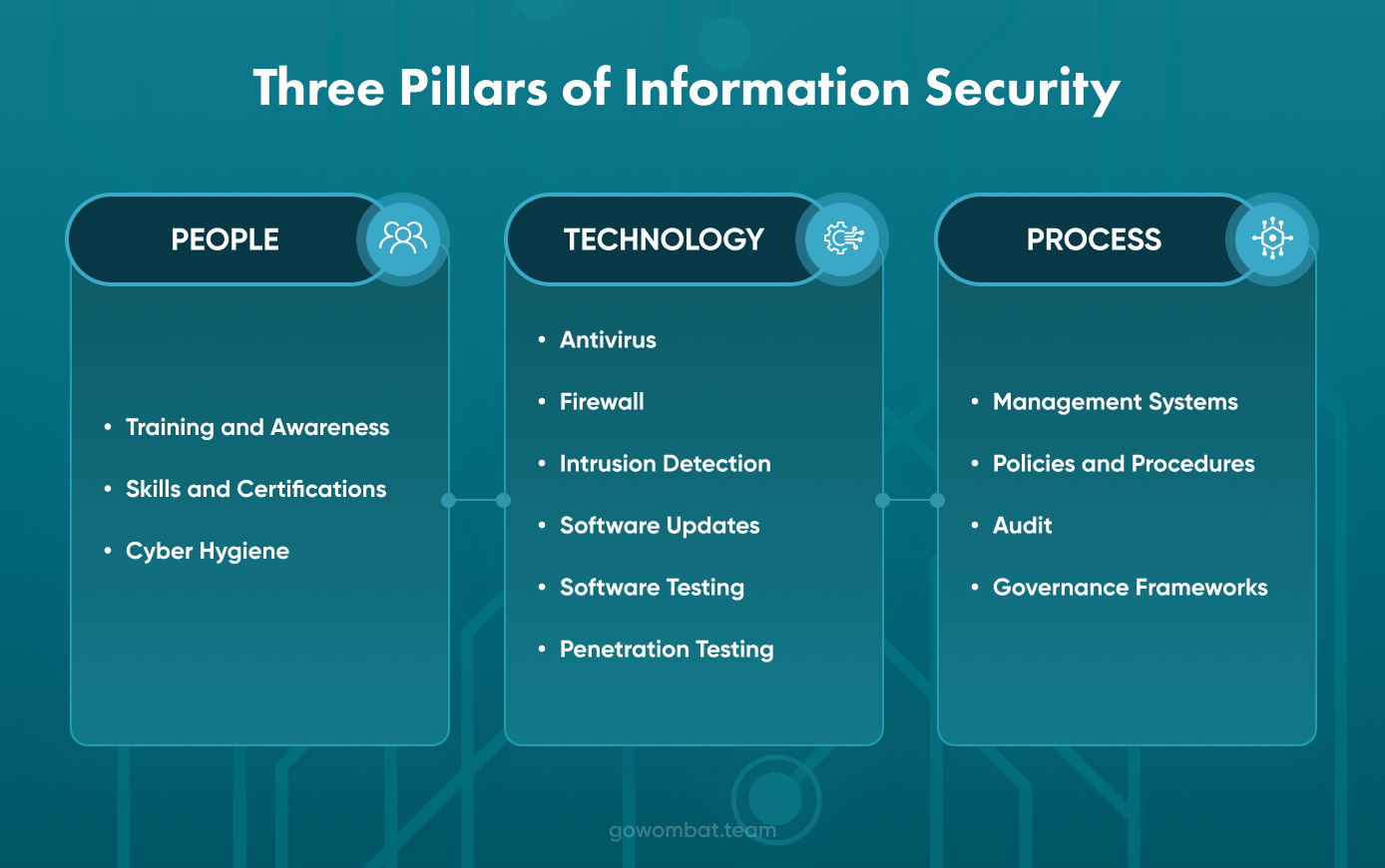
An information security management system (ISMS, ISO/IEC 27001) and a privacy information management system (PIMS, ISO/IEC 27701) together cover security and privacy risks.
The ISMS protects information assets; the PIMS extends it to data protection and privacy requirements.
Both rely on operational, technical and personnel controls working together.
Operational controls set up governance, risk management and oversight. Technical controls enforce security and provide logging and monitoring. Personnel controls make sure employees are trained and act as expected.
Together, they let a business:
- put information security policies into daily practice;
- demonstrate accountability to regulators and customers;
- respond effectively to incidents and audits;
- continuously improve security maturity.
Control Interdependence and Defence in Depth
No pillar can compensate for a serious failure in another. Defence in depth works when:
- Operational controls establish the ground rules and assign accountability.
- Technical controls implement and monitor these rules.
- Personnel controls promote awareness and ownership.
Layered controls prevent systemic failures and contain the effect of individual ones. In regulated industries, running the ISMS and PIMS together avoids duplicated controls and evidence. The aim is for governance, technology and people to work as one system.
Common Gaps Enterprises Face When Implementing the Three Pillars
Security breaches are often caused by unbalanced or fragmented controls rather than by negligence.
- Over-Reliance on Tools Without Governance
Many companies invest in the latest security tools but neglect policies, ownership and review processes. Tools do not protect without governance.
- Formal Compliance Without Operational Adoption
Controls that are documented but not followed defeat the purpose of an ISMS and increase the risk of regulatory violations. Compliance has to be part of how work is done.
- Fragmented Ownership Across Security, Product, and Compliance Teams
Unclear responsibilities lead to late decisions, inconsistent work and poor incident response. Security, product and compliance teams need clearly shared ownership.
Lessons from Enterprise Security Incidents and Audit Findings
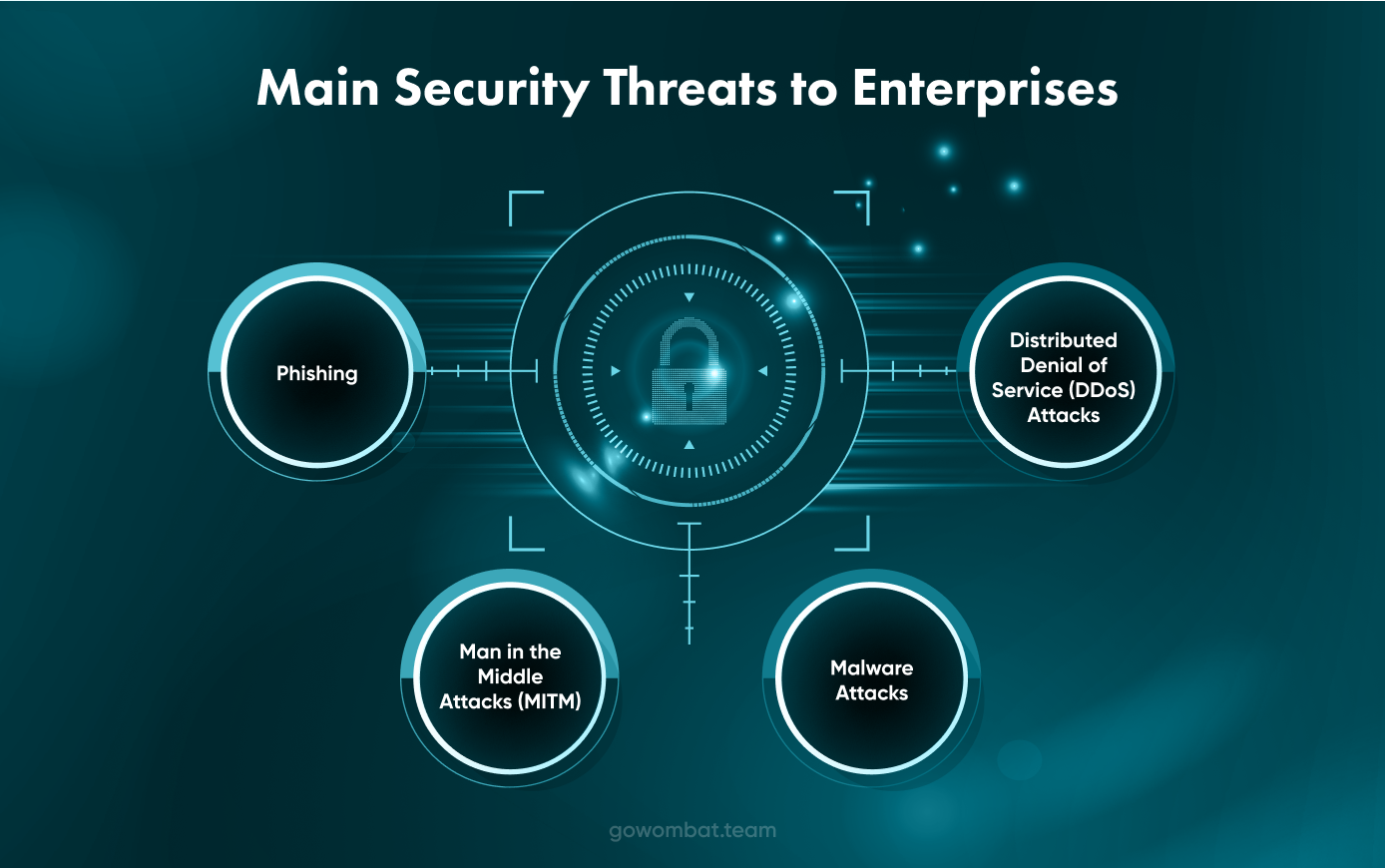
Major incidents and regulatory actions show that enterprise security failures rarely come from one missing control. They happen when operational, technical and personnel controls are not aligned, enforced or governed as a system.
Governance and Monitoring Gaps in Large-Scale Data Breaches
The UK regulator's inquiry into the British Airways data breach revealed that the company's security weaknesses went beyond just the absence of technical protection. There was a security technology, but the insufficient operational oversight and delayed detection had allowed the unauthorised parties access. Gaps in monitoring, escalation procedures and ownership can undermine even a mature technical environment.
Patch Management and Accountability Failure
The Equifax breach is a standard example of failed operational and personnel controls. A known vulnerability was left unfixed even though a patch was available. Technical controls existed, but operational processes did not get the patch applied quickly, and accountability for vulnerability management was unclear. The result was legal challenges and lasting reputational damage.
Third-Party Risk and Vendor Access Weaknesses
Supply chain weaknesses are a common pattern in enterprise incidents. The Target breach started through a third-party vendor with legitimate network access. Internal systems had technical protection, but vendor access and monitoring lacked organisational processes and governance. Access reviews and third-party accountability were not applied consistently, which allowed the attackers to move laterally.
Human Factors in Ransomware and Phishing Incidents
In ransomware and phishing incidents, human behaviour often decides the outcome. A phishing email that gets past technical filters becomes an incident when employees do not know how to recognise and report it. Regular training, phishing tests and clearly defined response roles shorten the time to containment.
The common lesson: advanced technology alone does not make an organisation resilient. Regulators, auditors and customers look at whether operational discipline and personnel accountability match the technical safeguards.
Conclusion
Grouping controls into operational, technical and personnel types gives enterprises a practical basis for an ISMS and PIMS programme. Unlike a principle-based view, it ties security to governance, accountability and audit readiness.
If you are preparing for ISO 27001, start by checking which of your controls have evidence behind them.
If your company is reviewing its information security or privacy management, or preparing for ISO certification, a Go Wombat information security consultant can help turn the frameworks into auditable practice.
FAQs
How do regulators and auditors evaluate information security maturity?
Regulators and auditors check whether controls are consistently implemented, documented, and reviewed over time. They concentrate on governance, risk management, incident handling, and accountability through the evidence, rather than on individual security tools.
How long does it take to build a mature ISMS using the three-pillar model?
Most organisations can establish a first baseline of controls and evidence within a few months and then move to continuous improvement cycles. Overall maturity depends on the organisation's size, its regulatory exposure and how well security roles are embedded across teams.
How do the three pillars of information security support SOC operations?
Operational controls define escalation and response workflows, technical controls provide monitoring and telemetry, and personnel controls make sure analysts and responders act consistently under pressure. A SOC needs all three.
Why does third-party risk management depend on all three pillars of information security?
Contracts alone do not solve vendor security. Operational controls define assessment and oversight, technical controls restrict access and exposure, and personnel controls make sure vendors follow the agreed security measures.
How does the three-pillar model evolve after ISO certification?
After certification, the focus moves to continuous improvement: controls are refined, audit and incident findings feed back into governance, and personnel roles change as systems, rules and threats change.
Share and subscribe to our blog
Related articles

6 GDPR Compliance Principles You Need to Master
Organisations may face serious financial, legal, and reputational risk if they do not comprehend and implement GDPR compliance principles. GDPR requirements adherence is a board level concern rather than just legal, technical and organisat…

Cloud Data Security: Protecting Sensitive Data
What cloud data security covers in private, public and hybrid clouds, why the Capital One, Uber and Accenture incidents happened, and the controls that prevent them.

Mobile App Security: How to Protect Data and Prevent Cyber Breaches
development marks a significant step for every organisation. By 2026, such applications extend beyond mere digital tools. Access to information systems, operational frameworks, and public perception now flows t…

The Importance of Cybersecurity
Why cybersecurity matters for businesses, the most common types of cyberattacks, and practical steps to protect your company against them.

Cybersecurity Risk Management: What It Is and How to Use It
Cybersecurity risk management explained: what it covers, what it gives a business, a five-step process, the main frameworks and how to respond to a breach.

How to Achieve ISO 27001 Certification in 2026?
How ISO 27001 certification works in 2026: ISMS scope, risk assessment, Stage 1 and Stage 2 audits, costs, surveillance audits and recertification.

How can we help you?

