



Why Use a CRM System? 7 Reasons Businesses Can't Afford to Skip One in 2026

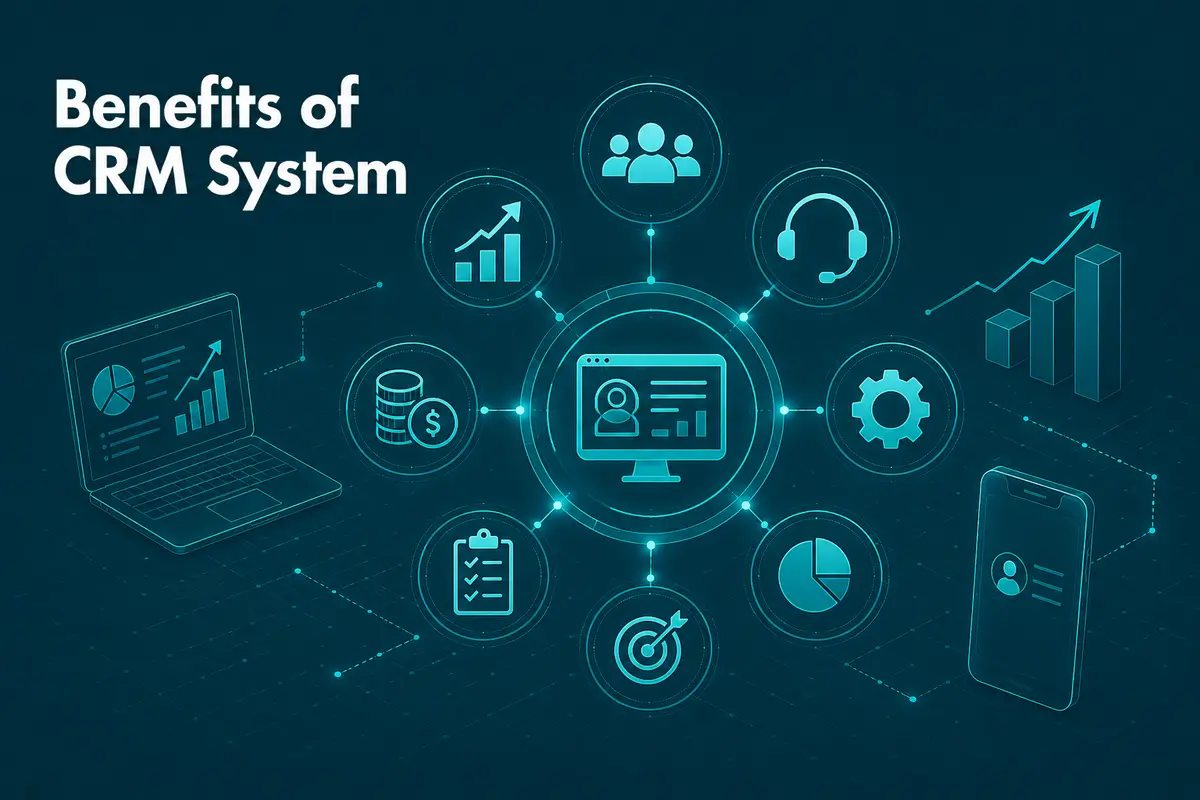
Communication habits changed after 2020 and never fully went back. Teams now reach colleagues and customers by email, chat, video calls and social channels, often within the same hour. A CRM system keeps those conversations in one place instead of scattered across many inboxes. Here's what a CRM system does, what changed by 2026, and why it is worth using one.
What Is a CRM System?
A CRM system (customer relationship management system) is software that records and organises every interaction a business has with its customers and prospects: emails, calls, contact-form submissions, social messages and meeting notes, all attached to one customer record instead of buried in someone's personal inbox. Salesforce, HubSpot and Microsoft Dynamics are among the best-known CRM systems; some businesses build their own around the way they sell.
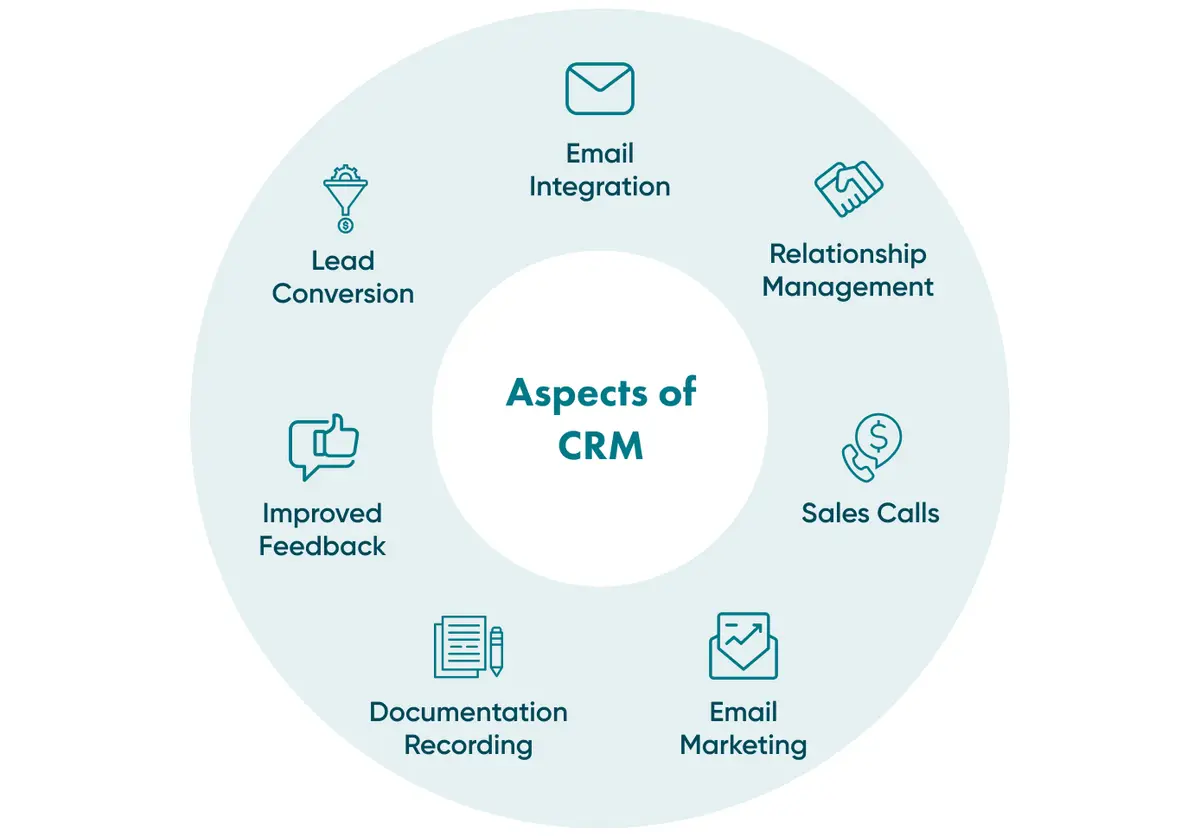
Modern CRM software also helps sales and marketing teams manage the whole funnel, from the first lead to a closed deal and the renewal after it. It automates routine tasks such as scheduled follow-up emails and gives managers a live view of the pipeline without chasing anyone for updates.
What's Trending in CRM in 2026?
AI Moves From Add-On to Default
AI in CRM systems is no longer a premium add-on. According to Salesforce's 2026 State of Sales Report, 87% of sales organisations now use some form of AI for prospecting, forecasting, lead scoring or drafting emails. The open questions for most companies are how to roll it out safely and whether their CRM data is clean enough to trust the output.
Low-Code Customisation Replaces the IT Queue
Sales operations teams used to wait weeks for a developer to adjust a CRM workflow. With low-code and no-code tools, a sales manager can often change a pipeline stage without opening a ticket.
CRM Meets Social and Real-Time Engagement
Many CRM systems now pull in social media mentions, comments and sentiment in real time, so teams can respond to a complaint within minutes rather than days.
Fewer Tools, More Integration
Companies are replacing separate platforms for sales, support and marketing analytics with CRM systems that combine all three in one interface, often with business process automation connecting the steps. With fewer tools, fewer leads get lost between them.
CRM Extends to Connected Devices
IoT devices, from equipment sensors to connected vehicles, can feed usage data straight into CRM records, so a field service engineer can check a machine's maintenance history before calling the customer.
Business Size No Longer Decides Who Needs CRM
CRM software is not only for large enterprises. What matters is the size of the sales funnel, not the size of the company: a freelancer with a dozen active clients needs a CRM system as much as a 200-person sales team does.
On-Site or Cloud-Based CRM?
CRM systems are deployed in one of two ways, and the choice affects cost, control and how quickly a team can start.
On-site CRM | Cloud-based CRM | |
Who manages security and updates | The business's own IT team | The software vendor |
Upfront cost | Higher: hardware and licences | Lower: subscription-based |
Scalability | Manual capacity planning | Scales on demand |
Setup time | Weeks to months | Days to weeks |
Best fit | Strict data-residency rules | Most growing teams |
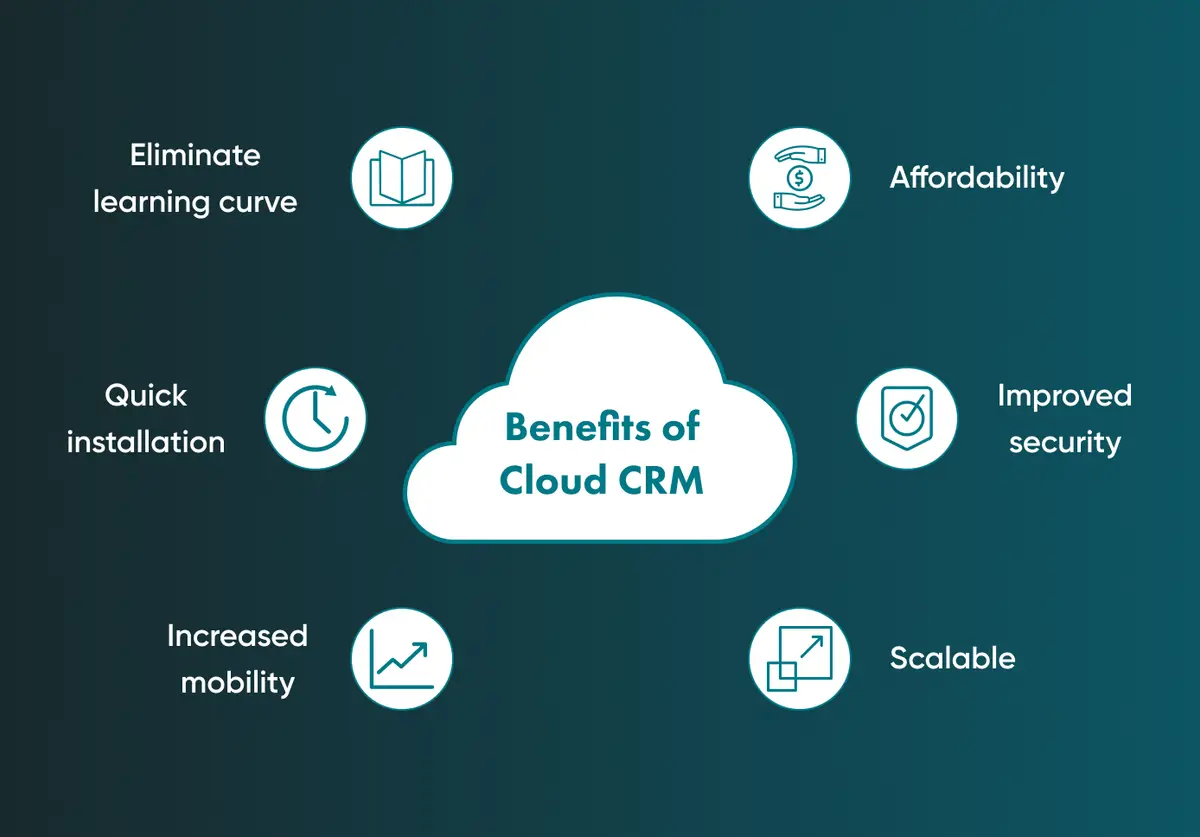
A cloud-based CRM system, often sold as software-as-a-service, has become the default choice for a simple reason: a growing company can add users and storage without buying new servers. On-site systems still make sense for organisations with specific regulatory constraints around where customer data physically sits.
How AI Is Used Inside a Modern CRM
AI in a CRM system is most useful in three areas.
Sharper Data Management
A CRM system pulls in data from email, social channels and web forms, then filters it and routes it to the right person automatically.
A Better Customer Experience
AI-assisted CRM tools surface a customer's history automatically, so a support agent opens a ticket already knowing what the customer bought last quarter and what they complained about before. Customers notice when they don't have to repeat themselves.
A Sharper Sales Strategy
Predictive lead scoring, built on machine learning, flags which leads are worth a call today and which need nurturing first. Grand View Research values the global CRM market at $79.6 billion in 2025 and expects it to reach $161.3 billion by 2033, a compound annual growth rate of 9.3%. The growth drivers it lists include customer data collection, predictive and prescriptive analytics, and social CRM.
Who Actually Needs a CRM System?
In most organisations, three teams use CRM software: sales, marketing and service. HR processes can be automated too, but with different software; see our article on HR automation.
Sales Teams
A CRM system tracks new leads, schedules calls, generates reports and issues invoices. Managers get a live forecast instead of one pieced together from memory at the end of the month.
Marketing Teams
Marketing campaigns run on the same customer data, pulled from website forms and email engagement. Qualified leads get handed to sales automatically, with no manual spreadsheet export in between.
Service Teams
After a sale closes, service teams use CRM records to track support requests and renewals. A help desk connected to the same system keeps each customer's full history in one place, so agents don't ask for details the company already has.
CRM System in Practice: What Go Wombat Has Built
Demco, a US manufacturer of agricultural equipment, semi-trailers, and RV towing products, sold its products through an extensive dealer network but had no digital system connecting dealers, the company, and end customers. Pricing a custom equipment configuration meant manually checking item-by-item costs, a process that ate up hours on both sides of every sale.
Go Wombat built a CRM platform on Python (Django) and React, deployed on AWS, that integrates directly with Demco's existing ERP system. Dealers can now price a full equipment configuration in under a minute and submit exchange or refund requests without a phone call. The project has been live and expanding since March 2020.
7 Reasons to Use a CRM System
Here are seven reasons to use a CRM system.
1. One record holds every conversation. Every call, email and meeting note sits in one customer record instead of someone's personal inbox, so anyone on the team can pick up where a colleague left off.
2. Fewer deals stall. Automated follow-ups and pipeline tracking mean fewer leads sit untouched while someone remembers to call back.
3. Forecasts are based on pipeline data. Sales reporting and forecasting use deal stages and close dates from the pipeline, so a manager can see which deals are close to closing instead of relying on reps' verbal updates.
4. It pays off at any company size. The value of a CRM system depends on how many active relationships a team manages, not on how many people the company employs.
5. Client knowledge survives staff turnover. Client history, past objections and pricing agreements stay with the business when an employee leaves.
6. Customers don't have to repeat themselves. When sales, marketing and support work from one shared record, a customer doesn't have to explain the same problem to three different people.
7. Competitors are investing in CRM. Grand View Research expects the global CRM market to reach $161.3 billion by 2033. Businesses without a CRM system compete with fewer tools and less data about their customers.
What Happens If You Don't Use a CRM System?
Without a CRM system, businesses typically run into these problems.
Leads Go Cold
Potential customers left unattended for even a few days often move to a competitor who responded faster. A CRM system schedules the follow-up automatically, so no lead depends on someone remembering to check a to-do list.
Time Disappears Into Manual Work
Tasks that a CRM system automates, such as logging a call or generating a report, otherwise have to be done by hand.
Nobody Has the Full Picture
Without a shared system, managers rely on staff to self-report progress, and important details fall through the gaps between conversations.
Planning Becomes Guesswork
Without real pipeline data, planning relies on gut feeling, which rarely works beyond a handful of clients.
Marketing Spend Loses Its Justification
Without a CRM system linking campaigns to closed deals, it is hard to calculate the return on marketing spend or to defend the marketing budget.
Key Takeaways
A CRM system centralises customer data, automates the repetitive parts of the sales cycle and, increasingly, uses AI to flag which leads deserve attention first. It is useful for teams of any size.
Go Wombat builds custom CRM systems, from the discovery phase to ongoing support, for businesses that have outgrown a spreadsheet or a generic off-the-shelf tool. If your current setup is holding your sales team back, share your project brief.
Frequently Asked Questions
What is a CRM system in simple terms?
A CRM system, or customer relationship management software, stores and organises every interaction a business has with its customers, from emails and calls to social messages, so nothing depends on one person's memory or personal inbox.
Do small businesses really need a CRM?
Size matters less than the number of active client relationships. A freelancer managing a dozen ongoing projects can benefit from the same tracking and automation that a large sales team relies on, often through a lighter, lower-cost plan built for small teams.
What's the difference between a CRM and an ERP system?
The two systems solve different problems: a CRM system manages customer-facing relationships and sales pipelines, while an ERP system manages internal operations such as inventory, finance, and supply chains. Many businesses run both together, integrated so that data flows between them.
Is a spreadsheet enough instead of a CRM system?
A spreadsheet can work for a handful of contacts, but it breaks down quickly once multiple people need to update the same records. There's no automatic follow-up, no shared history, and no easy way to spot which leads are going cold.
How much does building a custom CRM system cost?
Cost depends on scope, for example on whether you customise an existing platform such as Salesforce or HubSpot or build a system from scratch around a specific workflow. A short discovery phase is the fastest way to get an accurate estimate before committing to a build.
How is AI used inside a modern CRM?
Predictive scoring, automated email drafts, and instant customer history lookups are the three most common AI features inside a modern CRM system. Salesforce's 2026 State of Sales Report found that 87% of sales organisations already use some form of AI in these workflows.
Plan a CRM System That Fits Your Business
Replacing the wrong CRM system is expensive, and so is an off-the-shelf platform that ignores how your sales team works. Book a scoping workshop with Go Wombat's engineers, and we will map out what your business needs before any code is written.
Share and subscribe to our blog
Related articles

Five Proven Strategies To Automate Business Processes
What business process automation (BPA) is, what can and cannot be automated, five strategies for introducing it and the benefits to expect.

How To Make A Food Delivery Website in 2022
How to build a food delivery website: the three business models, the features customers and restaurants need, and the steps from market research to launch.

Six Reasons to Work with A Ukrainian IT Company
Six reasons to work with a Ukrainian IT company: skilled specialists, a good quality-to-price ratio, capable companies, good English, flexible teams, and location and time zone.

Why Generative AI Is the Next Step in CRM Automation
Generative AI turns a CRM from a record store into a tool that drafts emails, summarises calls and suggests next steps. Here are the main use cases and what slows adoption.

How can we help you?

