



How Can AI Agents Process Industrial IoT Data in Real Time?

Manufacturing plants generate large volumes of operational data. Industrial IoT sensors in machinery, production lines and logistics systems report temperature, vibration, pressure, throughput and dozens of other signals every fraction of a second.
Most manufacturers already capture this data. The hard part is acting on it in time.
A conveyor fault flagged three seconds too late becomes a line stoppage. An anomaly detected at the end of a shift, rather than the moment it appeared, becomes a defect that reached packaging. Industrial IoT AI shortens the time between a sensor reading and a decision.
This guide covers where to run inference (edge, on-premise or cloud), which protocols you will need to bridge, and how to choose a first pilot.
What Is Industrial IoT AI and Why Does Processing Speed Matter?
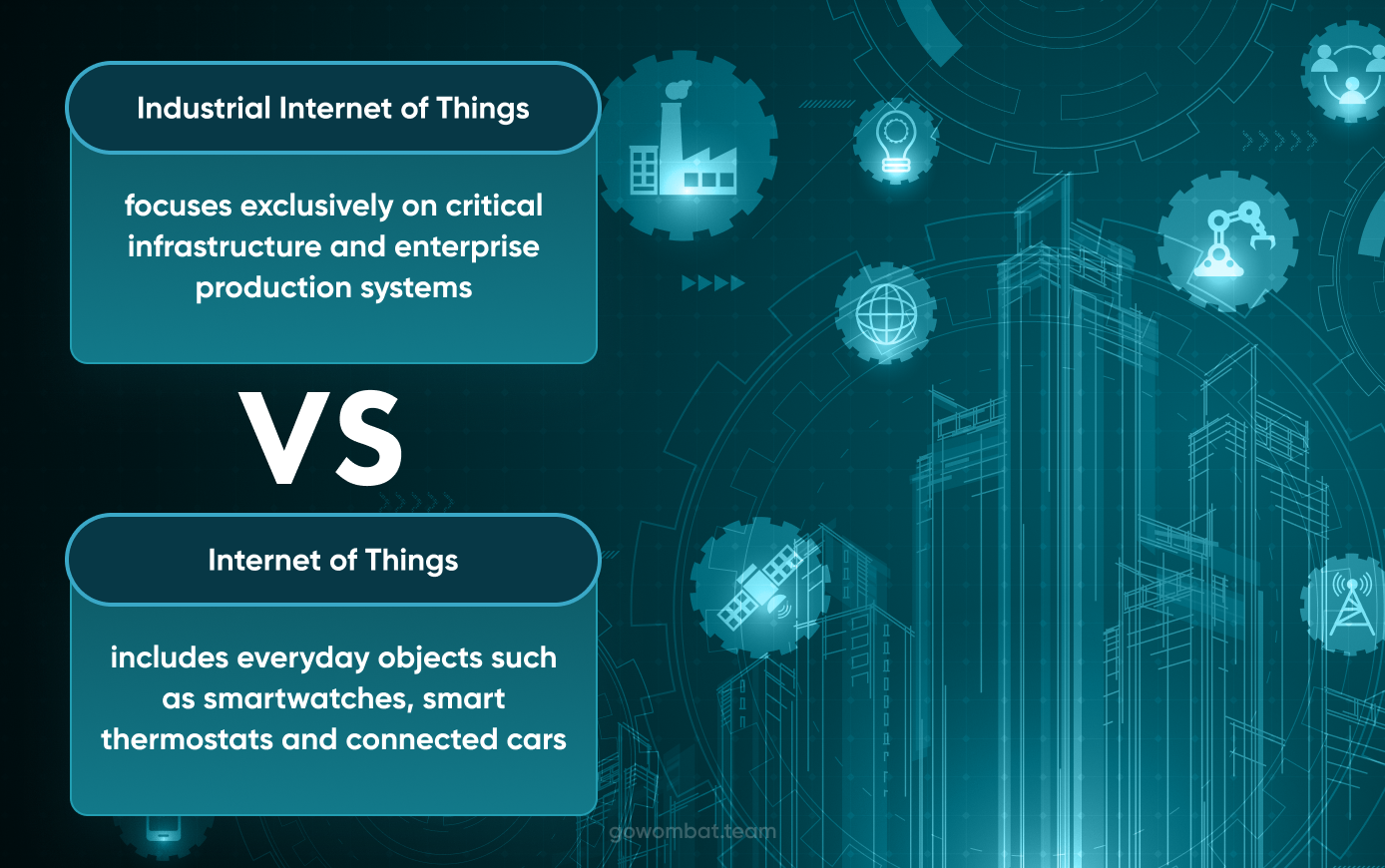
Industrial IoT AI refers to the combination of connected sensor infrastructure with artificial intelligence systems that interpret operational data and produce actionable outputs. In a manufacturing context, this means machines, assembly lines, environmental monitors, and logistics systems continuously feeding data into AI models capable of detecting patterns, predicting failures, and, in more advanced deployments, triggering autonomous responses.
The phrase "real time" gets used loosely across the industry. What it means operationally depends on context. For a packaging line running at high speed, real-time may mean a decision within 50 milliseconds. For a predictive maintenance model monitoring motor vibration, it may mean an alert within 30 seconds of anomaly detection. Either way, the threshold is defined by the cost of delay, not by a technological convention.
Traditional manufacturing analytics worked differently: data was aggregated overnight or weekly and reviewed by engineering teams, so decisions were retrospective. The value of data lay in historical patterns rather than immediate response.
The Cost of Delayed Decisions on the Shop Floor
Most manufacturers have already invested in sensors. The bottleneck is turning raw readings into usable information: without continuous AI processing, readings pile up in historians and dashboards that nobody watches in real time.
Every minute a developing fault goes undetected brings unplanned downtime closer, and every defective part that passes an uninspected checkpoint causes more problems downstream. The cost shows up in the maintenance budget, the scrap report and the customer complaint log.
AI agents watch data streams, interpret them in context and act without waiting for human review: they escalate alerts, adjust parameters or flag exceptions.
How Do AI Agents Fit Into an Industrial IoT Architecture?
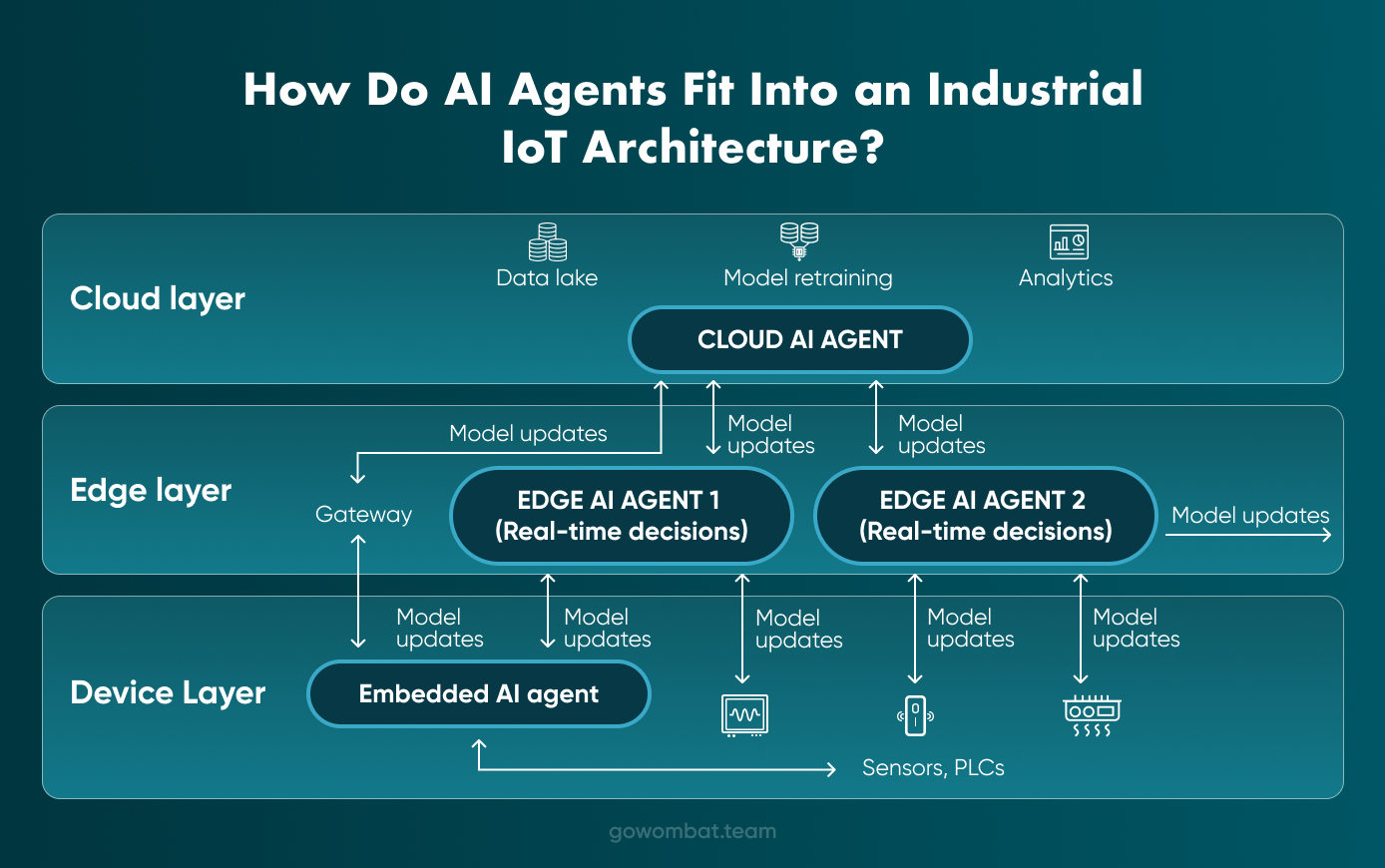
In manufacturing, an AI agent is a software system rather than a single model. It does three things: it perceives its environment through data inputs, reasons about that data against defined objectives, and acts, either by triggering downstream systems or by giving operators enough context to decide quickly.
In an industrial IoT deployment, the agent continuously ingests sensor data from connected devices, compares readings against learned baselines or operating parameters, and makes decisions at the speed the process demands.
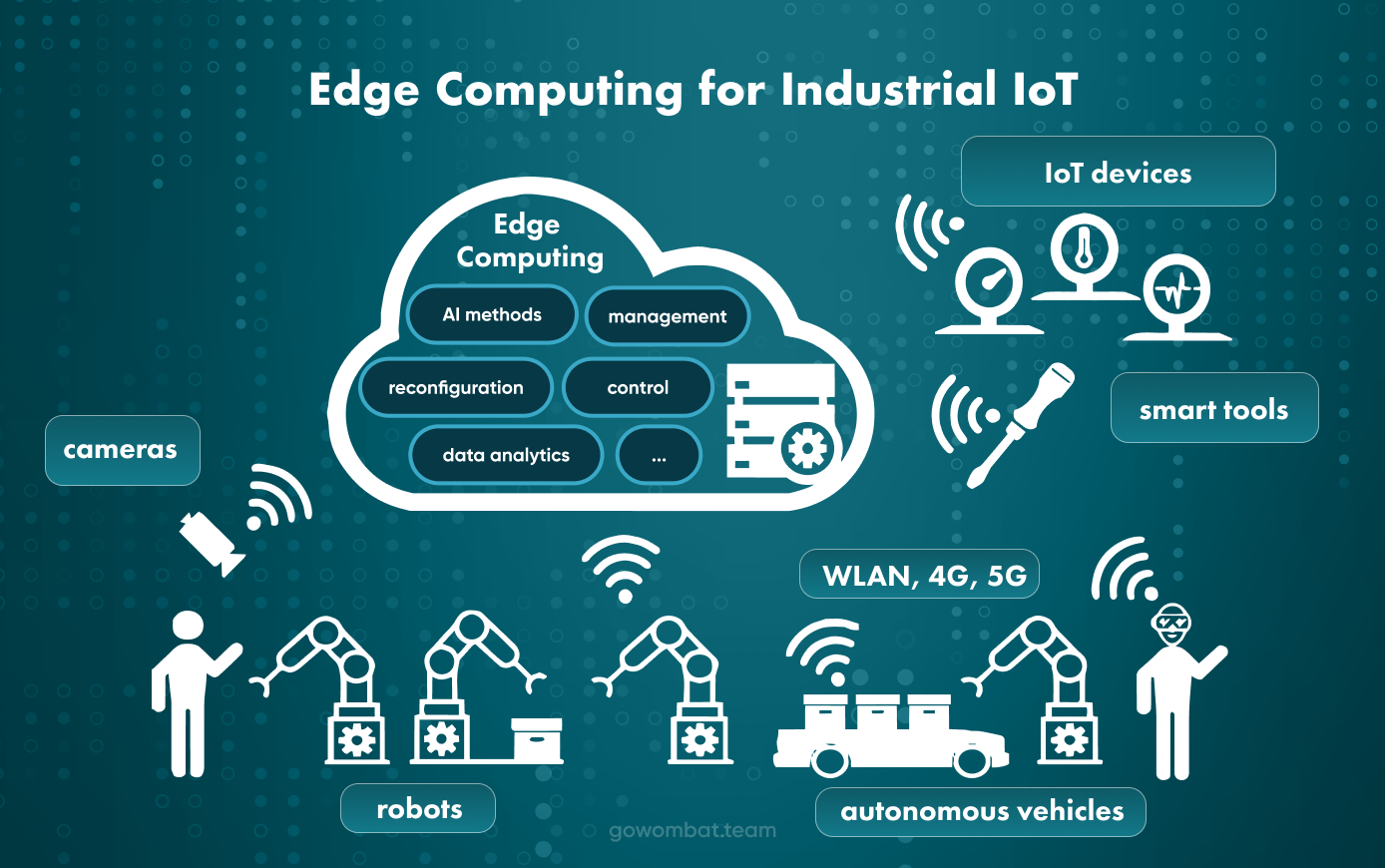
The architecture is layered. Sensors and actuators sit at the base. Edge devices process data locally. On-premise servers handle more complex inference. Cloud platforms provide long-range analytics, model training and cross-site intelligence. AI agents can operate at any of these layers, or across all of them in a coordinated multi-agent system.
Edge, Fog, and Cloud: Where Does the Intelligence Live?
This is where many deployments go wrong. Organisations attempt to run all inference in the cloud, only to discover that network latency makes real-time response impossible for time-critical decisions. Others attempt to run everything at the edge, only to find that constrained hardware cannot support the models they need.
The answer is almost always a hybrid. Decisions that must be made within milliseconds, such as anomaly flags and parameter adjustments, belong at the edge, where industrial IoT edge computing keeps latency low. Safety shutoffs are not a job for an AI agent: they stay with a separate safety instrumented system (SIS), kept independent of other controls under IEC 61508 and IEC 61511, and the agent can only raise an alarm or recommend action. Pattern analysis, model retraining and cross-machine correlation belong in the cloud or on on-premise servers with more computing headroom.
Getting that split right is one of the hardest engineering decisions in an industrial IoT AI deployment.
How Digital Twin Integration Extends Agent Capability
Digital twins, virtual models of physical machines or production processes, extend what real-time AI processing can do. An AI agent acting on live sensor data can update a digital twin at the same time, so engineers can simulate the consequences of a detected condition before committing to a physical response.
A pressure anomaly detected in a compressor triggers an agent alert. The same data updates the digital twin. The engineering team can model what happens if the machine keeps running versus if it is taken offline for inspection, within the time that would previously have been spent just realising there was a problem.
What Separates Real-Time AI Processing from Traditional Analytics?
Batch analytics, which most manufacturers still rely on, processes data in scheduled cycles: a model runs at midnight and results are ready the next morning. That is adequate for demand forecasting or long-term capacity planning.
For a production line, it is not.
Stream processing analyses data as it arrives, so decisions reflect the current state of a machine rather than its average over the last shift. This needs different infrastructure, different model architectures and a different approach to alerting.
The latency thresholds that matter in manufacturing are not uniform. A vision-based quality inspection system must flag a defective component before it reaches the next station, sometimes within 100 milliseconds. A predictive maintenance AI monitoring bearing wear may have a window of hours or even days, but the value lies in catching degradation early enough to schedule intervention rather than react to failure.
Sensor data feeds both scenarios. The difference is how the pipeline routes readings: to batch storage, to a real-time stream processor, or to both in parallel. At scale, you need both paths, with AI agents working on the live stream while deeper models use the historical record.
Where Can AI Agents in Manufacturing Deliver Results?
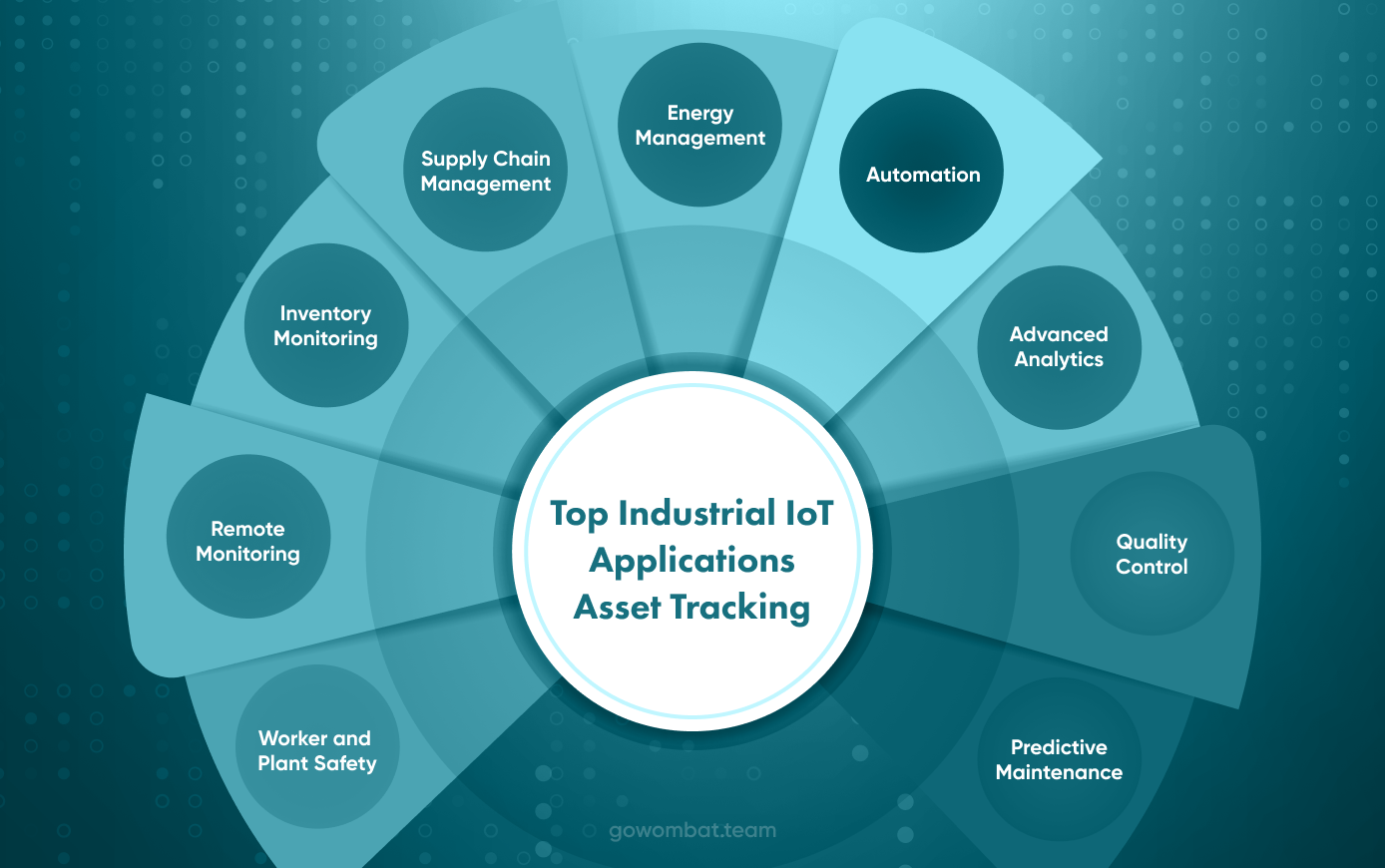
Industrial IoT AI pays off first where the feedback loop is tight and outcomes are measurable. Two applications stand out; the scenarios below are illustrative.
Predictive Maintenance AI in Practice
Unplanned downtime costs manufacturers significantly more per hour than a scheduled intervention would have. AI agents that monitor vibration, temperature, current draw and acoustic signatures can detect early signs of failure, such as bearing degradation, seal wear and alignment drift, well before an operator would notice them on a standard dashboard.
In more mature deployments, the agent also cross-references maintenance schedules, parts availability and production load to recommend the best intervention window.
What This Looks Like in Practice
As an illustrative scenario, take a food or beverage production line that loses hours of output each quarter to unplanned conveyor failures, with a maintenance team relying on scheduled inspection rounds and reactive callouts. Once AI agents monitor motor current and mechanical vibration across the conveyor network, they can flag bearing wear days before failure thresholds, so the team can schedule the fix during planned downtime instead of reacting to a stoppage. The same agents can also defer preventive maintenance on components that show no signs of degradation, saving intervention costs and technician time.
Quality Inspection at Line Speed
Computer vision models embedded within agentic workflows can inspect products at line speed with consistency that manual checking cannot match at scale. The agent observes, classifies, and, where integrated with line controls, stops or reroutes defective items without human involvement.
Fatigue and shift patterns do not affect an AI agent. Lighting still does, which is why consistent, engineered lighting at the inspection point matters as much as the model itself. The inspection standard remains identical at 06:00 and at 22:00.
What This Looks Like on the Line
As an illustrative scenario, take a precision components manufacturer whose defect escape rate exceeds customer tolerance because inspectors, tired by repetitive visual checks, miss surface micro-cracks late in a shift. An AI agent that combines camera feeds with real-time processing can run anomaly detection at every inspection point instead. Keeping false positives low is usually the hardest part of such a project, so plan time to tune the model on real production images.
What Are the Hardest Challenges in Deploying Industrial IoT Edge Computing?
Teams that underestimate the architectural complexity often end up with impressive pilots that cannot scale.
The first challenge is legacy infrastructure. Most manufacturing environments contain machines and control systems that were never designed to communicate beyond their own PLCs. Getting structured data out of a 15-year-old CNC machine requires protocol conversion, not an API call. Bridging the OT/IT divide, connecting operational technology to the information technology layer where AI models run, is an engineering problem that must be solved before any AI development begins.
The protocols add further complexity. OPC-UA, MQTT, Modbus, and proprietary vendor formats coexist in most plants. Normalising data from these sources into a unified format that AI agents can consume consistently is a specialist task that requires both protocol expertise and a clear data architecture strategy.
Industrial IoT edge computing introduces hardware constraints that are easy to underestimate. Edge devices must run inference models fast enough to meet latency requirements while operating in environments that are hot, dusty, vibration-prone, and often poorly connected. Model compression, reducing the computational cost of AI models without sacrificing accuracy, sits at the intersection of data science and embedded systems engineering. It is not a common skill set.
Security compounds everything. Edge devices deployed across a shop floor expand the attack surface considerably. In an environment where a compromised sensor could trigger a physical safety event, security is a design constraint from the outset, not a compliance checkbox applied at the end.
How Should Manufacturers Build Toward an AI-Ready Industrial IoT Stack?
Invest in data connectivity before you invest in AI.
A machine that cannot reliably transmit structured data cannot be monitored by an AI agent. A plant where sensor readings arrive in inconsistent formats with inconsistent timestamps cannot support real-time AI processing at any meaningful scale. The data foundation determines everything built above it.
A Unified Namespace, a single structured data architecture that normalises operational data from all sources into a consistent model, is a practical starting point. It gives AI agents one consistent view of a complex, mixed plant environment.
From there, take a phased approach rather than a full-scale transformation programme. Start with a single line, a single asset class or one high-value process. Validate agent performance against real operational outcomes, not just model accuracy metrics. Then scale what works.
Go Wombat's teams build this kind of architecture, from sensor data normalisation to custom AI agent development.
In AI solutions for manufacturing operations, the foundations matter more than the size of the AI budget: reliable data connectivity and focused agents aimed at real operational problems.
What Leaders Should Remember
Agents on live sensor data let maintenance teams move bearing replacements into planned stops instead of reacting to breakdowns, and keep inspection quality the same across shifts.
The barriers are legacy systems, protocol complexity, edge hardware constraints and the difficulty of making AI reliable in physical industrial environments. All of them are engineering problems that can be solved.
Next step: list which of your machines can already stream data over OPC UA or MQTT, and pick one line for a pilot.
Frequently Asked Questions
What is industrial IoT AI, and how does it differ from standard IoT monitoring?
Standard IoT monitoring collects and displays sensor data, typically on dashboards reviewed by operators. Industrial IoT AI adds a reasoning layer: models that continuously analyse data streams, detect patterns and trigger actions without waiting for human review, which matters in time-sensitive manufacturing.
What types of AI agents are most commonly used in manufacturing?
The most common are predictive maintenance agents monitoring equipment health, quality inspection agents using computer vision on production lines, process optimisation agents adjusting parameters in response to live conditions, and anomaly detection agents flagging deviations from expected behaviour. More advanced deployments use multi-agent architectures where these specialised agents share information and coordinate responses across an entire facility.
Why does industrial IoT edge computing matter for real-time AI?
Processing data at the edge, on devices located close to the machinery generating it, eliminates the latency introduced by routing data to a remote cloud server. For manufacturing applications where decisions must happen within milliseconds or seconds, edge computing is often the only viable architecture. It also reduces bandwidth requirements and keeps sensitive operational data within the facility.
How does real-time AI processing integrate with existing manufacturing systems?
Integration typically occurs through data connectors that bridge OT protocols such as OPC-UA, MQTT, or Modbus with modern data architectures. AI agents then consume normalised data streams from these connectors. Most deployments are designed to work alongside existing SCADA and MES systems, adding intelligence on top of established control infrastructure rather than replacing it.
What is the first practical step for a manufacturer looking to deploy AI agents?
Before any AI development begins, the priority is reliable, structured data connectivity across the assets you want to monitor. This means auditing what data your machines currently produce, identifying the gaps, and building a normalised data layer, often structured as a Unified Namespace, that AI agents can consume consistently. Without this foundation, even well-designed models will underperform in a live industrial environment.
Share and subscribe to our blog
Related articles
-blogCardMobile-480x320.webp)
Agent as a Backend: Replacing REST Controllers With AI Agents That Reason
Agent as a Backend (AaaB) replaces or augments hardcoded REST controllers with AI agents that reason about each request. Components, boundaries, security and costs.

Business IT: Exploring AR, VR and MR Technologies
What AR, VR and MR are, how they differ, what hardware they need, and the challenges of using immersive technologies in business.

How Predictive Logistics, AI, and IoT Build More Resilient Supply Chains
How predictive AI and IoT help logistics and manufacturing companies forecast demand, spot supply chain risks early and plan around disruptions.

AI in Healthcare: A Revolution for the Medical Industry
Where AI is used in healthcare today: the main types of AI, their benefits, use cases from diagnostics to drug development, and the problems that remain.

AI in Oil and Gas: The Technology Revolutionising the Industry
How AI is used in oil and gas: the benefits, applications from defect detection to exploration, and the technologies used alongside it.

How Is AI Transforming Marketing Technology in 2026?
How AI is used in marketing technology in 2026: the main technologies, agentic AI, real examples, benefits, challenges and how to start.

How Can AI Agents Optimise Precision Agriculture Workflows?
How AI agents fit into precision agriculture workflows: crop monitoring, irrigation, variable rate application and autonomous machinery, plus the data and connectivity problems to solve first.

How can we help you?

