



The Top Marketing Automation Trends of 2023


Marketing teams automate email, ad buying, social media and reporting to cut manual work. Here are nine marketing automation trends for 2023.
At Go Wombat, we have automated workflows for our clients for more than 10 years. If you already have a marketing automation plan in mind, or these trends give you one, set up a consultation.
About marketing automation
Why marketing automation is important
A 2012 Nucleus Research study found that marketing automation cut marketing overhead by 12.2% on average.
Businesses can take advantage of automation in marketing to:
- Send messages when action is taken on your site
- Schedule new content across channels
- Conduct targeting and retargeting for ad campaigns
- Set up email campaigns to nurture leads
- Find optimum opportunities for purchases and upsells
- Get reports on customer behaviour and how well your campaigns do
Different categories of automation in marketing
These categories come up across the trends below:
- Marketing intelligence (think marketing automation, but a “2.0” version)
- Advertising automation (a subset of marketing automation)
- Advanced workflow automation (used in almost every sector; here we focus on marketing)
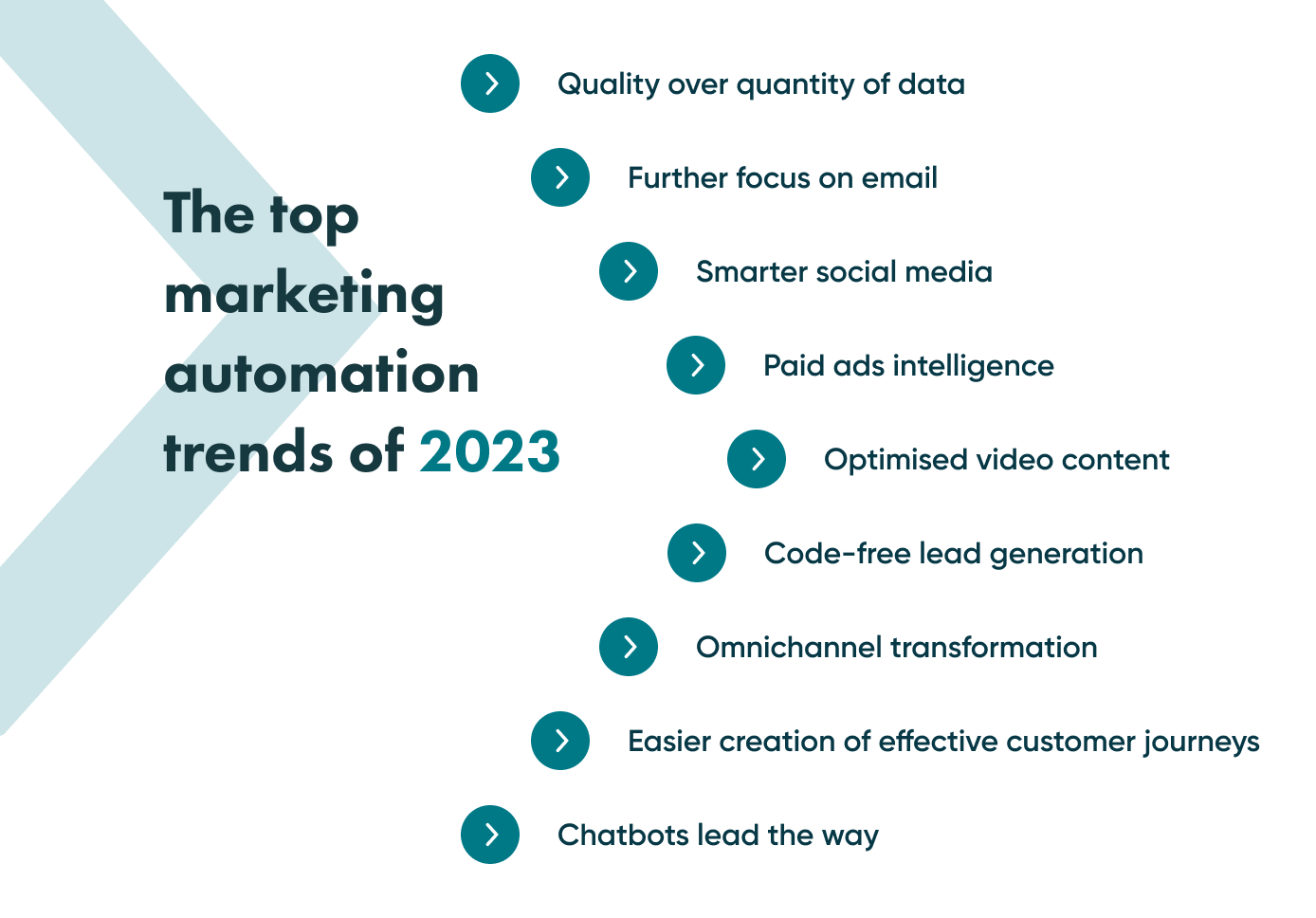
9 marketing automation trends for 2023
In Ascend2’s survey of 391 marketers for The State of Marketing Automation 2023, nearly 60% expected their marketing automation budgets to increase in 2023.
1. Data quality over data quantity
In the same survey, 43% of marketers named optimising their overall strategy as a primary goal for improving their marketing automation in 2023.
Two other top goals were more specific:
- Improve data quality (37% of marketers)
- Identify ideal customers or prospects (34%)
You want the truth
Forbes sums up the conundrum:
Poor data quality is marketing’s affliction, and high-quality data is marketing’s holy grail, yet achieving high-quality data is marketers’ ongoing battle.
Companies can now collect huge amounts of consumer data, but only part of it helps find leads and turn them into customers.
Better marketing decisions need accurate, relevant data, not just more of it, and sorting it by hand takes too long.
That is why more tools will automate not only data collection but also the choice of which data to use and how.
Blockchain is sometimes suggested as a fix, but it only guarantees that data is not changed once recorded. It cannot check whether data from outside sources was correct in the first place (the ‘oracle problem’ described in the Ethereum developer documentation), so it does not solve data quality.
How to handle that truth
Quality data helps companies understand their customers better and tailor what they offer.
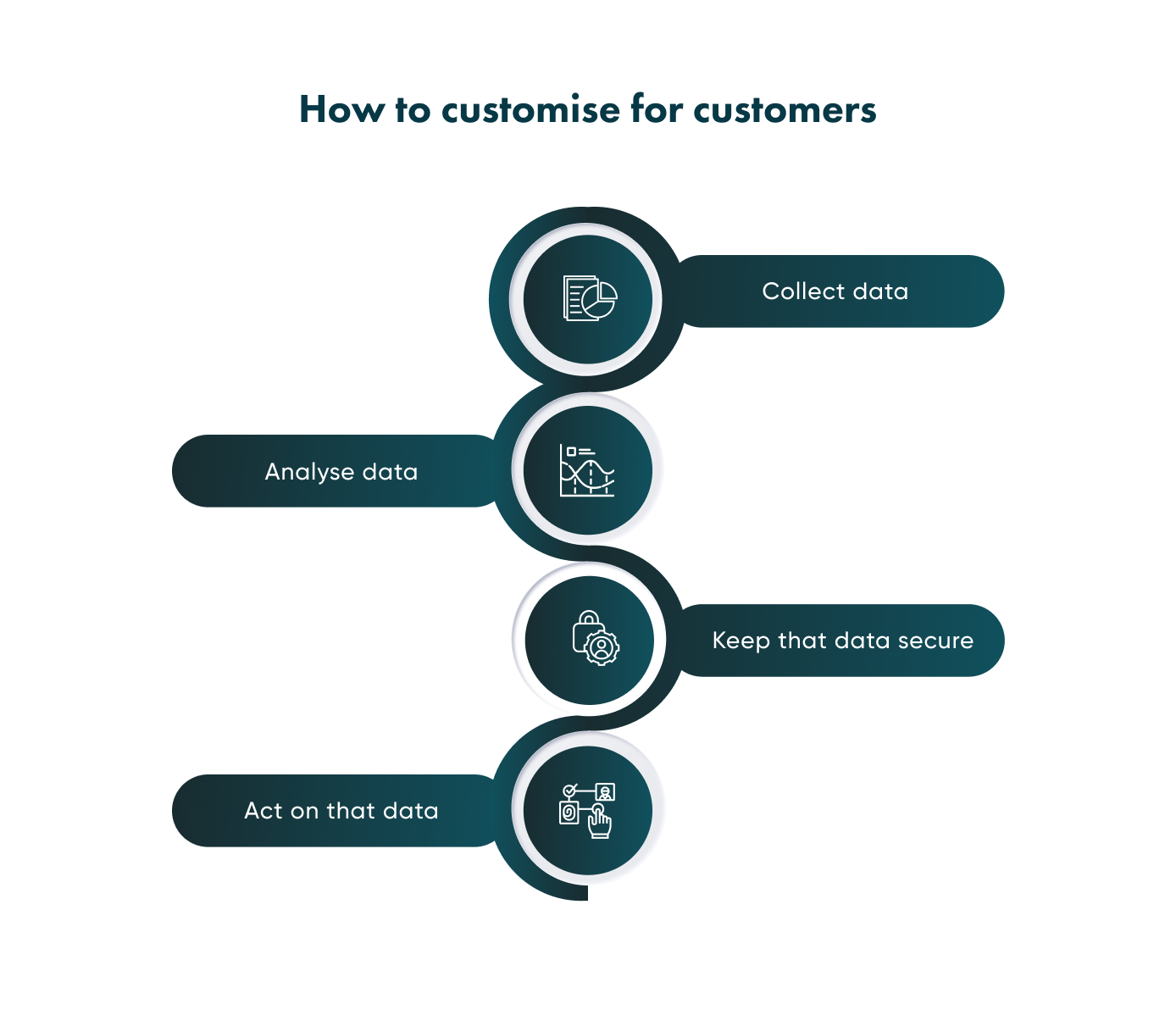
This requires a company to:
- Be able to collect data
- Be able to analyse data
- Keep that data secure
- Be able to act on that data (i.e. respond to the customer’s needs in a timely manner)
2. Further focus on email automation
Use of email automation has grown fast: 63% of marketers in Ascend2’s 2023 survey used automation in their email marketing, compared with 40% of those surveyed in 2021.
Automation can already handle email sequences that warm up leads over time. As unread mail piles up, tools will have to be more selective about when to send emails and what to say in them.
In the same survey, 29% of marketers said they planned to add automation to social media management and paid advertising, and 28% to email marketing.
3. Smarter social media marketing
People spend a lot of time on social media, and many of them are tired of it.
There is so much content that people are tired of brands filling their feeds. According to a Winter 2022 special marketing issue of Harvard Business Review (HBR), they are shunning old-school marketing and forming groups around specific interests.
Marketers will not leave social media, but to build and keep consumer trust they will have to be smarter about how they use it.
Marketing departments and agencies will need data on audience behaviour and posts that respond to it.
The challenge is to automate without overwhelming people.
4. Paid ads intelligence
Advertisers will have to get smarter as consumers become more jaded.
Media buying
In Google-sponsored content on HBR.org (September 2022), Google’s VP of Global Ads Marketing Marie Gulin-Merle reported that 48% of ‘budget-agile’ marketers exceeded their KPIs, compared with 33% of other marketers. And one important action to optimise budget agility is to adopt automation for media buying.
If you let marketing automation platforms do your bidding, make sure they place ads appropriately. Forrester estimated that marketers wasted USD 7.4 billion on poor-quality digital ads in 2016, including fraudulent and non-viewable inventory.
Monitoring and fraud-detection tools will be essential to reduce this risk.
Ad bias
According to HBR, bias is a widespread problem in targeted discounts and dynamic pricing. Personalisation algorithms in advertising automation will have to change to stop it.
A case in point
For example, we worked with SilverBullet on 4D, its platform that lets users match ads with the right audience in the right context. 4D helps brands, agencies, publishers, and ad platforms navigate the post-cookie era by ensuring ads are aligned with specific content and context across all channels.
5. Optimised video content in the marketing funnel
Video is far and away the preferred method for consumers to learn about products, according to statistics compiled by Wyzowl.
Getting video content to prospects earlier in the marketing funnel is one of the trends in automation to watch in 2023.
Automation helps deliver video at the right point in the funnel. It also helps on the creative side, since effective videos take time to make: AI-powered tools will speed up production.
6. Code-free lead generation
Cloud-based, no-code automation and data extraction tools are easy to use and process data quickly, so they will become more popular in 2023.
In a newsletter, Exploding Topics reported that its trend-spotting algorithm had detected a surge in searches for no-code lead generation software (also called no-code prospecting), part of what it calls a lead generation API meta trend.
Polaris Market Research, cited by Exploding Topics, expects the marketing automation market to grow from USD 4.79 billion in 2021 to USD 13.71 billion by 2030.
7. Omnichannel transformation
Big brands like Starbucks, Nike, JP Morgan Chase, and Home Depot “have publicly announced personalised and seamless omnichannel experiences at the core of their corporate strategy,” says the HBR.
Intelligent experience engines, a term from Edelman and Abraham’s 2022 Harvard Business Review article “Customer Experience in the Age of AI”, are difficult to build, but some companies already use them and more will follow.
“An omnichannel transformation is the only way for a company to address rising complexity, provide an excellent customer experience, and manage operational costs,” states McKinsey.
8. Increased ease of creating effective customer journeys
Customers still run into problems on their journey with a brand. The right software can remove some of that friction and keep them satisfied.
If you are unsure which software fits your organisation, get in touch.
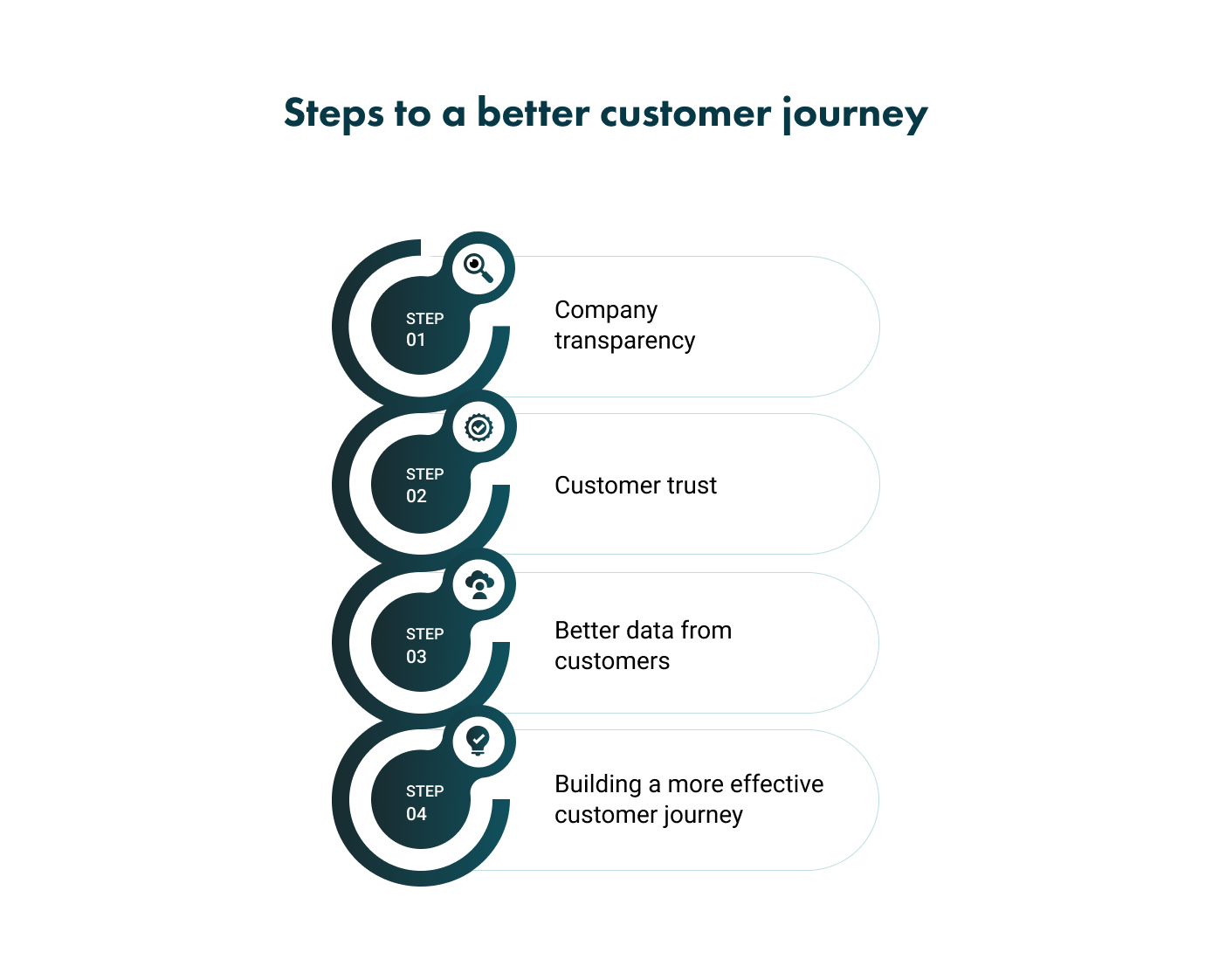
Transparency leads to trust
An effective customer journey needs specific data about your customers, and they will only share it if they trust you. Being open about how you use their data helps earn that trust.
Connected strategies
Once customers trust you and you know what they want and when, you can act on it automatically instead of waiting for them to ask. Siggelkow and Terwiesch call this a connected strategy in their 2019 HBR article “The Age of Continuous Connection”, which HBR reprinted in its Winter 2022 special issue:
The age of buy what we have is over. If you want to achieve sustainable competitive advantage in the years ahead, connected strategies need to be a fundamental part of your business. (HBR, May–June 2019)
Customer-value management
Cost-cutting pushed from the top sometimes hurts customers, and later your bottom line.
Customer-value management tools will give investors the analytics to track customer value like any other asset, so budgets can keep funding improvements to the customer experience.
9. The (continued) rise of the chatbots
Chatbots are not new, but as AI assistants become common in homes, we will see new developments.
What marketers will do for bots
Marketing will no longer target only consumers. According to HBR, brands will also have to market to AI platforms “to influence platforms in order to get preferential positioning on AI assistants”.
As Niraj Dawar wrote in Harvard Business Review in 2018, “Customer acquisition will become even more of a science and will focus on a single channel—the platform.”
Much as marketing already works on SEO (search engine optimisation), brands will have to optimise for AI platforms. This is now usually called GEO (generative engine optimisation) or AEO (answer engine optimisation).
What bots will do for marketers
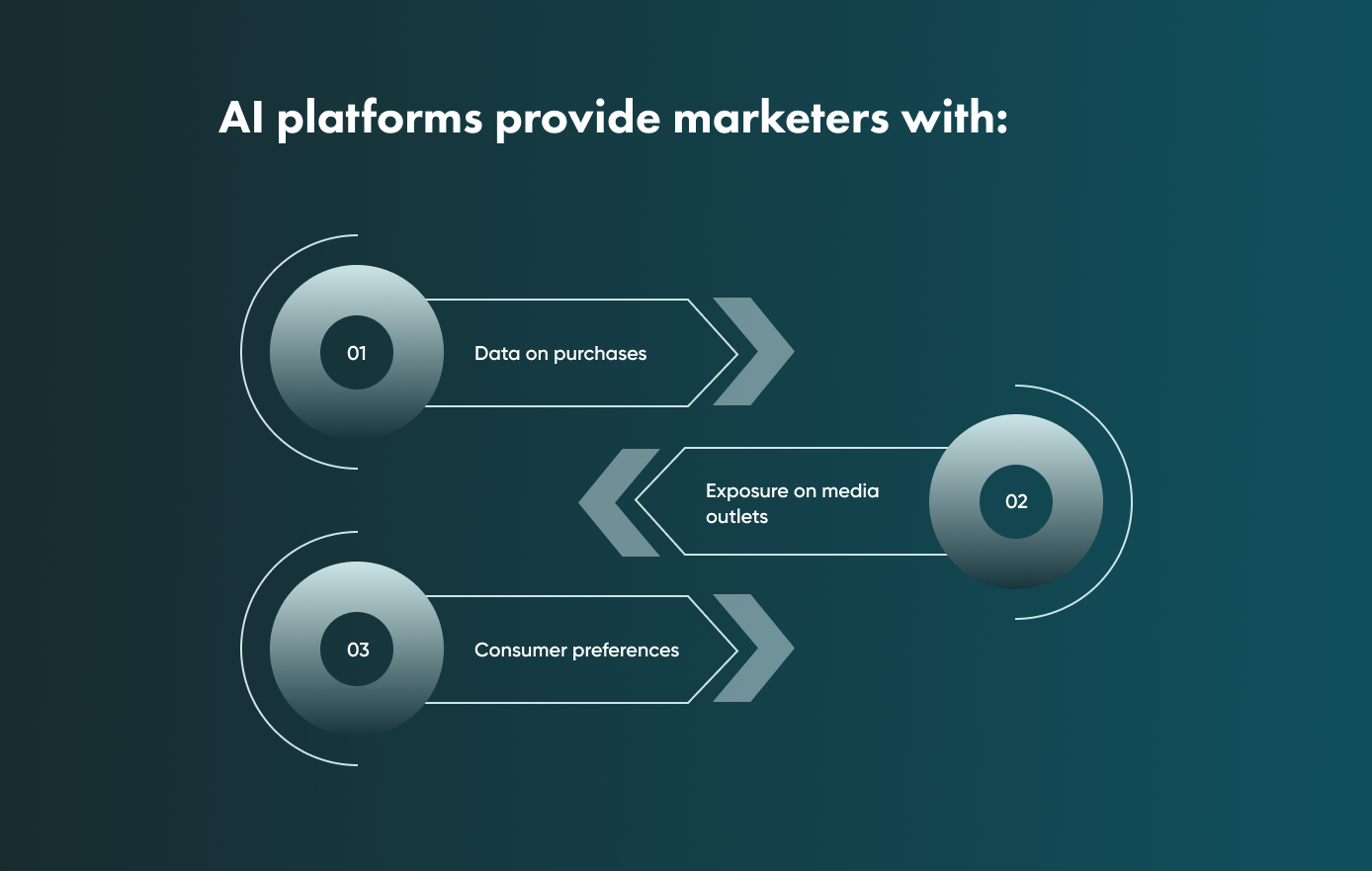
However, those platforms will also be creating value for marketing departments in the form of:
- Data on purchases
- Exposure on media outlets
- Consumer preferences
To benefit, businesses will need marketing automation software that can manage, secure and act on that data (see trend 1).
Finding a solution for you
There are already many ready-made marketing automation platforms.
If you are unsure which one suits your business, Go Wombat can review your requirements with you and, if needed, build custom marketing automation software. Let’s talk.
Conclusion
The common thread in these 2023 trends is a push towards more intelligent automation.
Share and subscribe to our blog
Related articles

10 Key Software Development Trends In 2022
The software development trends we expected to matter most in 2022, from automation and AI to blockchain and PWAs, and what they mean for custom software.

What Is MarTech? A Complete Guide to Marketing Technology in 2026
What MarTech is, how it differs from adtech, the main categories of marketing technology tools, and what changed in the MarTech landscape in 2026.

Five Business Automation Trends to look out for in 2022
Five technology trends for business process automation in 2022, taken from Gartner's list: cloud-native platforms, composable applications, hyperautomation, AI engineering and generative AI.

Why Use a CRM System? 7 Reasons Businesses Can't Afford to Skip One in 2026
What a CRM system does, how CRM software changed by 2026, and seven reasons to use one, illustrated by the CRM platform Go Wombat built for Demco.

How can we help you ?