



The Importance of Digital Transformation for SMEs

What matters and a strategy to make it a reality for small and medium-sized businesses
As consumer behaviour changes, small and medium-sized businesses (SMEs) need a clear roadmap for adopting new technologies. This is the core of digital transformation.
A 2024 Gartner survey of more than 3,100 CIOs and technology executives found that only 48% of digital initiatives meet or exceed their business outcome targets. Additional research suggests that market pressures are the main driver of digital transformation.
Below: what digital transformation means, its advantages and challenges, examples by industry, the main technologies, one Go Wombat project, and three steps to start.
What Is Digital Transformation?
Digital transformation means rebuilding a company's business model, operations, products and marketing around digital technologies and data.
Companies now generate large amounts of information, and digital tools collect, store and process it. With enough data, big data analytics becomes possible.
Digital transformation is not the same as automation. Automation changes one process; digital transformation covers all of a company's operations.
Take a library. A librarian looks up a book in a paper card index and then goes to the shelf. With a digital catalogue, the same search takes seconds. That changes one process, so it is automation.
Digital transformation would mean digitising the books, building an app for reading them, and studying how readers use the app to improve it and to see which books and services interest them most.
Advantages Of Digital Transformation
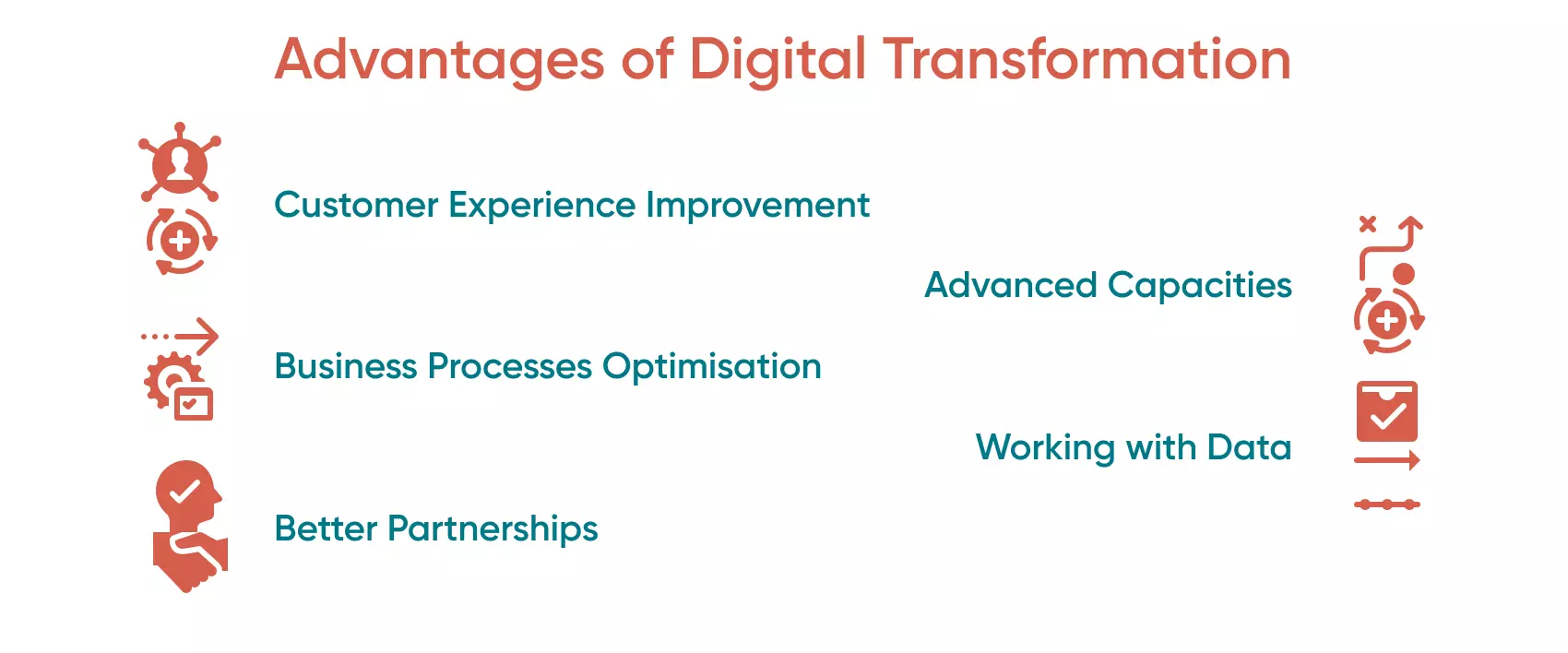
Statista tracks worldwide spending on digital transformation; in 2022, that spending was forecast to reach $1.78 trillion.
Customer experience improvement
Customers drive digitalisation: they compare the service they get from different companies. Digital tools let you measure service quality and understand your customers better.
Digital tools also make a more individual approach possible. Chatbots are a good example.
Digital transformation also changes how employees work and can make them more productive.
Business processes optimisation
Digital transformation can cut costs and make a company more efficient. Companies that ignore modern technologies risk falling behind competitors that adopt them.
It also makes a company faster. Make changes when you can, not when you are forced to. Digital processes let a company react sooner, make decisions on time and give customers relevant information quickly.
Advanced Capacities
Digital tools add capabilities a company did not have before. Cloud technologies let several teams work on one project and share resources. Process mining finds bottlenecks in business processes so you can fix them.
Working with data
Every company now produces large amounts of digital data. To use it, you have to collect, structure and analyse it. Digital transformation brings in technologies such as Big Data and Artificial Intelligence (AI) that make large data sets manageable.
Better Partnerships
Digital tools make it easier to work with partners wherever they are and to manage a business from anywhere. The applications and web services that connect partners can be custom-built by software development companies like Go Wombat.
To plan your digital transformation with Go Wombat, contact us.
Digital Transformation Technologies
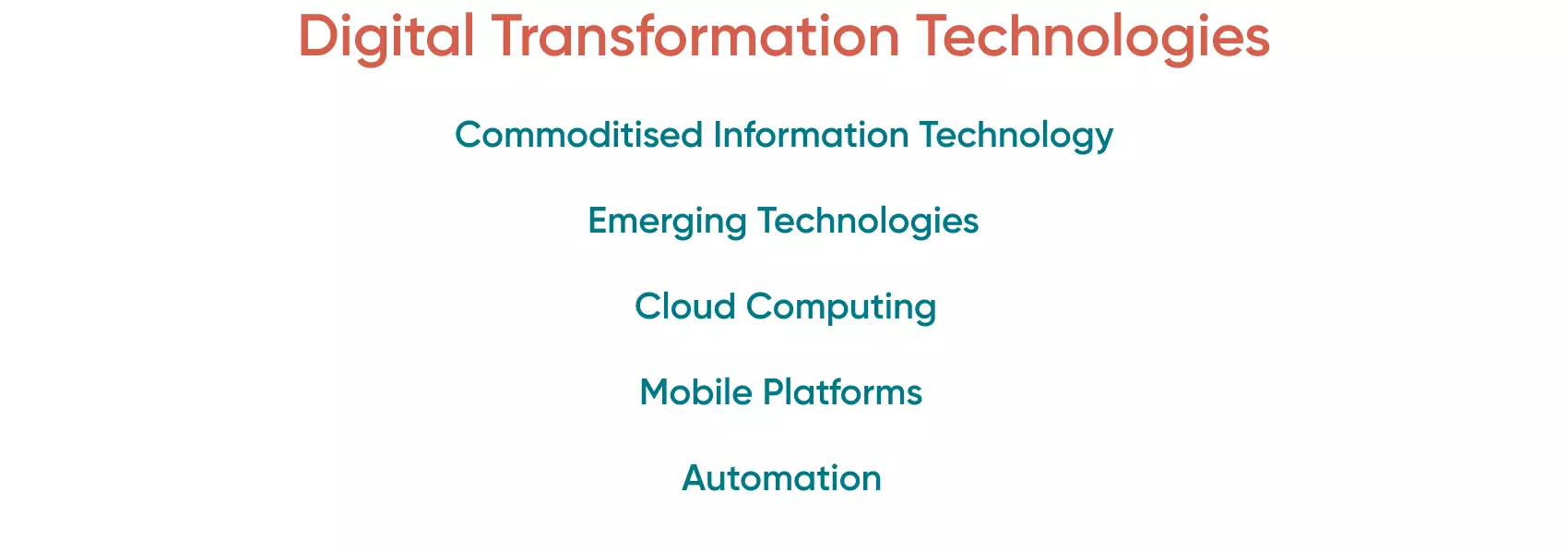
Cloud computing
Cloud storage and cloud-based services give employees access to documents and files from anywhere.
Commoditised Information Technology
Standard, widely available IT products and services can be configured to fit your business processes.
Mobile platforms
With mobile applications, employees can work wherever they have an internet connection. For field staff, an app can replace paper forms.
Automation
Robotic process automation (RPA) uses software bots to take over repetitive, routine tasks, which reduces errors.
Emerging Technologies
Newer technologies such as artificial intelligence and machine learning, the Internet of Things, big data, the Internet of Behaviour, blockchain and AR/VR (augmented and virtual reality) can add new features to your products and help you keep customers.
Examples of Digital Transformation by Industry
Digital transformation can help SMEs in any industry.
In healthcare, it has brought patient portals, telemedicine, virtual visits, e-prescriptions, and even virtual reality for pain management and simulations.
In the hospitality industry, hotels have added mobile check-in to cut waiting times, AI for facial recognition and personalised service, and the Internet of Things for smart rooms where guests control devices.
In the insurance sector, online portals give instant quotes and let customers file claims. Predictive analytics helps insurers anticipate risks and make better decisions.
In the retail industry, augmented reality helps customers choose products, and mobile apps reach them with relevant push notifications. IoB and AdTech algorithms analyse customer journeys to help increase sales.
A live Project
Here is a project that shows digital transformation in practice: a platform that helps websites understand their customers.
What We Worked On
It is a cloud data platform built for customer insights, personalised experiences and privacy. It collects and structures data about website visitors, shows what motivates them and uses this to personalise marketing channels, from the first visit to the purchase.
Customers buy and install an app. It shows them what visitors do on their website, what they buy, which products are in more or less demand, how they behave and how long they stay.
Two back-end developers and one front-end developer from our company are involved. Go Wombat didn't create the project from scratch: our task was to improve and modify an existing product. Its main customers are eCommerce websites, which use visitor preferences to improve the shopping experience. The platform stays fully operational while we add new features and polish it.
As for server-side development, one of our back-end developers has created an extension for email marketing. His task was to write code and unit tests, create data flow, and write documentation.
Challenges
The project had no well-thought-out architecture at the start. Our developers had to agree on a unified approach and standard and build a structured architecture. This phase took a lot of time.
The front-end developer is building a new version of the script on the new standard, so customers can configure it to their business needs.
Tech Stack
Front-end toolkit:
React library, TypeScript (a superset of JavaScript that compiles to clean JavaScript output, and it is suitable for larger applications);
ESlint (a static code analysis tool for identifying problematic patterns found in JavaScript code);
Prettier (enforces a consistent code style (i.e. code formatting that won't affect the AST) across your entire codebase);
axios and axios-hook (libraries for building requests to backend);
Material UI (a library that allows us to import and use different components to create a user interface in our React applications).
Recharts (A composable charting library built on React components).
Back-end toolkit
Google Cloud Storage. A service for storing objects in Google Cloud. An object is an immutable piece of data, a file of any format;
BigQuery. Google's cloud-based big data analytics service for querying very large data sets;
Pytest. A full-featured Python testing framework. With the pytest-xdist plugin, developers can run tests in parallel and cut the test suite's execution time;
Unittest. A unit testing framework for checking code before deployment;
Falcon. A high-performance Python web framework for building large-scale app backends and microservices;
Pub/Sub (Publish/subscribe messaging). A form of asynchronous service-to-service communication used in serverless and microservices architectures;
MongoDB/PostgreSQL. Non-relational and relational databases;
Redis (Remote Dictionary Server). An in-memory, persistent data structure store for fast common operations.
If you need to improve existing software or build new software from scratch, contact Go Wombat.
Three Steps To Transform Your Business
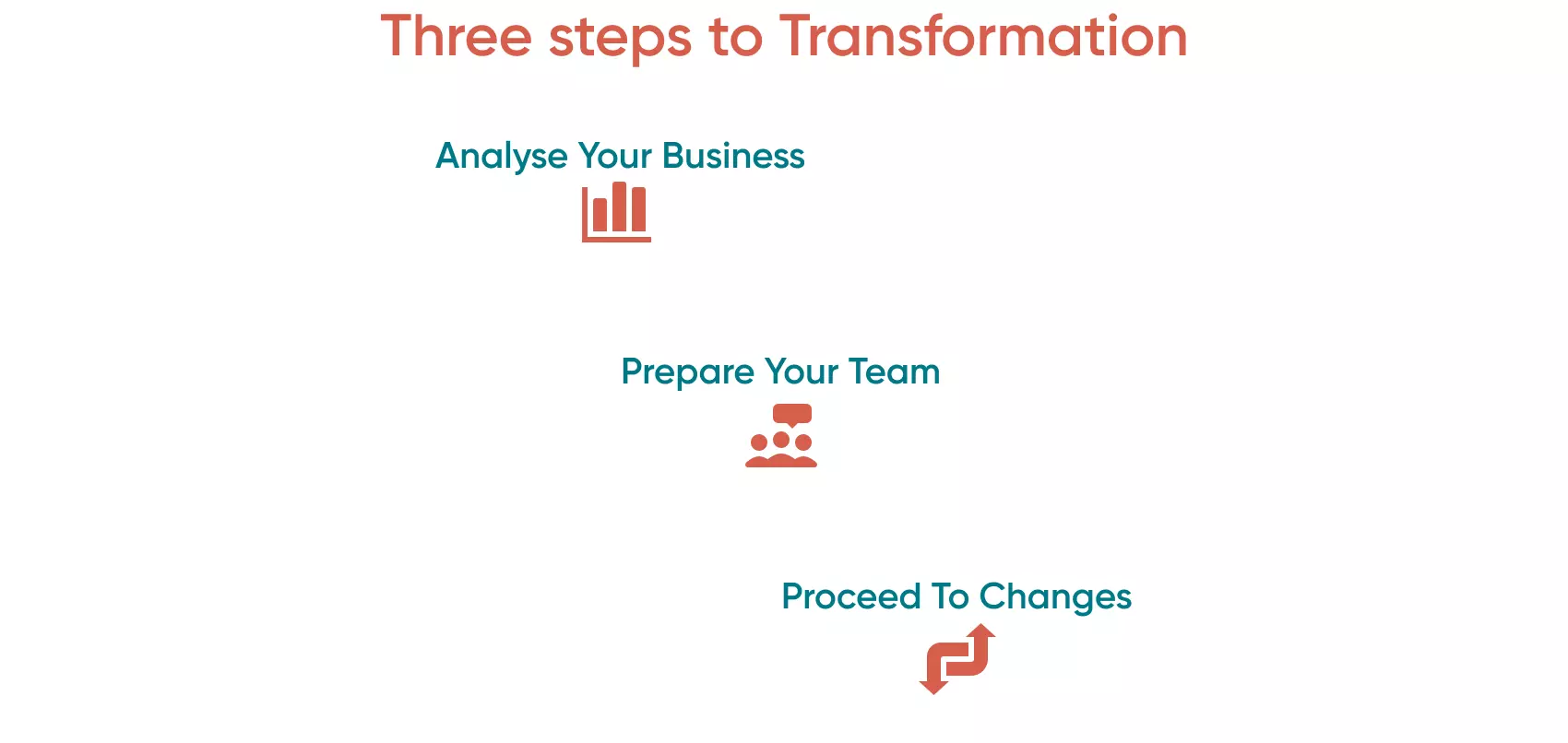
Every business is different, and there is no single recipe. These three steps make the process smoother.
Analyse Your Business
Include all daily working processes in the Project Discovery Phase, so the transformation does not hurt your customers.
Then identify your business's pain points, the processes that need to change first. Don't try to transform everything at once.
Prepare Your Team
Your team has to take part in the transformation, and it will not work if people don't understand what is happening. Share the data and market research behind the decision; it makes your plans easier to explain.
Give each team member a clear role and responsibility in the digital transformation.
Proceed To Changes
List the applications and other software you plan to build. Even if you outsource all development to Go Wombat, you need clear requirements. Draw up a rough financial plan: how much you need to invest and how much you expect to earn. This gives you an estimate of ROI.
Once the changes start, track key metrics to see whether the software meets customers' expectations.
Challenges To Consider: Why Digital Transformation May Fail

Watch out for these obstacles.
Budgetary Constraints
Transformation requires substantial investment. If the business cannot fund it, the project stalls, so plan the budget before you start.
Poor Management
Employees need to know why the business is changing and how to use the new tools. Specialists in digital transformation training can help.
Privacy Concerns
When your business goes online, all customer data should be protected, and any confidential information cannot be disclosed. Your software should have appropriate security measures installed to protect it from external threats.
Regulatory Changes
Finally, don’t forget to make your business compliant with local regulations such as GDPR, CCPA, or HIPAA. We have a more detailed article about HIPAA and GDPR certification. Simply put, since you process customer personal information, you must ensure that you use it properly and respect customer privacy.
Our business development team can help you define the right software and estimate the development budget.
Contact us to discuss your project.
Share and subscribe to our blog
Related articles

Cloud Data Security: Protecting Sensitive Data
What cloud data security covers in private, public and hybrid clouds, why the Capital One, Uber and Accenture incidents happened, and the controls that prevent them.

The Importance of Cybersecurity
Why cybersecurity matters for businesses, the most common types of cyberattacks, and practical steps to protect your company against them.

Similarities, Differences, and Everything You Need to Know About GDPR and HIPAA Compliance
If your company leverages digital tools it means that you have to comply with the regulations of the region you work in. For example, if you are gathering, storing, or processing the personal information of European Union (EU) residents, y…
-blogCardMobile-480x320.webp)
What is Data Migration and how to create the perfect process
What data migration involves: the six main types, big bang vs trickle migrations, choosing a tool, and managing the main risks.

How can we help you?

